
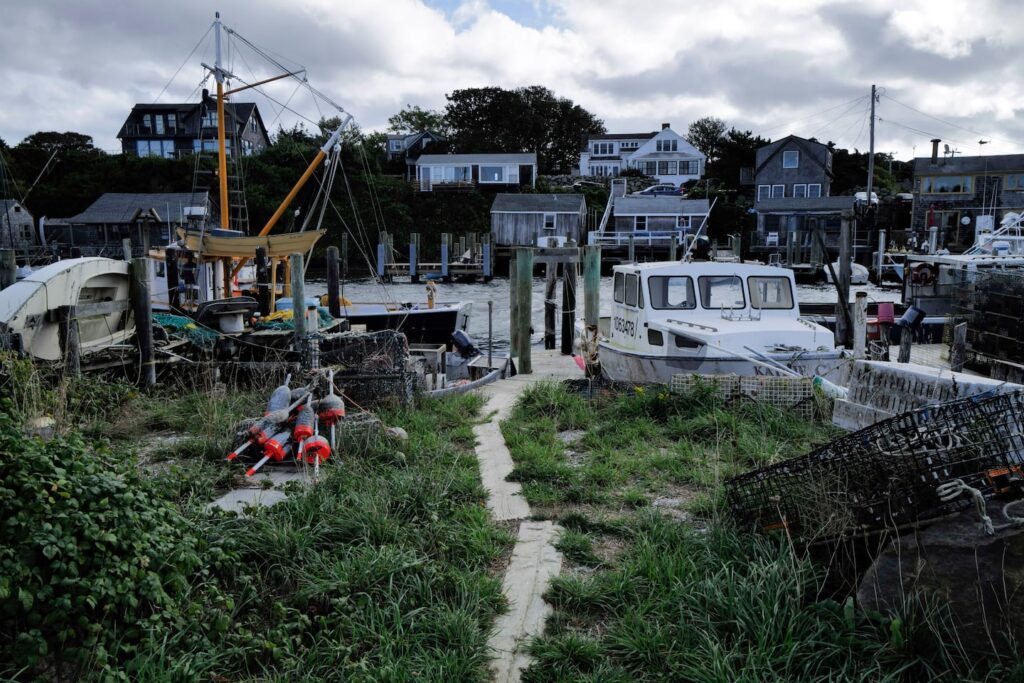
Climate change has fueled an unprecedented rise in costly disasters, making it one of the biggest financial threats to insurers. Over the last five years alone, New England has suffered more than 40 disasters with losses exceeding a billion dollars each, the majority of which were winter storms or severe storms. As nor’easter season settles in, the threat of heavy rains and strong winds is high.
“Rising premiums are the market’s response to what science has told us for decades,” said Ali Hiple, a senior policy analyst at the Conservation Law Foundation.
Steven Feinsmith, 75, estimated that the annual cost to insure his approximately 2,000-square-foot home in West Tisbury has doubled in recent years to nearly $5,000. He’s asked his insurance agent to “try everything you can do” to keep his costs down, including raising his deductible to the max. When he asked why costs keep going up, his agent told him the region is due for a storm.
New England has not been directly hit by a hurricane since 1991, and Martha’s Vineyard has largely been spared from catastrophic damage during recent storms.
“You have to insure your home,” Feinsmith said. “You’re caught.”
Jim Bishop, 77, said insurance prices have gone up “exponentially” each year since he moved to the Vineyard in 1997. He lives in West Tisbury and owns several properties across the island. He said he’s lucky to not have to worry about the cost of insurance, but he’s concerned about the impact on younger people trying to buy homes.
“Insurance companies have lost their moral compass,” he said. “It’s greed.”
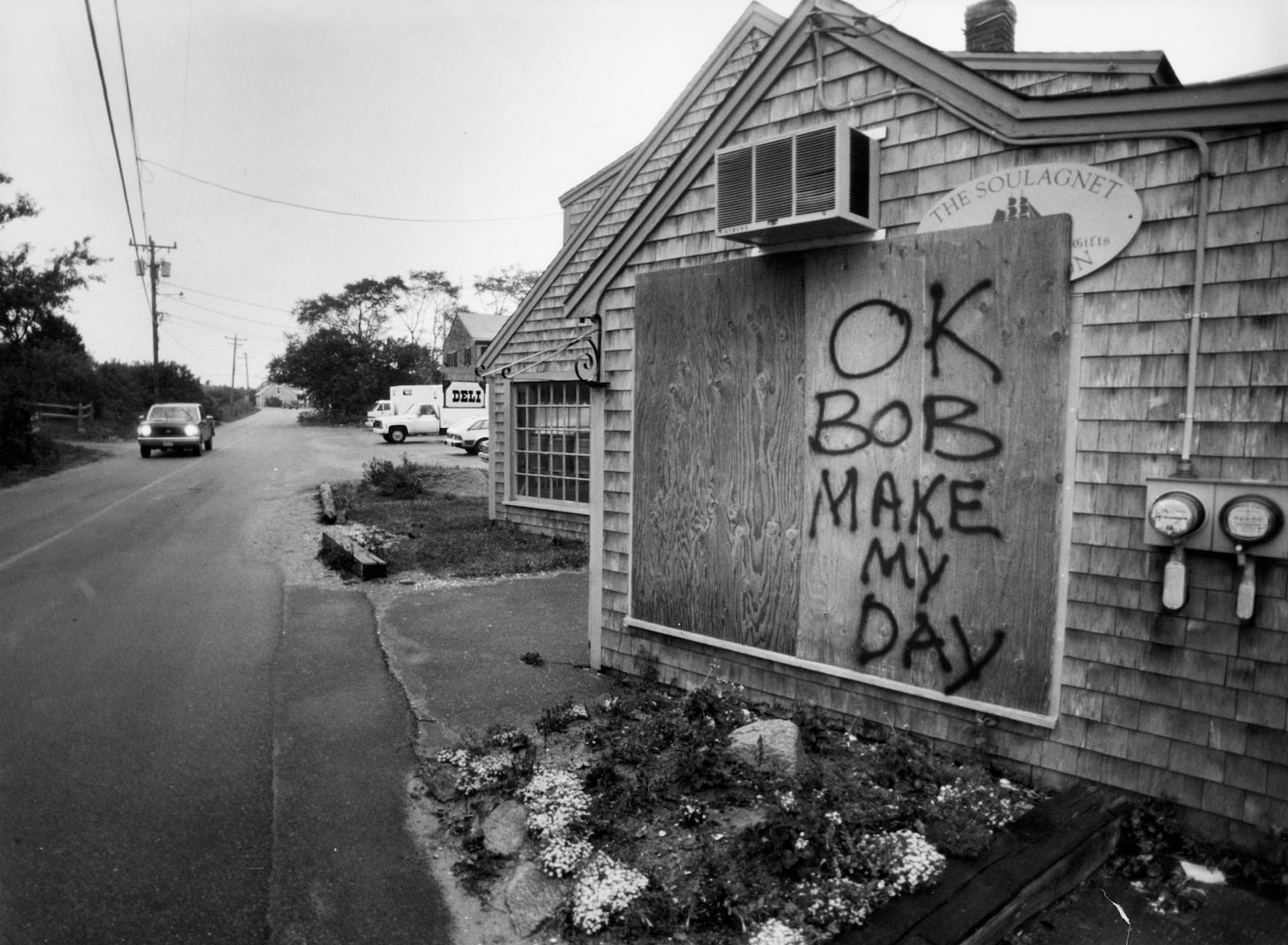 A board put up to protect a deli in Menemsha, Mass., on Martha’s Vineyard, carried a challenge to the elements on Aug. 20, 1991, ahead of Hurricane Bob.Tom Landers/Globe Staff
The stakes of obtaining insurance are high. For many, homeownership is the foundation of building wealth, and insurance is needed to take out the loans that make these purchases possible. High premiums put financial strain on households, spike monthly escrow mortgage payments, or force people onto plans that cover less at a steeper cost.
US Senator Sheldon Whitehouse of Rhode Island, a Democrat, warned that the climate challenges to insurance could trigger a larger economic crisis. He said the early stages of “the great climate insurance collapse” are already appearing in his home state.
Whitehouse said that when properties become uninsurable, they become unmortgageable, which severely limits the number of potential buyers, thereby reducing the value of the home. In some parts of Florida, uninsurable homes are selling at deep discounts to buyers, a dire outcome for families caught in this trap.
Whitehouse said the cascading effects could trigger a “2008-style economic meltdown.”
“Climate change ain’t about polar bears any longer,” he said. “It’s coming from people’s mailboxes in the form of insurance bills, nonrenewals, and serious mortgage difficulties.”
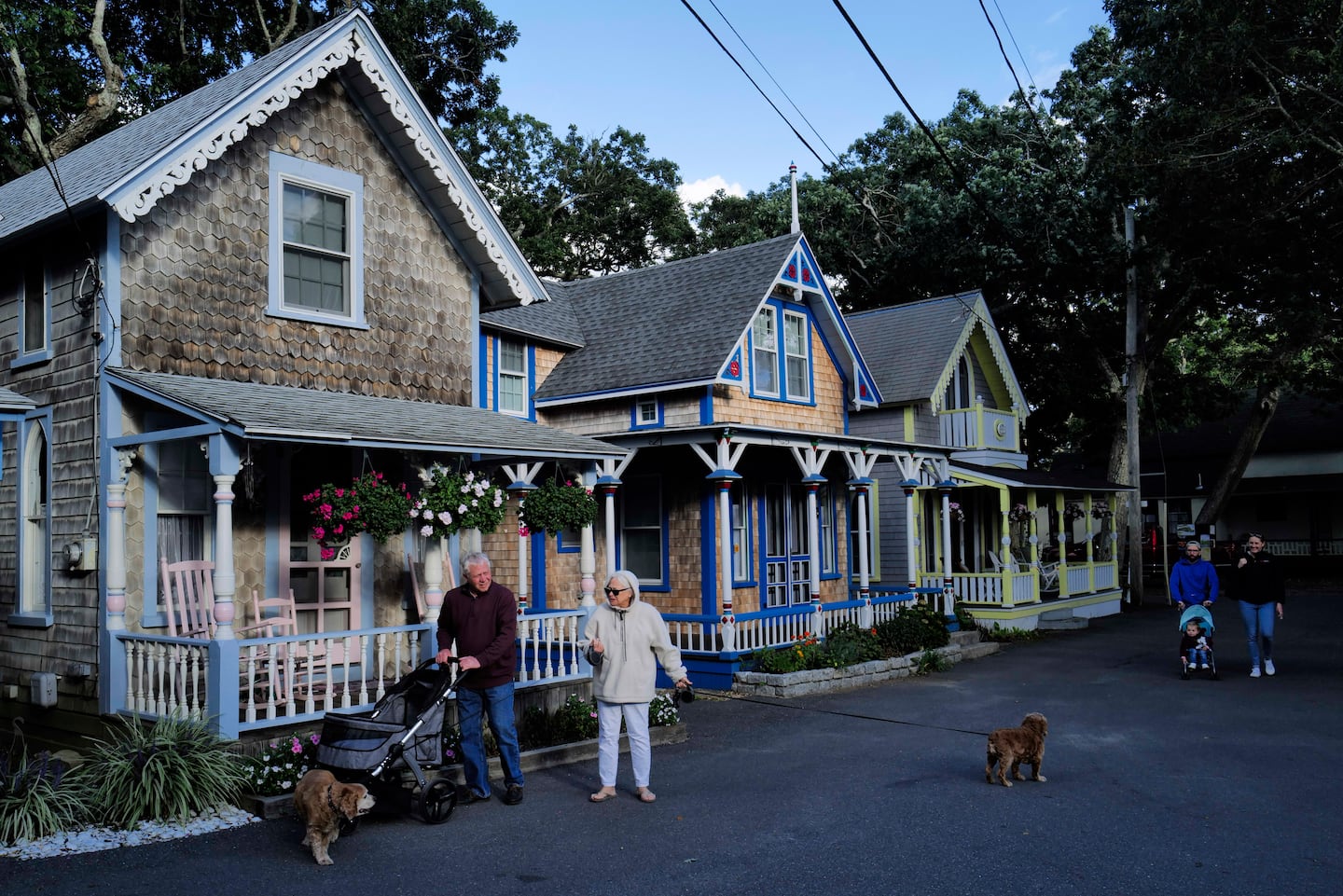 People walked their dogs through a neighborhood in Oak Bluffs in Martha’s Vineyard in 2022.Carlin Stiehl for The Boston Globe
According to data from the Senate Budget Committee, insurers are dropping homeowners in Martha’s Vineyard, Nantucket, and Cape Cod at rates that are among the highest in the country.
The committee’s report found that Dukes County, which spans the Vineyard and Elizabeth Islands, an archipelago southwest of Cape Cod, had the third highest nonrenewal rate in the United States in 2023, with insurance companies dropping more than one in 10 policies. Just a few years prior, the county’s nonrenewal rate was less than 1 percent.
“This is insurers wanting to cut their exposure to these areas,” said Ishita Sen, an assistant professor at Harvard Business School who studies how climate change impacts insurance. “This is 100 percent a response to climate risk.”
About a third of residents on the Cape and island communities are insured through the Massachusetts FAIR Plan, a state program that acts as the insurer of last resort. The program is a safety net for residents who can’t get insured otherwise, but the policies often cost more and cover less than traditional insurance.
Some coastal residents who are still able to purchase insurance through the private market have seen their costs soar. Premiums surged by over 30 percent between 2018 and 2022 in parts of Massachusetts, Maine, and New Hampshire, according to data released in January by the US Department of the Treasury.
Sen said the growing climate risks to these communities is not the sole factor. Some of the rise can be attributed to households taking on more coverage and features built into contracts that lead to an increase in cost for homeowners, she said.
Sen said it is also the case that climate risks in other states have driven up premiums across New England. Because some states with elevated climate risks tightly regulate insurance rates, such as California, insurers cross-subsidize their business by raising rates in areas that are less regulated.
On the Vineyard, husband and wife duo Rich and Libby Soo Hoo have had to explain to frustrated customers of their insurance agency, Sterling Insurance Group, that the rising costs reflect changing risk assessments and are not personal. The two started the company after moving to the island, where Libby Soo Hoo was born and raised.
“The carriers pay hundreds of millions of dollars for these catastrophe models, and these models are indicating that our probability of loss in this area is high,” said Rich Soo Hoo. “They are predicting we are due for a major Cat 4, Cat 5 storm.”
Hurricane Bob tore through the island in 1991, when Libby Soo Hoo was growing up. The storm made landfall in Rhode Island as a Category 2 hurricane and wreaked havoc across New England, including on Martha’s Vineyard, where it downed hundreds of power lines and caused millions in damage. Memories of the storm have faded among residents, even as climate change fuels more powerful and volatile hurricanes.
“It’s been a long time since we’ve had something big and bad like that,” she said.
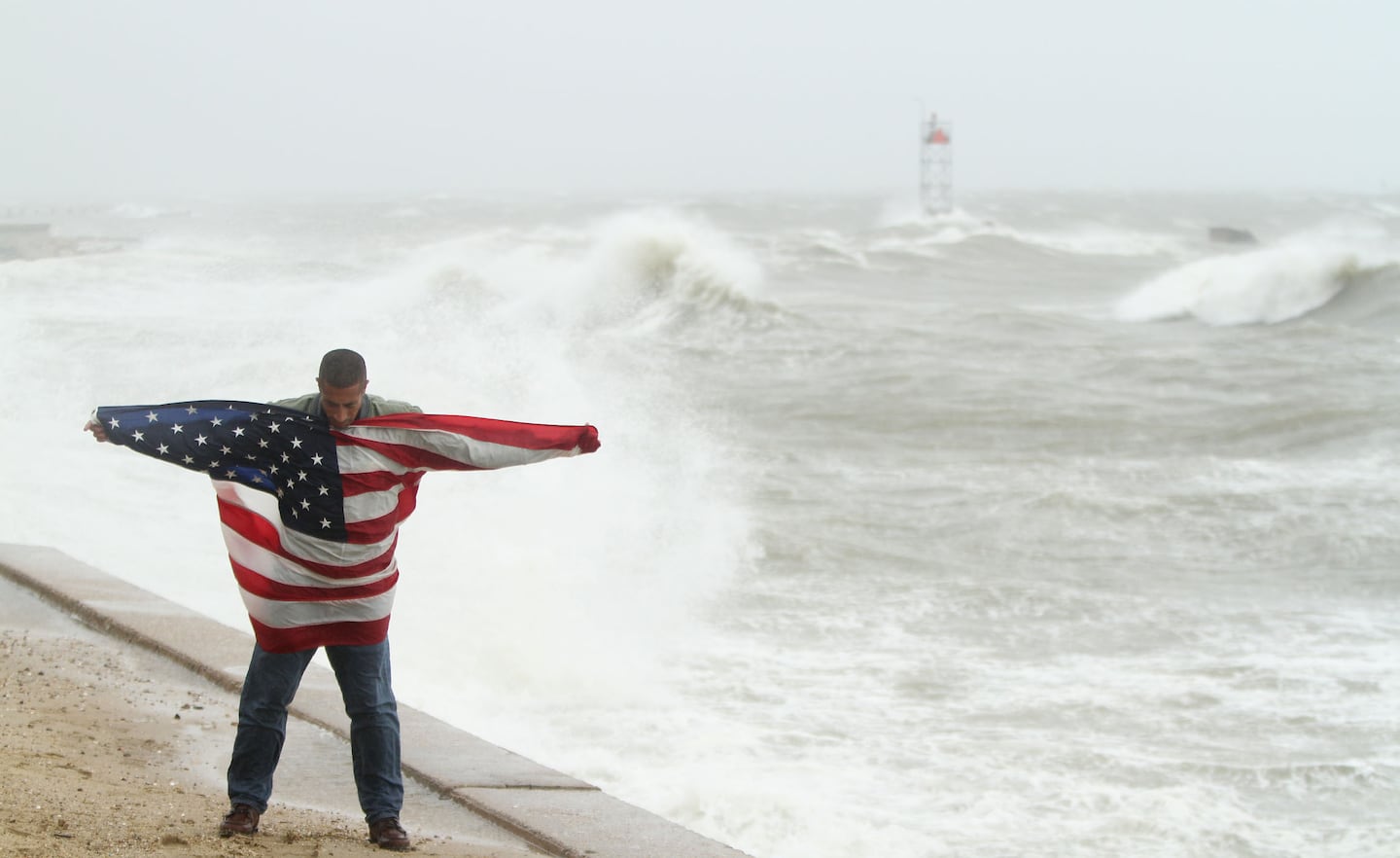 Richard Tarter, 54, an ex-marine, flew the American flag at the seawall in Oak Bluffs as Tropical Storm Irene began to hit Martha’s Vineyard in 2011. “It’s the right thing to do,” Tarter said. “During troubled times you can always count on the flag.” He also flew the flag during Hurricane Bob. The Boston Globe/Boston Globe
There is no easy fix for the insurance challenges, though experts suggested that efforts to fortify homes and communities against weather damage would make a difference in protecting them, though not necessarily slashing rates. This could include retrofitting roofs to protect against wind and restoring coastal ecosystems to slow down a storm surge.
Hiple, of the Conservation Law Foundation, said several bills are making their way through the Massachusetts State House that could help, including legislation that would incorporate climate risk into the state building code and establish a fund for climate adaptation.
In Connecticut, officials released a mapping tool this fall that gives residents assessments of their homes’ vulnerability to wildfires, hurricane winds, and other climate-driven risks. Andrew Mais, the state insurance commissioner, said residents can use the tool to make informed decisions about where to live and what coverage to buy.
“Why should that information only be available to insurance companies?” Mais asked.
Kate Selig can be reached at kate.selig@globe.com. Follow her on X @kate_selig.