
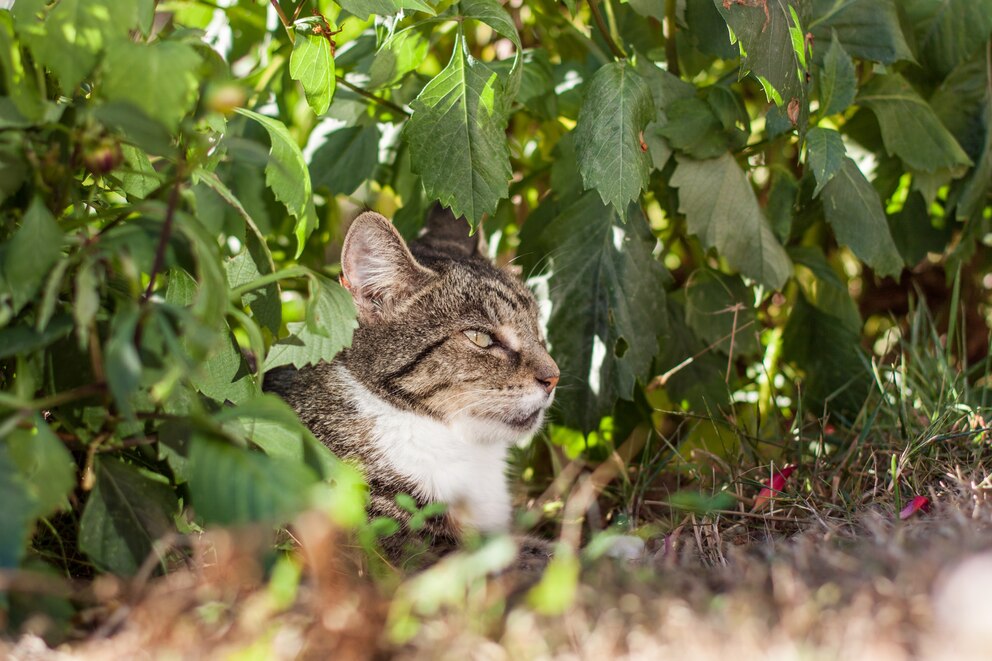
They are considered shy loners, but for New Zealand’s nature, they are deadly: Millions of feral cats threaten rare species there. Therefore, the government plans to eradicate them nationwide by 2050–and is now receiving support from large parts of the population.
Feral Cats Now on the “Predator-Free 2050” List
New Zealand has announced a far-reaching step in species protection: By 2050, feral cats are to be completely eradicated. This was declared by New Zealand’s Environment Minister Tama Potaka on November 21, 2025, as reported by the British daily “The Guardian.” The measure is part of the so-called “Predator-Free 2050” strategy, an international flagship project for the elimination of invasive species. It is the first time since the initiative’s launch in 2016 that a new predator has been added to the list.
Feral cats are already being captured and killed in certain regions. However, their inclusion on the official list now means they are the focus of large-scale, coordinated control measures nationwide–supplemented by research and targeted eradication programs. Exactly what these will look like is not yet known. Detailed plans are expected to follow in March 2026.
“Cold-Blooded Killers”
Estimates suggest more than 2.5 million feral cats live in New Zealand’s forests and on its remote islands. Some animals reach a length of up to one meter, including the tail, and weigh up to seven kilograms. Their impact on the native wildlife is severe: They are considered a major cause of the dramatic decline of the rare Pukunui–also known as the Maori plover. The bird species once inhabited much of the South Island but now only breeds inland on Rakiura (Stewart Island). Cats are also blamed for the disappearance of bats in the region around Mount Ruapehu.
Potaka described the feral cats to Radio New Zealand as “cold-blooded killers” that are now being placed alongside other invasive species: “To strengthen biodiversity, to strengthen the cultural heritage landscape, and to strengthen the kind of place we want to see, we need to get rid of some of these killers.”
Intense Debates Over Cat Control
The decision follows years of political and societal discussions. As early as 2013, environmental activist Gareth Morgan caused a stir with his “Cats to Go” campaign, which sparked fierce protests. A competition where children were to shoot feral cats also drew criticism from animal welfare groups (PETBOOK reported).
Despite earlier resistance, a large portion of the population now supports stricter control. According to the New Zealand Ministry for the Environment, 90 percent of participants in a public consultation either supported the inclusion of feral cats in the strategy or better regulation.
House Cats Excluded but Still in Focus
While feral cats are now being targeted, house cats are officially exempt from the measure–even though they are also considered a significant threat to biodiversity. New Zealand has one of the highest cat ownership rates in the world, yet there are few clear legal regulations.
The National Cat Management Group, a coalition of environmental and animal welfare organizations, advocates under the motto “Every cat in a lap” for keeping house cats indoors. The goal is to minimize their impact on wildlife as much as possible.
Call for Legal Reform
The SPCA, New Zealand’s largest animal welfare organization, is generally open to measures against feral cats but calls for more humane methods. The “Guardian” quotes SPCA scientist Christine Sumner: “We are talking about removing them from an environment, and that is currently being done with lethal means, which we are not happy with. That is the biggest challenge.”
Both environmental and animal welfare organizations advocate for a unified national legislation on cat ownership. This includes mandatory chipping and neutering of house cats. For environmental activist Gareth Morgan, this is a long-overdue step, as he writes in the “Guardian”: “It was a glaring omission not to include feral cats at all,” he said. “Now we need policy changes if this is to work in reality.”
The post New Zealand Plans to Eradicate Feral Cats by 2050–Public Supports the Move appeared first on PETBOOK.