
Newswise — Researchers from Hunan University, et al. have conducted a review study entitled “Per- and polyfluoroalkyl substances in the environment and their removal by advanced oxidation processes”. This study was published in Frontiers of Environmental Science & Engineering, Volume 19, Issue 9.
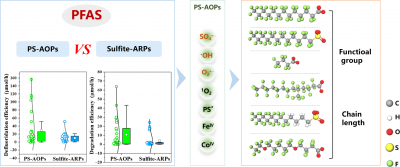
Per- and polyfluoroalkyl substances (PFAS) are a class of persistent organic pollutants with over 7000 compounds, featuring high toxicity, chemical stability, and environmental persistence. They are widely used in various industries and spread through multiple pathways, accumulating in water, atmosphere, and soil, posing significant risks to ecosystems and human health. Persulfate-based advanced oxidation processes (PS-AOPs) have emerged as a promising remediation technology, but the structural diversity of PFAS leads to varying removal efficiencies, requiring in-depth analysis. The review systematically summarized PFAS’s environmental distribution and migration patterns, compared the performance of PS-AOPs and sulfite-based advanced reduction processes (Sulfite-ARPs) for PFAS removal, analyzed PS-AOPs’ activation mechanisms (homogeneous and heterogeneous catalysis) and key influencing factors (PFAS chain length, functional groups, temperature, coexisting substances), and proposed three integrated AOPs/ARPs strategies for complex contamination scenarios.
For more detailed information, the full paper is available at: https://doi.org/10.1007/s11783-025-2041-4.