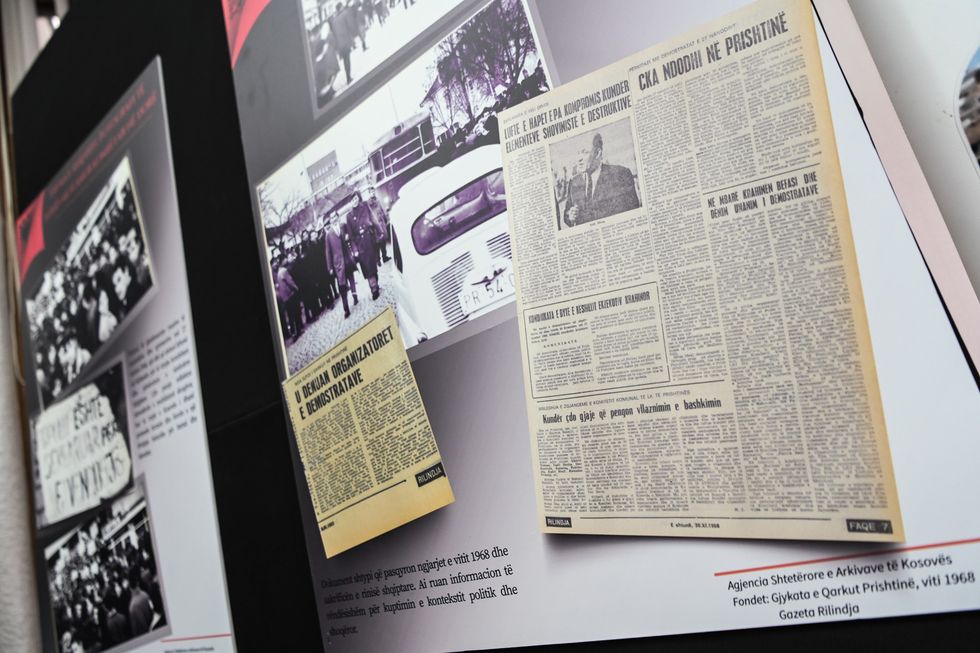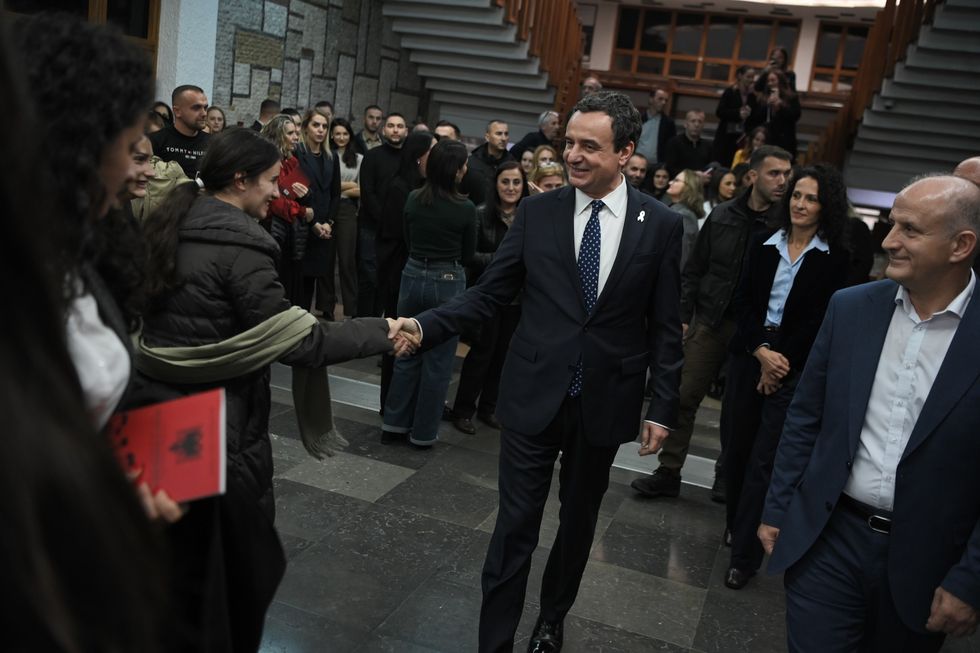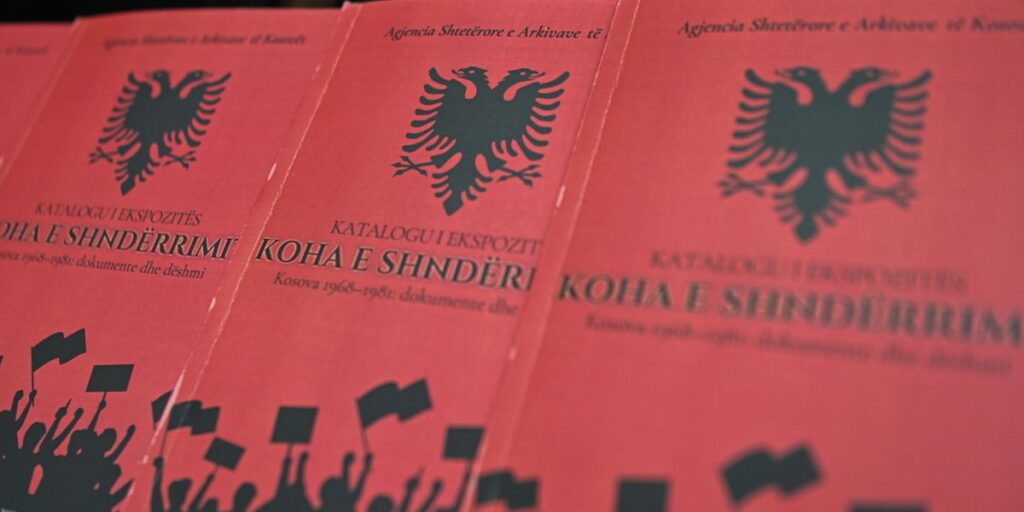
The acting Prime Minister of the Republic of Kosovo, Albin Kurti, participated in the opening of the exhibition, “Time of Transformation – Kosovo 1986-1981: Documents and Testimonies”, organized by the Kosovo State Archives Agency (ASHAK) and which is being held at the National Library.
In a fitting speech, in front of those present, Prime Minister Kurti said that, just like the title of the exhibition, there was also the period from 1968 to 1981, when Albanian youth, at the same time as the protesters in Prague, who paved the way for a chapter of liberalism, and Paris, which from a student movement turned into a social revolution, rose up in protests demanding freedom, their rights and above all, chanting “University” and “Self-determination”.
The 1968 demonstrations, Prime Minister Kurti said further in his speech, paved the way for the advancement of the cultural and political rights of Albanians in Yugoslavia, but, on the other hand, were also an event from which an entire generation of indomitable activists was born, many of whom ended up in prison, such as Adem Demaçi and Rexhep Mala.
He said that although the years for Kosovo after the 1974 Autonomy, which elevated Kosovo to the level of an autonomous and constitutive province of the Yugoslav Federation, were seemingly prosperous and peaceful, they collapsed as a result of oppression, exploitation and discrimination, because, although economic development took off, inequality and the underrepresentation of Albanians in Kosovo and beyond continued to deepen.
“In the spring of 1981, during March and April of that year, initially the students of the University of Pristina and then the workers and the broad masses of the people, rose up in a series of protests, which marked another breakthrough event in the new history of Kosovo,” said Prime Minister Kurti, adding further that the history of these years and this transformation is readable in the documents exhibited there among the documents selected by the Kosovo State Archives Agency.
And looking at these documents, the Prime Minister emphasized that we see how important it is to invest in our archival institutions, both in infrastructure and technology, and at the same time as cultivating the culture of archiving, as an institutional tradition. “The archives of our state, in addition to telling us what the past was in the form of documents and footage and recordings, at the same time encourage our society to keep as many records as possible, to document as much as possible for those who will come after us, just as those who came before us did for our generation,” he said.
At the end of his speech, Prime Minister Kurti said that, by studying and learning well where we come from, we know how to move more directly, faster, and more clearly towards where we started. Therefore, the archives of our state, in addition to showing us what the past was in the form of documents and footage, at the same time encourage our society to keep as many records as possible, to document as much as possible for those who will come after us, just as those who came before us did for our generation.
He called on all citizens to visit this exhibition, because there they will find things that will make you know more and learn even better.