
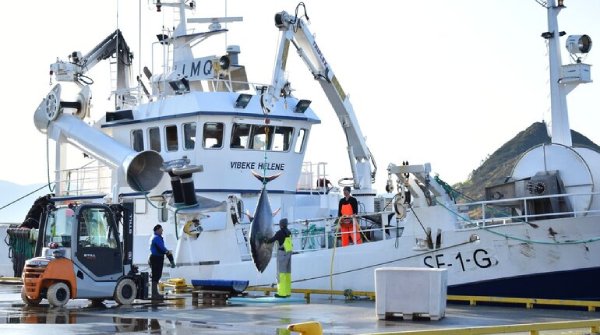
Norwegians benefit from increased bluefin tuna quota after ICCAT deal raises national share and allows higher catches through 2028
Norway has secured a significant increase in its bluefin tuna quota following negotiations at ICCAT, with higher catch limits agreed for the 2026 to 2028 management period.
The new Norwegian total quota will be approximately 461 tonnes, representing an increase of around 25 percent. In addition, Norway will be able to apply a 20 percent quota flexibility, allowing catches of up to 535 tonnes in 2026.
The outcome follows ICCAT’s decision to raise the overall Atlantic bluefin tuna quota, based on updated stock assessments indicating that the stock can support higher catches over the next three years. The total allowable catch will rise from 40,570 tonnes in 2025 to 48,403 tonnes in 2026, with Norway’s share increasing to 0.95 percent of the total.
Stock Recovery Strengthens Norway’s Negotiating Position
Norway’s fisheries and oceans minister Marianne Sivertsen Næss said the species has now re-established itself in Norwegian waters, improving fishing opportunities.
“Makrellstørja is now well established in Norwegian waters, and fishing opportunities are better than ever. We now have to start utilising this fantastic resource,” Næss said.


She also acknowledged that Norway has struggled in recent years to fully take its allocated bluefin tuna quota, a factor that has weakened its hand in past negotiations.
“In recent years we have not managed to fish the Norwegian bluefin tuna quota, which has put pressure on us in negotiations,” Næss said. “At a time when many fisheries are seeing quota reductions, I hope strengthened opportunities in this fishery can be positive for fishermen who want to participate.”
Quota Growth Offset By Participation Constraints
ICCAT’s decision covers 20 contracting parties, all sharing the increased total quota. While Norway has secured an improved national allocation, the ability to fully capitalise on it remains an open question given previous underutilisation.
Næss said the government intends to address this by expanding participation. “This is a first-class food fish and a resource we should be able to utilise fully. In the coming years we will work to ensure that more Norwegian vessels can take part in the fishery,” she said.
Whether the Norwegian fleet can scale up in time to benefit fully from the higher quotas, particularly amid broader quota pressures across other fisheries, will determine how meaningful the ICCAT gains prove in practice.