
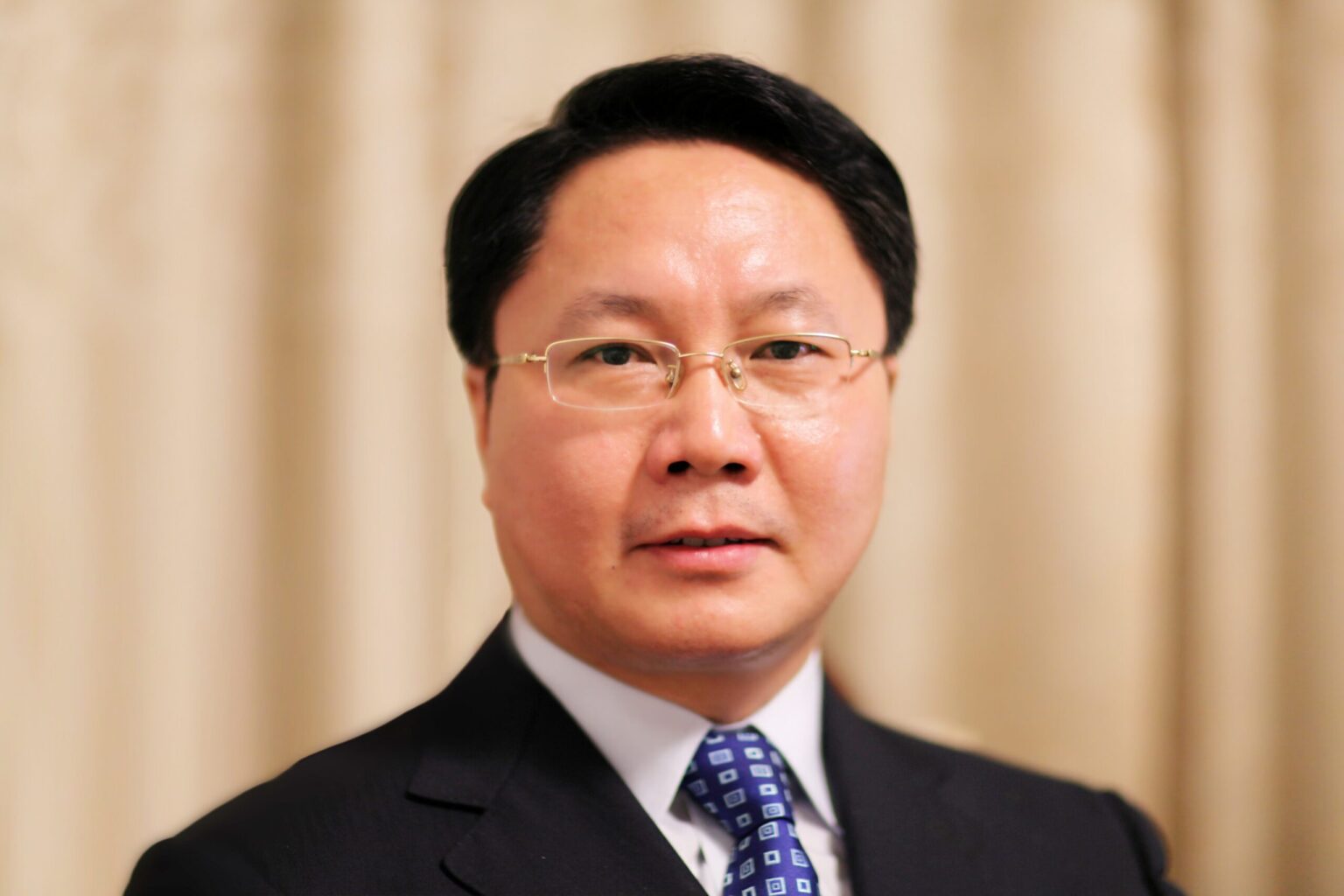
H.E. Wang Xuefeng, Chinese Ambassador to Denmark
Amid profound adjustments in the global economic landscape, China is taking steady steps toward a new stage of high-standard opening-up. In the past, China’s opening-up focused primarily on facilitating the free flow of goods and production factors. Today, China is steadily advancing institutional opening-up. This is not merely about opening the market, but about building a system aligned with high-standard international economic and trade rules, and promoting deep reforms in areas such as governance mechanisms and standard-setting.
The recommendations for formulating the 15th Five-Year Plan, recently adopted at the Fourth Plenary Session of the 20th CPC Central Committee, once again emphasized the need to steadily expand institutional opening-up, setting a clear direction for further high-standard opening-up and for fostering new prospects of mutually beneficial cooperation.
For Denmark, an economy known for its high degree of openness, China’s upgraded policies for high-standard opening-up represent a rich mine of opportunities with immense potential.
The recommendations made it clear that China’s high-standard opening-up will be advanced in the following four aspects:
First, China will proactively expand unilateral opening-up, further shorten the negative list for foreign investment. With a focus on the service sector, there will be more pilot programs for opening such areas as telecommunications, health, finance, and education. Denmark is highly competitive in sectors including maritime services, elderly care, health services, and biomedicine—areas that closely align with China’s priorities in this new round of opening-up.
Second, China will promote new progress in trade, upgrade and optimize trade in goods, vigorously expand green trade, increase imports of high-quality products, and move steadily toward carbon peaking and carbon neutrality. Danish agricultural and food products, particularly organic foods, are known for their high quality, green standards, and safety, and thus hold substantial potential as exports to China. Denmark has also accumulated extensive experience in wind energy utilization, energy-efficient buildings, urban management, and environmental technologies. With our two countries both committed to green development, there is ample room to further implement the China-Denmark Green Joint Work Programme, and to deepen cooperation on green transition and high-level green development.
Third, China will expand the space for two-way investment by actively addressing the concerns of foreign enterprises, such as intellectual property, cross-border data flows, and government procurement. China will fully deliver national treatment to ensure both market access and post-entry operations, and foster an institutional environment that is transparent, stable, and predictable. As China continues to build a world-class business environment that is market-oriented, law-based, and in line with international standards, the rights and interests of Danish businesses in the Chinese market will enjoy even stronger and more reliable protection.
Fourth, China will promote high-quality Belt and Road cooperation, advancing both major landmark projects and small and smart livelihood projects. Denmark is strong in wind power, architectural design, environmental governance, and water resource utilization, while China excels in infrastructure development and industrial chain integration. By leveraging our respective strengths, our two countries can jointly explore cooperation in third markets.
China has a mega-sized market with a population exceeding 1.4 billion and a middle-income group projected to surpass 800 million in the next decade. For nearly half of the Danish companies operating in China, our country is their largest or second-largest market globally. The 8th China International Import Expo recently held in Shanghai attracted 4,108 companies from 138 countries and regions, with intended deals reaching US$83.49 billion. In November, China officially launched the “Big Market for All: Export to China” events under which ten themed activities will be rolled out to help bring more foreign goods and services into China, enhance the popularity of high-quality products, and boost long-term prospects for foreign exporters interested in China. Going forward, China will continue expanding high-standard opening-up and share development opportunities and dividends with countries around the world, including Denmark.
China and Denmark have long upheld the principles of mutual respect and equality, with Denmark being our only comprehensive strategic partner in the Nordic region. The year 2025 has seen high-level economic and trade exchanges, with several Danish cabinet ministers visiting China and signing multiple cooperation documents with the Chinese side. The 24th Meeting of the China-Denmark Joint Economic and Trade Commission was successfully held in Wuhan. Denmark served as the guest country of honor at the China-Nordic Forum. Meanwhile, more than ten Chinese provincial and ministerial delegations visited Denmark, engaging in in-depth exchanges with their Danish counterparts and the business community, yielding fruitful results.
From January to September this year, China-Denmark trade continued to grow, with bilateral trade in goods totaling US$13.32 billion—a year-on-year increase of 19 percent, the fastest growth rate among Nordic countries. This demonstrates the strong resilience and growth potential of our bilateral trade. Two-way investment has also progressed steadily: LEGO has established and officially opened its largest global theme park in Shanghai; Danfoss has built its first global carbon-neutral factory in Nanjing; and Novo Nordisk announced an 800 million yuan investment to expand its quality control laboratory in Tianjin. China’s new energy vehicles are gaining popularity in Denmark, with cumulative sales of Chinese brands such as XPENG and BYD each exceeding 5,000 cars. Air China’s Copenhagen office achieved record-high sales, and Chinese lifestyle brand POP MART recently opened its first Nordic store in Denmark, offering much loved LABUBU to its Danish fans.
Today’s world may face growing unilateralism and protectionism, but economic globalization remains an irreversible trend. Both China and Denmark advocate free trade and support a multilateral trading system with the World Trade Organization at its core. China-Denmark economic and trade cooperation contributes to economic growth and improved well-being for both peoples. The recent Fourth Plenary Session of the 20th CPC Central Committee and the recommendations for the 15th Five-Year Plan have charted the course for China’s future development, injected stability and certainty into the global economy, and created valuable opportunities for countries—including Denmark—to deepen cooperation with China.
In July, the China Eastern Airlines launched a direct flight from Shanghai to Copenhagen, building a new air bridge between the two countries. Recently, China announced a one-year extension of its unilateral visa-free policy for Denmark and 44 other countries, further facilitating exchanges and cooperation. China’s economy is like a vast ocean; believing in China is believing in the future, and investing in China is investing in tomorrow. We would love to see more Danish enterprises come to China, participate in China’s development, explore the Chinese market, and work with us for shared benefits of common development.