
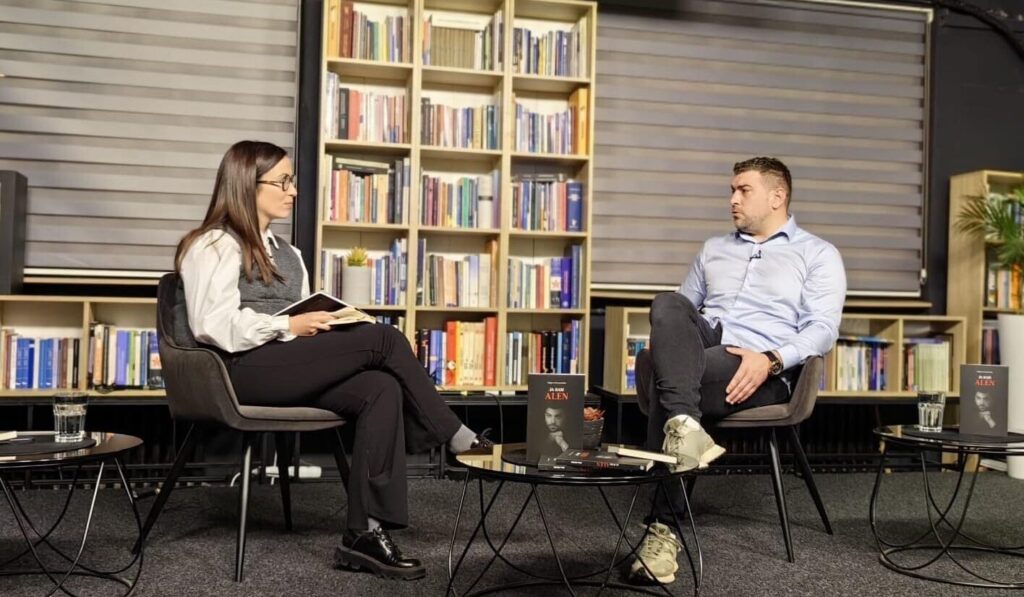
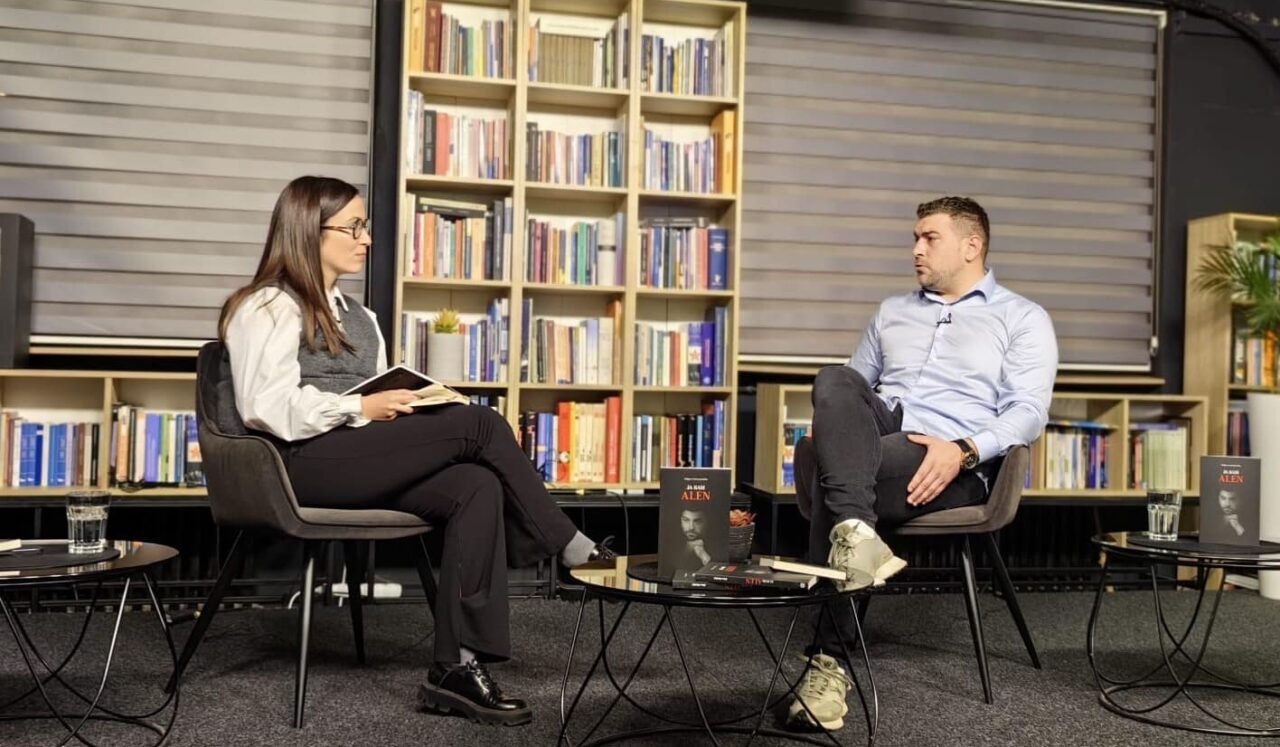
Alen Muhic (right) and journalist Iva Paradjanin at the book event in Belgrade. Photo: Olivera Simic
Alen Muhic presented ‘I Am Alen’, his book about his life since being born in Gorazde in Bosnia in 1993 as a result of wartime rape, for the first time in Serbia to a packed hall in Belgrade on Wednesday evening.
Muhic’s biological mother, a Bosniak woman, was raped by a Serbian soldier during the war years in the town of Foca. His book is a personal testimony that raises questions of identity, belonging, pain, and love as well as being a confrontation with his traumatic past, providing insight into an experience that often remains outside public discourse.
Muhic told the Belgrade audience of around 100 people at the Prostor Miljenko Dereta cultural centre about his adoptive family, who he said gave him lots of love. However, he said he still yearned to meet his biological parents – particularly his biological father, who was tried for war crimes but acquitted on appeal.
He spoke about his disappointment in the justice system in Bosnia, which he said betrayed not only his mother but also “all other women victims of wartime rape who probably changed their minds about speaking out once they saw that the rapist of my mother walked free”.
He said that the Sarajevo-based Forgotten Children of War Association from Sarajevo, which he helped establish, estimates that between 2,000 and 4,000 children were born of wartime rape in Bosnia and Herzegovina. Some of them live abroad, and some in Serbia, he said.
The association represents “children from all ethnic groups, but also children fathered by UN peacekeepers”, he added.
Although some women survivors of wartime rape and their children live in Serbia, the country remains the only one in the region that has not yet recognised women victims of rape as civilian victims of war, which Muhic condemned.
“We are experiencing transgenerational trauma. Imagine a system in which victims do not have the right to free counselling and psychological help,” he said.
“My biological mother is still in the process of healing, and she will probably be for the rest of her life. She has nightmares and struggles with me as a reminder of the crime that happened to her. She also has nightmares of her rapist, my biological father, who was, in the end, acquitted, which was her second trauma after surviving the first one, rape,” he added.
Journalist Iva Paradjanin, who led the discussion with Muhic, said that the fact that the book event was being held in Belgrade gave it “historical importance”.
Muhic said that the authorities in Bosnia’s Serb-dominated entity Republika Srpska still do not want to talk about the subject of children there who were born as a result of wartime rape.
But he added that the Forgotten Children of War Association is campaigning for change so that these children can get the status of civilian victims of war, as they have already done in the country’s other entity, the Federation of Bosnia and Herzegovina.
“I would like more children to come out and speak up. It would be easier for me, too, if more of us spoke publicly about what happened to us so it is not all media attention on one or two of us,” he said.
Muhic received a standing ovation when he told the audience about his plan for building a monument to women victims, which would be a punishment for all wartime rapists, including his father.
“What I want to do is to build the biggest monument to women victims of wartime rape, not just to Bosniak women, but all women victims of rape. He and others cannot be punished worse than that,” he said.