
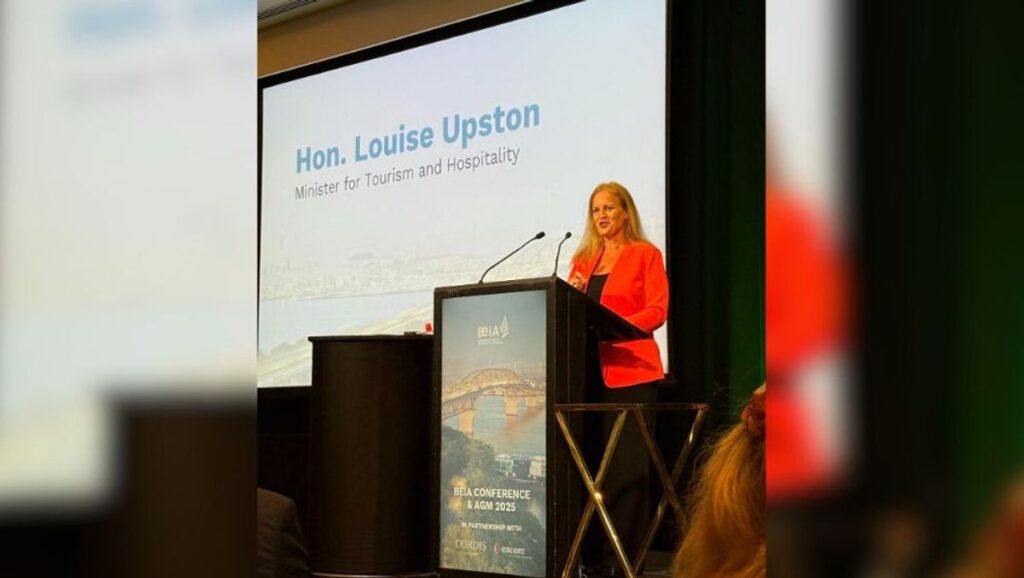
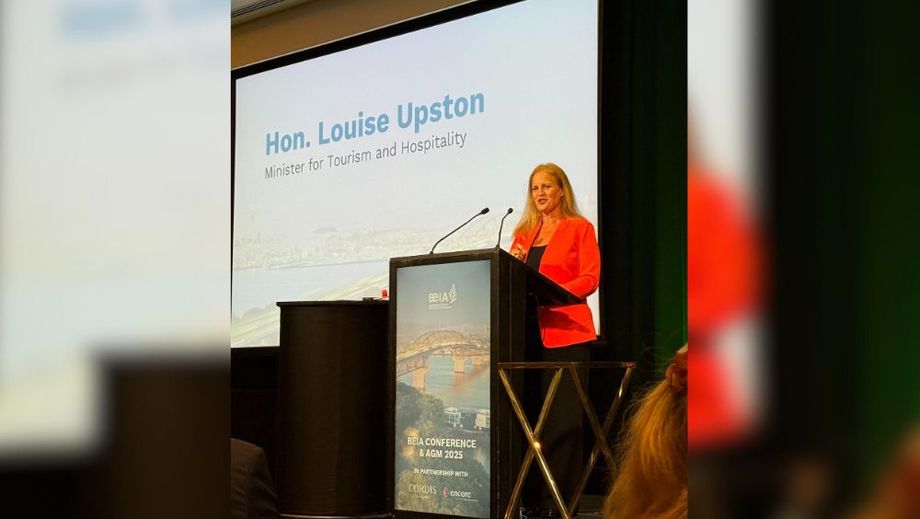
Tourism and Hospitality Minister Louise Upston unveiling the industry-led programme on 26 November.
New Zealand has launched a dedicated qualification for the business events sector to address workforce gaps and pressures in the country’s growing meetings sector.
“Te Haeata”, the New Zealand Certificate in Business Events, was announced by Tourism and Hospitality Minister Louise Upston at the Business Events Industry Aotearoa (BEIA) Conference 2025 in Auckland.
Introducing Te Haeata
The programme aims to enrol 200 learners in the first 18 months, with 50 additional learners annually.
The first module will be available from February/March 2026, with the other modules rolling out over the subsequent months.
The first module of the qualification will also be delivered in secondary schools in 2027, as a taster pathway into the sector.
Minister Upston confirmed NZ$145,000 (US$82,800) in government support through the International Visitor Conservation and Tourism Levy.
The plan is for NZ$105,000 to go towards qualification design and online delivery, and NZ$40,000 for industry marketing, engagement, and reporting over 12 months.
Industry initiative
BEIA chief executive Lisa Hopkins said the Level 4 certificate was “developed by the industry, for the industry” and shaped by input from event professionals nationwide.
The programme has been verified by the New Zealand Qualifications Authority and will sit within the national qualifications framework.
Te Haeata was created collaboratively by BEIA, Ringa Hora, Service IQ and Grow Tourism, with BEIA owning the qualification.
Filling the gap
Minister Upston said: “This qualification directly addresses workforce shortages in the tourism and business events sector, supporting our long-term goal of building a skilled domestic workforce.”
A recent workforce survey by Ringa Hora and BEIA found that more than 70% of organisations expect increases in event volume and plan to expand recruitment, particularly for coordinator-level roles.
BEIA’s Hopkins added that demand for formal training is reinforced by a “backlog of workers seeking recognised qualifications”. “Developing and retaining talent has never been more important,” Hopkins stressed.