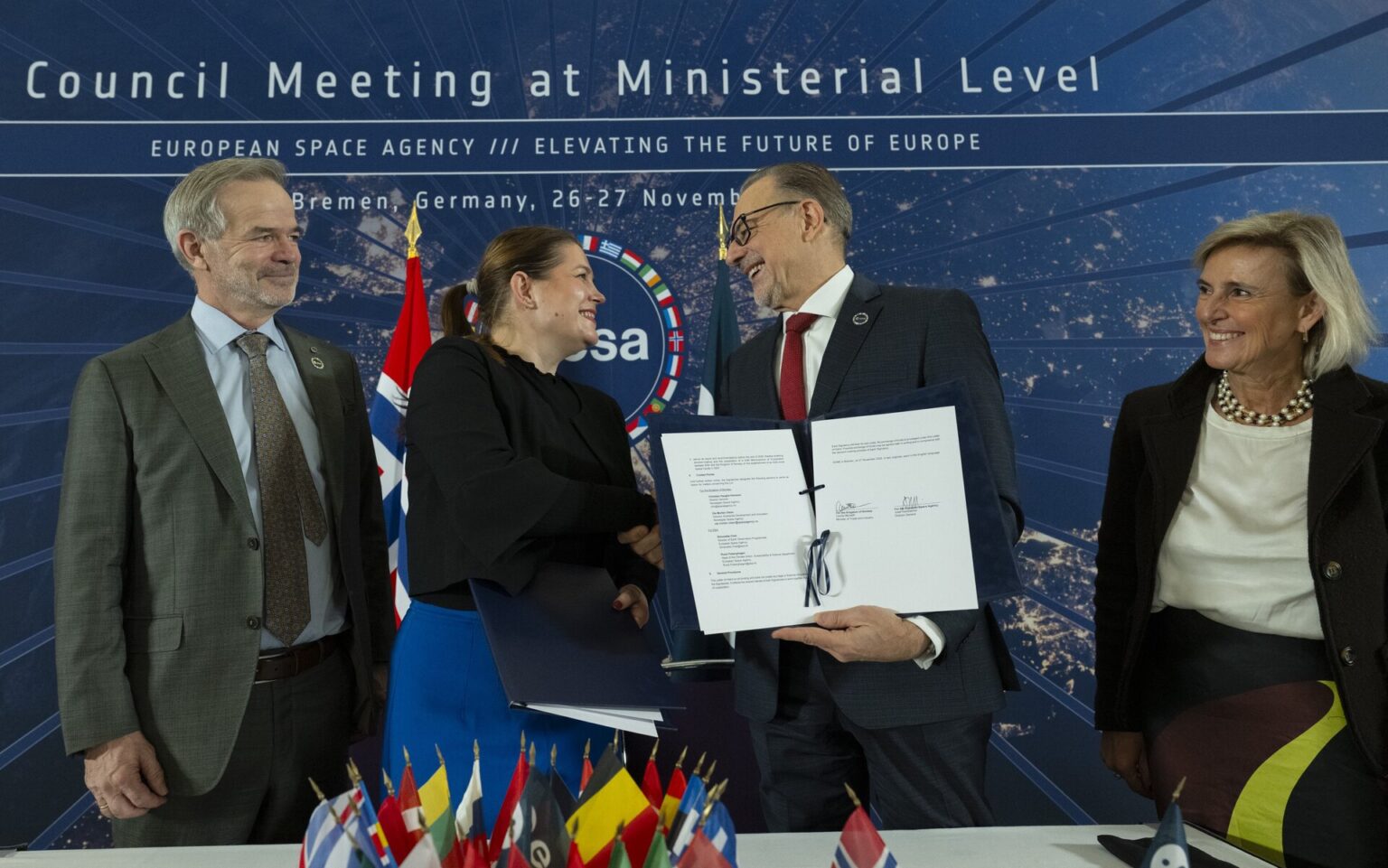
The European Space Agency (ESA) has taken a major step toward expanding its presence in the far north, signing a letter of intent with the Norwegian government to explore the creation of a dedicated Arctic Space Centre in Tromsø. The move signals growing European interest in using space technology to better understand and respond to the rapid transformation of the Arctic.
A Strategic Push Into A Rapidly Changing Region
The Arctic is warming at a rate far beyond the global average, with environmental, economic and geopolitical implications. ESA sees a future centre as a way to boost Europe’s ability to track ice loss, weather systems, and environmental shifts from space, while also supporting navigation, communications and safety services across the high north.
ESA’s Director of Earth Observation, Simonetta Cheli, underscored the stakes, saying: “It is inevitable that the Arctic region faces change – as the whole planet does – but I believe that space can be a positive influence for the environment and the people of the Arctic region.”
Tromsø’s Growing Space Ecosystem
Tromsø is already a northern hub for space activity. It hosts mission operations for the Arctic Weather Satellite (AWS), launched in August of last year to demonstrate how a constellation of polar-orbiting satellites can sharpen short-term forecasting for both the Arctic and the wider world.
The city is also home to the Arctic Council Secretariat, a campus of the Arctic University of Norway, the Norwegian Polar Institute, ESA’s Arctic Φ-lab, and an ESA Business Incubation Centre. Research institutes focused on marine biotechnology, medicine, sustainability and space weather further strengthen the local ecosystem.
Joint Working Group To Shape The Centre
With the letter of intent now signed by Norwegian Minister of Trade and Industry Cecilie Myrseth and ESA Director General Josef Aschbacher, a joint working group will be established to assess the scope and structure of the proposed centre.
The experts will explore potential priorities, governance and a roadmap for development, with findings expected before the end of 2026. Early expectations suggest the centre would likely focus on Earth observation, navigation, and telecommunications, while partnering with organisations across the Arctic.
Norway’s Longstanding Role In ESA
Norway has been a member of ESA since 1987, contributing to a wide range of programmes. Although outside the European Union, it participates in major EU-led space initiatives such as Copernicus and Galileo through its European Economic Area agreement.