
At first sight Robert Golob makes an unlikely Father Christmas, but the Slovenian prime minister has brought some festive cheer to his small Alpine republic with a plan to give every one of its million or so workers a tax-free bonus next month of €639 (£560).
The move, agreed in parliament this month, is backed by a majority of voters and could give a much-needed boost to the former businessman’s hopes of re-election in March. The bonus is equivalent to half the monthly minimum wage of €1,277.
Estimated to cost at least €600 million, it has been attacked by the opposition, criticised by the European Commission and denounced as unaffordable by the overwhelming majority of employers who are having to pick up the tab.
Such complaints are only to be expected, according to Andrej Zorko, head of ZSSS, the largest trade union association in Slovenia. He insists the deal, which will also have to be paid by the government to its own employees in the public sector, is justified.
“People work hard all year and because of that the companies are making profit, and it’s fair that some of that should go to them, too,” he said. “Now, because next year there are elections in Slovenia, the prime minister came up with his proposal, which we accept with both hands.”
Zorko said he planned to use his own bonus to buy presents for his nine-year-old daughter and five-year-son, and for a few days skiing over the border in Austria.
• Can’t ski, won’t ski? 25 of Europe’s most exhilarating snowy breaks
Workers in Slovenia, once part of communist Yugoslavia, have long received summer bonuses equivalent to one month’s salary, payable before the end of June and known as the 13th month’s pay. Taken together, the two bonuses will be worth more than €2,000.
There will also be a €150 winter allowance for pensioners and those paid disability insurance benefits.
Golob, 58, has been in power at the head of a three-party, centre-left coalition since the April 2022 election at which he defeated Ivan Jansa, a populist admirer of Donald Trump.
A former executive of a state-owned energy company that launched green power projects and a one-time competitive white water rafter, Golob had been a relative unknown until he took over a small environmental party that relaunched a few months before the poll as the Freedom Party.
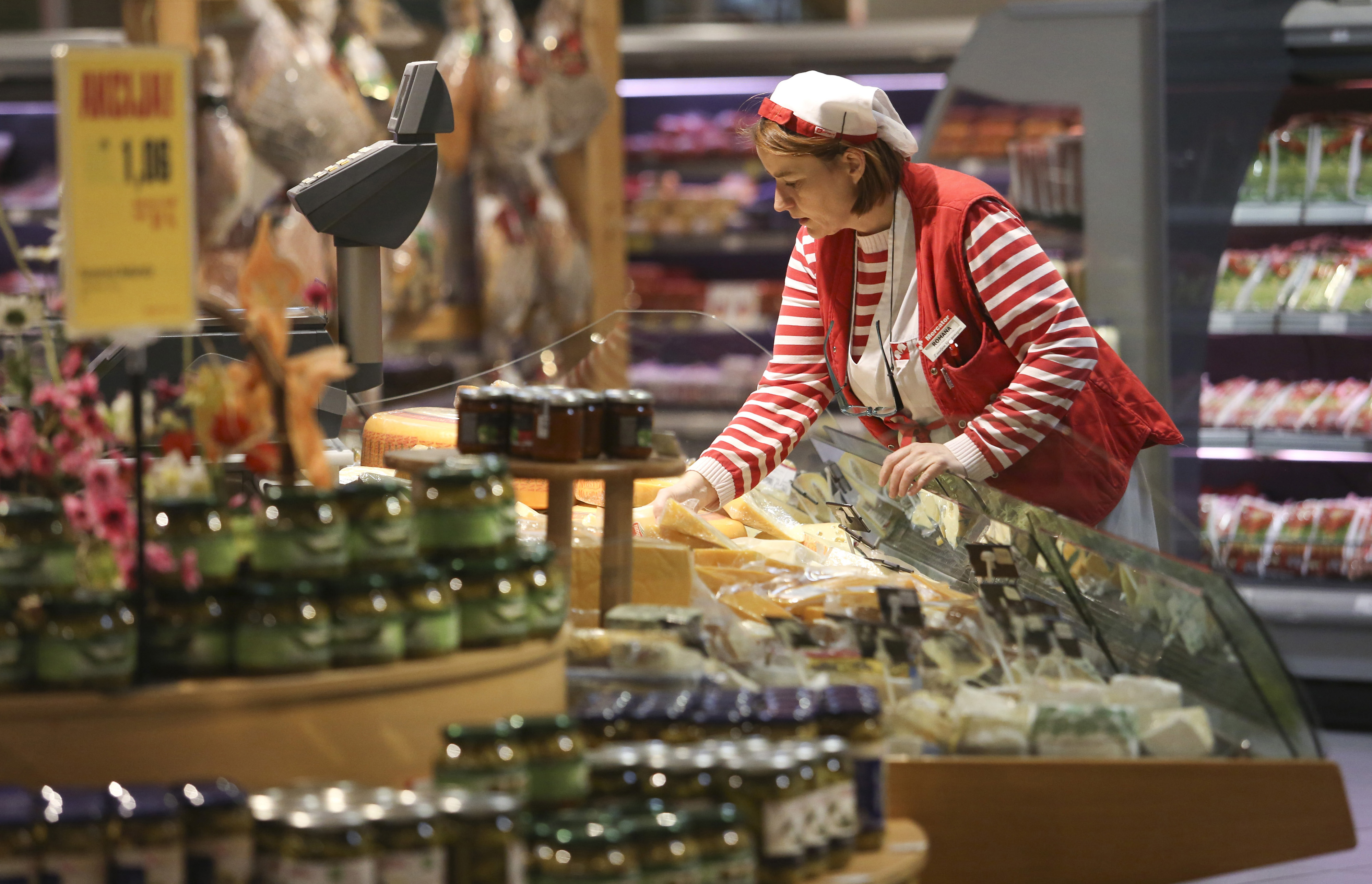
An employee in Christmas colours arranges a display of cheeses in a delicatessen counter in Ljubljana, Slovenia
CHRIS RATCLIFFE/BLOOMBERG VIA GETTY IMAGES
He vowed to take Slovenia back to the political mainstream and was rewarded by voters, who elected his party with 34 per cent of the vote, an astonishing return in Slovenia. Thanks to manufacturing and booming tourism, the country is the most affluent in central and eastern Europe, with GDP per head higher than Spain and close to that of Italy.
Golob’s government has run into choppy waters, however, and support for his party has slumped to 22 per cent, after the inflation and cost of living crisis that followed Russia’s invasion of Ukraine, coupled with a series of scandals. This has left it well behind Jansa’s Slovenian Democratic Party, which is back in the lead on 29 per cent.
The prime minister, clearly in need of a boost, announced the mandatory bonus — or “14th-month pay” — in September, surprising not only employer groups and unions but also his junior coalition partners.
“It’s as clear as day that this is a pre-election sweetener,” complained Jozef Horvat, an MP from the opposition New Slovenia party.
The European Commission has warned the government risks breaking fiscal rules as a result of the giveaway, whose financial implications the EU has estimated as equivalent to as much as 0.3 per cent of GDP.
The winter bonus must be paid by December 18, with some exceptions, especially for companies facing cash flow problems, who will be given until the end of March.
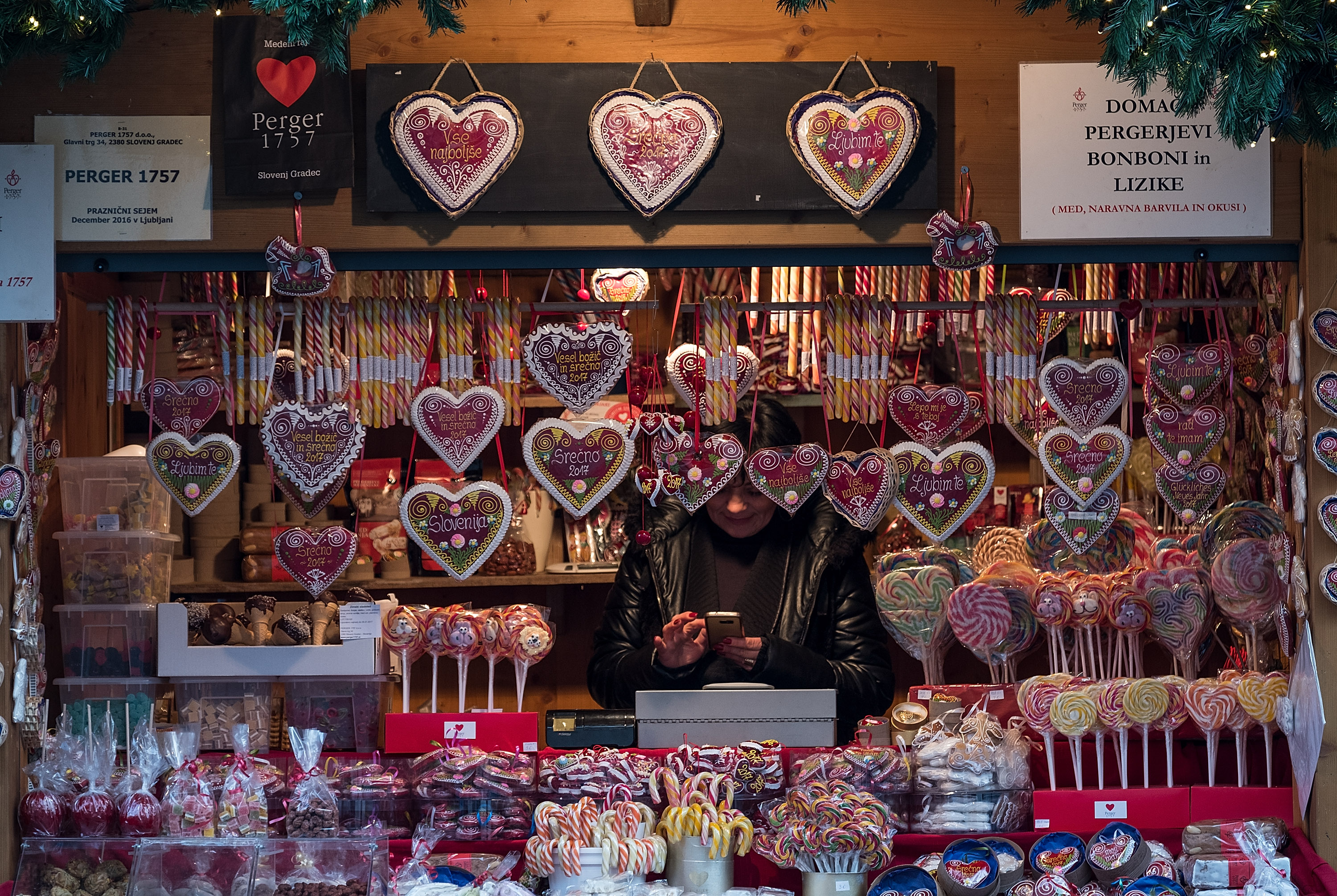
The winter bonus must be paid by December 18, with some exceptions
MARCO SECCHI/GETTY IMAGES
Up to 91 per cent of employers are opposed, according to a poll released last month by the Chamber of Crafts and Entrepreneurship of Slovenia. “The public statements by government representatives that the Christmas bonus is supported by business people have proven to be pure demagogy, even a lie, based on the results of our survey,” said Blaz Cvar, its president.
Their main objection appears to be its obligatory nature: 43 per cent said they paid a bonus last year and 70 per cent pledged to pay one voluntarily if it can be free of tax and social security contributions.
Among them is Peter Bruncic, 49, who owns and runs a small agency specialising in tailor-made travel in Maribor, Slovenia’s second city.
“I have three employees, and for years I have been paying them Christmas bonuses at the end of the year, simply because I felt it was the least I could do for my workers,” he said. “This is the time when everyone gives presents, but it is also the time when money is often scarce, so I support this idea.” It will also be more advantageous because it is tax free.
“Nevertheless, I can imagine that this is not so easy for many others, especially medium-sized companies in Slovenia with a large number of employees, because the regulation came rather unexpectedly,” Bruncic added.
Katja Lendvaj, 46, who teaches at a secondary school in Maribor, is in favour too, and plans to use the money for a short family holiday. But, as an economist by training who used to work in the private sector, she also fears the suddenness of the announcement could prove a financial shock for some firms.
“It would have been better if there had been a sort of soft transition, a transitional period of a few months, so that companies would not now have to take out loans to cover this obligation,” she said.
Additional reporting by Borut Mekina in Ljubljana