
30.11.2025. 08:55h
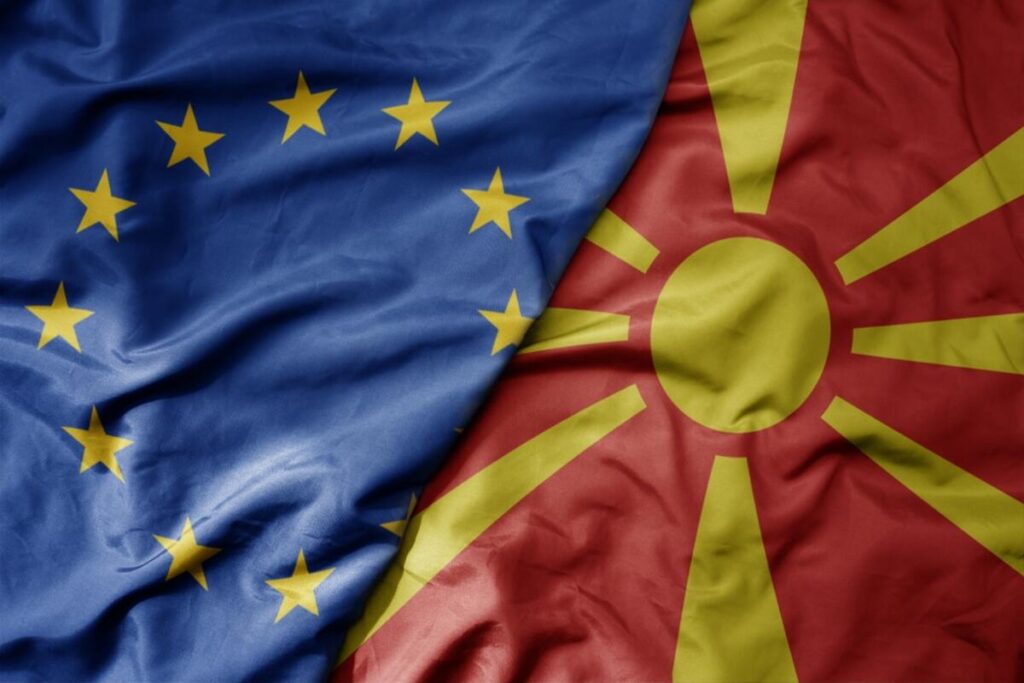
The European Council will once again call on North Macedonia at its summit in December to fulfill its obligation and implement constitutional amendments in order to continue the negotiation process, according to draft conclusions on enlargement, which Radio Free Europe (RFE) has had access to.
They state that the Council welcomes the country’s commitment to European integration and “encourages it to intensify efforts to advance reforms.”
“The Council notes that North Macedonia has not yet completed the constitutional changes it has committed to. The Council confirms its readiness to convene another intergovernmental conference, without further delays or additional political decisions, once North Macedonia has fulfilled this obligation, in accordance with its internal procedures,” the draft conclusion states.
The draft document then states: “The Council is ready to open the first negotiating group as soon as possible, in accordance with the Negotiating Framework.”
EU member states are expected to unanimously adopt the draft conclusions on December 16 in Brussels. They are based on European Commission (EC) reports published earlier in November on the countries’ progress.
In addition to North Macedonia, they also apply to the other five countries of the Western Balkans (Albania, Montenegro, Serbia, Kosovo and Bosnia and Herzegovina), as well as to Ukraine, Moldova and Georgia.
The need for constitutional changes, outlined in the draft conclusions, is a commitment that North Macedonia made in 2022 as a compromise to overcome the dispute with Bulgaria, which had previously vetoed the start of Macedonia’s EU accession negotiations in 2020.
After the compromise was reached, the Macedonian government held an intergovernmental conference with Brussels, and in order to hold a second one, the country committed to, among other things, adding the Bulgarian community to the Preamble of the Constitution. On the other hand, the compromise kept the clear wording on the Macedonian language, while Bulgaria issued a unilateral statement expressing its position on the issue.
“North Macedonia to protect the independence of the judiciary”
In other conclusions concerning North Macedonia, according to the draft document, the Council will emphasize the need for swift and decisive action to meet the criteria from the first cluster, “Core Values”.
According to the document, which RFE/RL has had access to, the country is asked to intensify its efforts and implement reforms “especially in the area of the rule of law”, where the European Commission concluded in its report that no progress had been made in the past year.
“North Macedonia should protect the independence and integrity of the judiciary,” the conclusions state.
This includes reforms, namely the strengthening of the Judicial Council, in line with the 2023 recommendations and the opinion of the Venice Commission.
Like the EC, the Council will also seek to strengthen the fight against corruption and organised crime, according to the proposal, in order to improve results through effective investigations, convictions and asset confiscation in high-level corruption cases.
“The Council calls on North Macedonia to adopt a new Criminal Code in line with EU legislation and international standards,” the draft conclusions state.
The new Criminal Code, which, according to RFE/RL, was announced for the previous period, is expected to be adopted by the Government and submitted to Parliament by the end of the year. Among other things, it is expected to “fix” the amendments from September 2023, when penalties for abuse of official position and authority were reduced, which led to the statute of limitations for dozens of court cases.
Praise for foreign policy
In draft conclusions to be adopted in December, the Council is expected to welcome the country’s alignment with the EU on foreign policy and sanctions. It is also expected to welcome cooperation and border management in cooperation with Frontex.
In relation to other areas, according to the draft, progress is noted in public administration reforms, with an emphasis on continuing modernization and providing the necessary capacities.
It should also call for “further strengthening of fundamental rights, including the rights of persons belonging to minorities, freedom of the media and freedom of expression”.
Countries should use the momentum to progress towards the EU
The European Council will, in its conclusions, as can be seen in the draft document, emphasize the geostrategic importance of the Union’s enlargement, but also that progress must be based on merit and through a credible process.
“The Council calls on all partners to seize the opportunity, seize the momentum and take all necessary steps to accelerate their progress on the path towards the EU. In an increasingly unstable geopolitical context, with Russian aggression against Ukraine unfolding on our continent, the EU remains an anchor of peace, prosperity and security,” the draft conclusions stress.
At the same time, it is emphasized that in addition to countries aspiring to EU membership, the Union itself needs to implement internal reforms.
The EU’s ability to absorb new members, while maintaining its ability to function and develop effectively, is an important factor in the general interest of both the Union and the candidates, the draft emphasizes.
“Roaming like at home” in 2026.
The document with the proposed draft conclusions indicates the abolition of roaming for Ukraine and Moldova from January 1, 2026, while emphasizing that the Western Balkan countries should receive the same regime during 2026.
“Ukraine and Moldova will join the ‘Roam like home’ programme from 1 January 2026, allowing their citizens to make calls to, from and within the EU and the European Economic Area and use mobile data at no extra cost. Partners from the Western Balkans will do the same in 2026. The Council calls on the Commission to accelerate work towards this goal,” the conclusions state.
The abolition of roaming with the EU has been announced for a long time. North Macedonia’s Foreign Minister Timčo Mucunski announced such a decision for the beginning of 2026, during a meeting with European Commissioner for Enlargement Marta Kos in August this year.
News