
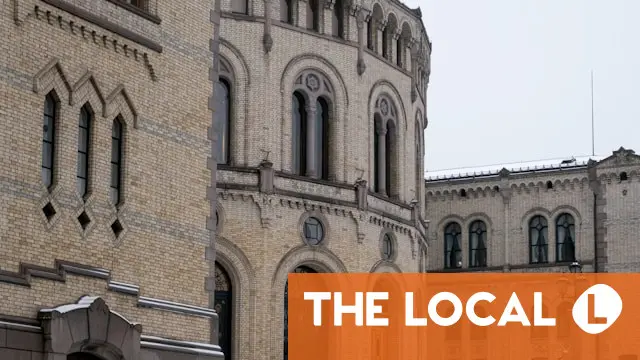
With just days left until the final vote, Norway’s government is scrambling to secure a majority for the 2026 state budget after negotiations with key allies collapsed over the weekend.
The deadline for the recommendation for next year’s state budget passed on Sunday night without a clear majority in parliament.
That came after two of Labour’s partners in the budget, the Socialist Left Party (Sosialistisk Venstreparti, SV) and the Green Party (Miljøpartiet De Grønne, MDG), withdrew from the agreement over the weekend.
The Red Party and Centre Party have agreed with Labour on a budget deal. This means the version that was presented on Saturday only has the support of three of the five budget “partners.”
The minority Labour government and other four parties on the left only have a small majority over the opposition, meaning all five of those parties must agree on a budget for it to pass through parliament.
Despite the turmoil, the governing Labour Party has denied that the situation has descended into chaos.
“We have to continue working to secure a majority for this budget by Friday. Therefore, we will have talks with SV and MDG,” Tuva Moflag, Ap’s financial policy spokesperson, told broadcaster NRK on Monday morning. “We are not finished until the budget has a majority.”
What happened?
For the last few weeks, the minority government, led by the Labour Party and the Centre Party, has been trying to reach an agreement with three supporting parties to pass the state budget for 2026: SV, the Red Party, and the Green Party (MDG).
The negotiations have been characterised by major disagreements, particularly related to oil exploration, climate change, and Norway’s sovereign wealth fund, also known as the Oil Fund (Oljefondet).
On Saturday, the Labour Party, the Centre Party, and the Red Party reached an agreement. However, it is not enough to pass parliament as without the backing of MDG or SV, the government lacks a majority.
The crisis deepened when the latter two parties walked out of the negotiations. MDG withdrew, stating that the climate policy in the budget proposal was too weak and would lead to increased emissions. SV declared they could not back the proposal and insisted on being heard on issues related to the Oil Fund’s investments in Israel and Gaza.
Advertisement
Red party leader Marie Sneve Martinussen said she was happy with the current deal but warned against “opening the box again,” fearing that the welfare and environmental wins they secured could be lost if the government tries to appease the other parties too much.
Meanwhile, the opposition Conservative Party and Progress Party have both harshly criticised the government, with Progress leader Sylvi Listhaug stating Labour had “failed to deliver on its core message.”
What happens next?
Labour has summoned SV and MDG for fresh talks on Monday at the parliamentary leader level, meaning senior figures from all parties will be involced
If the smaller parties do not back down, Prime Minister Jonas Gahr Støre faces a difficult choice before a final vote on Friday, December 5th.
The worst-case scenario could see him posing a “cabinet question” (kabinettsspørsmål). This is a political ultimatum where the government threatens to resign if the parliament does not vote for its budget, essentially forcing the smaller parties to choose between the budget or a government collapse.
If he loses, the government resigns, plunging Norway into a political crisis.
Advertisement
What is in the deal so far?
Despite lacking a majority, the current proposal agreed between Labour, Red and the Centre Party includes several measures that will affect life in Norway.
- Public Transport: A study will be launched into the possibility of a national monthly pass for public transport. Additionally, 1.1 billion kroner will be allocated to counties to strengthen local transport services.
- Health: 500 million kroner allocated to strengthen hospital finances.
- Dental Health: Funding for Norway’s Health Economics Administration (Helfo) will increase by 315.7 million kroner. This funding will help reduce patients’ copayments (egenandel) by 10 per cent, aiming to improve dental health.
- Environment: A total ban on seabed mining for the entire parliamentary period.
- Taxes: No increase in petrol and diesel taxes (a key demand from the Centre Party), and a halt to a new tax on artificial fertilisers.
- Municipalities: An extra 3 billion kroner to strengthen municipality economies.
- Disability Benefits: The tax-free income limit for those on disability benefits (uføre) who want to work will be increased to approximately 130,000 kroner.
- Kindergartens: 600 million kroner allocated for peak staffing. Families to pay a maximum of 1,200 kroner per month for a kindergarten (barnehage) place, reduced to 700 kroner per month in the most remote municipalities.
- International: A 1 billion krone aid package to Gaza.