
Ukraine says it has begun shooting down Russia’s newest high-speed attack drones with low-cost interceptors, marking an early success against a system many analysts feared would outpace the country’s defenses.
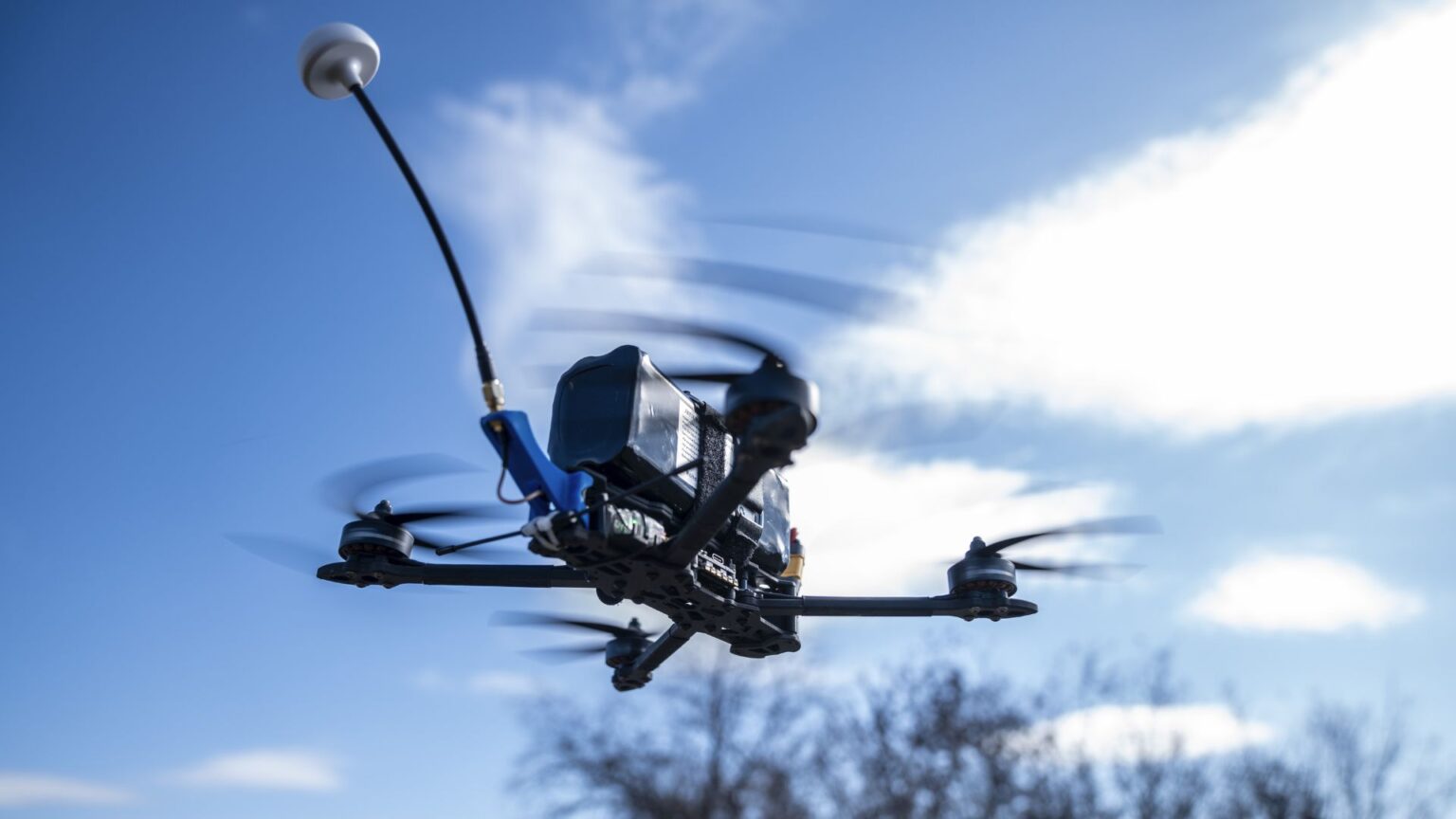
Serhii Sternenko, who leads a volunteer group that supplies drones to Ukrainian frontline units, said Sunday that a domestically built interceptor, the Sting, had destroyed several of Russia’s new Geran-3 drones.
He called the event “a bit of a historic achievement”. He posted an image on Telegram appearing to show the rear view of a fast-moving jet-powered drone, suggesting the footage was captured by an interceptor able to match its speed.
Russia’s new drone
The claim comes as Russia steps up its use of the Geran-3, a turbojet-powered loitering munition modeled after Iran’s Shahed-238. Ukraine’s General Staff said in a recent briefing that Russia has already launched 138 of the new drones in recent weeks.
The Geran-3 represents a significant upgrade in speed and survivability over the propeller-driven Geran-2, the Shahed-136 derivative that Moscow has used in large numbers throughout the war.
The Geran-3 is estimated to reach 230 mph, roughly double the Geran-2’s cruising speed of around 115 mph, making it harder to hit with small-arms fire or standard interceptor drones.
Russia relies heavily on these mass-produced systems to bombard Ukrainian cities and infrastructure, often launching them in large swarms alongside decoys to saturate air defenses.
Ukrainian officials estimate the Geran-2 can cost as little as $20,000, forcing Kyiv to find cheaper ways to counter them without depleting its supply of expensive air-defense missiles.
To fill that gap, Ukrainian engineers and volunteers have rushed to develop fast, inexpensive interceptor drones. Many are modified first-person-view platforms built to ram or detonate near incoming Russian drones.
They generally cost between $2,000 and $6,000, making them a financially viable option for routine air defense.
Ukraine’s interceptor
The Sting, produced by the Ukrainian firm Wild Hornets, is one of the fastest and most widely used. Designed to reach roughly 215 mph, the Sting was built specifically to chase down the Geran-2.
But the arrival of the jet-powered Geran-3 raised concerns that Ukraine’s interceptor fleet could soon be outrun, forcing the country back into the costly cycle of using high-end air-defense weapons against cheap targets.
Ukraine’s General Staff said most of the 138 Geran-3s launched recently had been destroyed, though it did not specify which systems were responsible.
Military officers have said Russia appears to be field-testing the new drones in limited quantities, suggesting the Kremlin has not yet scaled production to the levels reached with the Geran-2, which Russian factories now produce by the thousands each month.
Even in small numbers, the Geran-3 presents a challenge. The drone is believed to carry improved satellite navigation technology and features designed to withstand jamming, making it more resistant to Ukraine’s electronic-warfare units.
Ukrainian officials say they have anticipated this shift. Pavlo Palisa, deputy head of the presidential office, said in September that Kyiv had developed drones “capable of fighting the Shaheds with jet engines,” though he offered no specifics.
For now, the reported Sting intercepts suggest Ukraine may have found a cost-effective tool to blunt Russia’s newest long-range strike system.
Whether these interceptors can keep pace if Moscow moves to full-scale production of the Geran-3 remains a critical question for Ukraine’s air-defense strategy as winter approaches.