
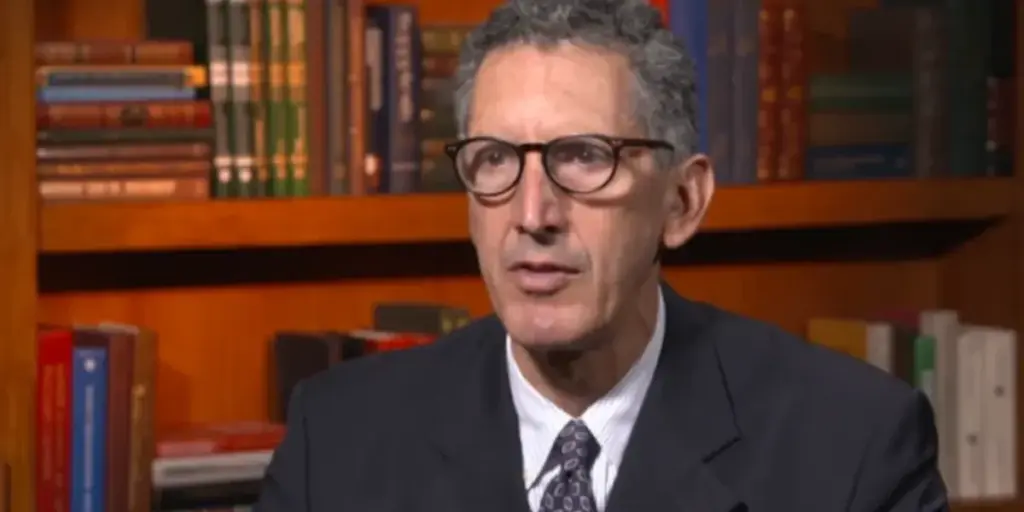
Edward P. Joseph, a lecturer at Johns Hopkins University in the US and an expert on conflict management, has said that Serbia’s eventual membership in NATO would constitute “the Balkan equivalent of the sinking of the Moskva”, describing Belgrade as the “warship” through which Russia projects its influence in the Balkans.
In an interview for REL said that if Serbia were to move closer to NATO, this would be a strategic blow to Moscow, but also to Beijing, who see Belgrade as the main platform of influence in the region.
The expert asked why Serbia would accept such a step, despite its great internal sympathy for Russia.
He listed several strong reasons that, according to him, would make it difficult for President Aleksandar Vucic to reject a potential American offer – especially if it comes from former President Donald Trump.
First, Trump enjoys great popularity in Serbia and is seen as a figure of immense influence.
The expert recalled that during his first term, Trump tried to mediate normalization between Kosovo and Serbia, so recognizing the region would not be something new for his administration.
Second, Vučić is politically weakened. Protests against the government have been ongoing for a year, and according to the expert, accepting such a plan would completely change the internal dynamics, shifting the focus from the protests to a “historic development.”
He added that, although part of the pro-Russian public would consider this a betrayal, a large part of the opposition would support it, since NATO membership means reforms, rapprochement with the EU, and an end to the “two chairs” policy.
The expert emphasized that Serbia is already surrounded by NATO member states, such as Bulgaria, Romania, Croatia and Montenegro, while Bosnia and Herzegovina has also expressed readiness for membership and Kosovo wants to open this path.
He recalled that Serbia has stable relations with NATO and the US and that military cooperation is consolidated.
“If you were to ask Serbian generals privately, most would want NATO membership,” he said.
In the rest of the analysis, the expert also focused on the international recognition of Kosovo.
According to him, Greece is expected to recognize Kosovo as soon as the statute of the Association of Serb-majority Municipalities is signed, subsequently easing the path for Romania, Slovakia and Spain.
He emphasized that these states are not asked for immediate recognition, but that they not block Kosovo’s membership in NATO.
According to the analysis, within three years the situation in the Balkans could change radically, bringing less tension and more economic and political cooperation in the region./REL.