
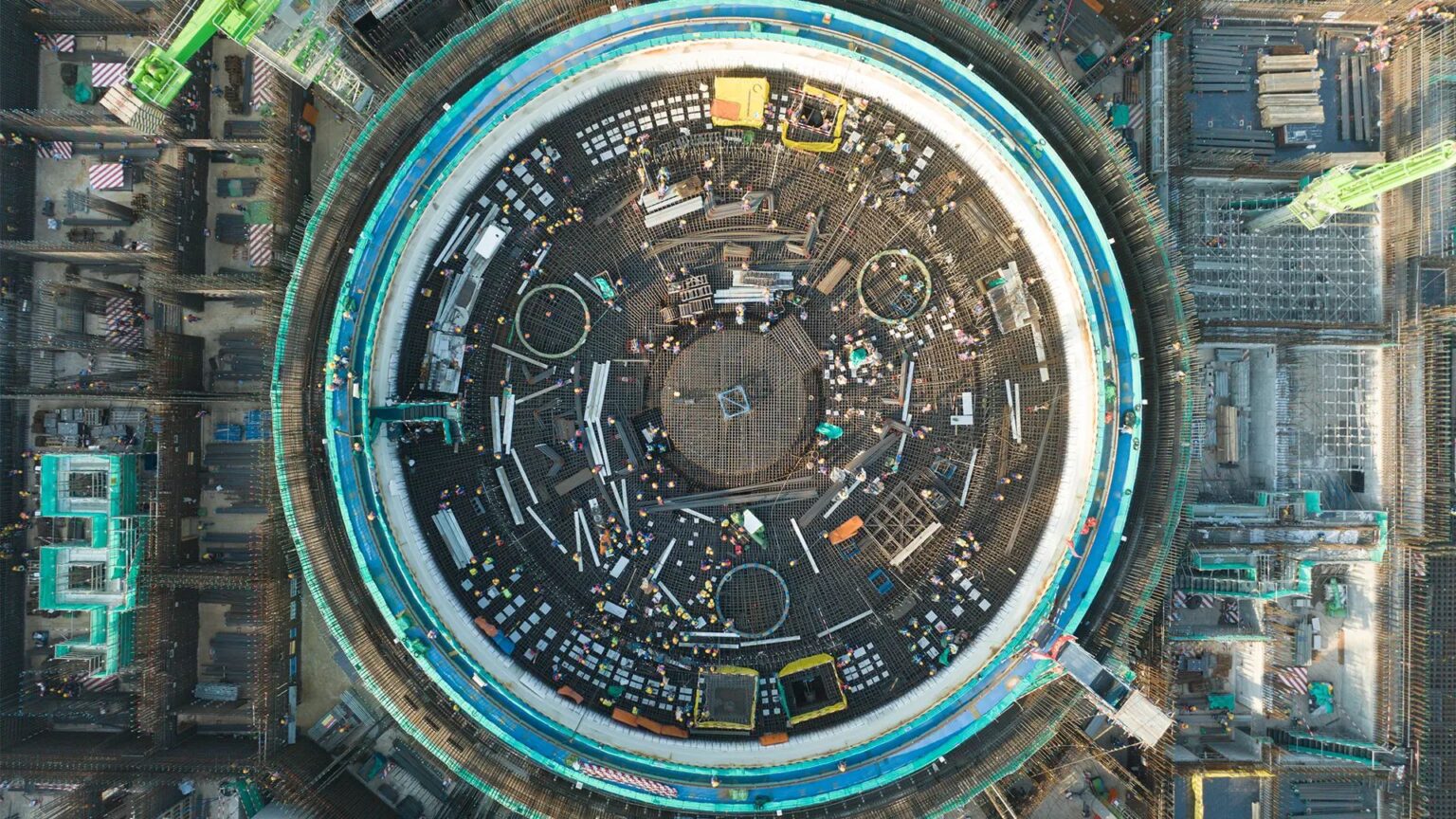
German researchers have adapted a technology originally designed for space telescopes to make detecting radioactive contamination in dismantled nuclear power plants faster, more precise, and far more efficient.
Led by Thomas Siegert, PhD, a nuclear physicist and space expert from the Chair of Astronomy at the Julius Maximilian University of Würzburg (JMU), the scientists collaborated with several industry and academic partners to develop the novel software.
The team’s project, scintLaCHARM, was supported by the German Federal Ministry of Research, Technology, and Space (BMFTR) under the FORKA program, with nearly USD 2.3 million (EUR 2 million) in funding.
The novel method could significantly accelerate the long and costly process of decommissioning nuclear plants. It also reduces workers’ exposure risks and protects surrounding communities.
Precision from space
Before a nuclear plant can be decommissioned, every surface must be checked for radioactive contamination. This is particularly important for areas near the reactor, where radioactive particles can be absorbed into the building fabric.
However, the process is slow, expensive, and dependent on bulky semiconductor detectors that must be cooled to -328 degrees Fahrenheit (-200 degrees Celsius) using liquid nitrogen. These can measure a few square meters per room within an hour before moving on to the next measuring point.
“If you imagine this for an entire room and then for a whole hall-sized facility, you realise how inefficient and time-consuming this method is,” Siegert stated.
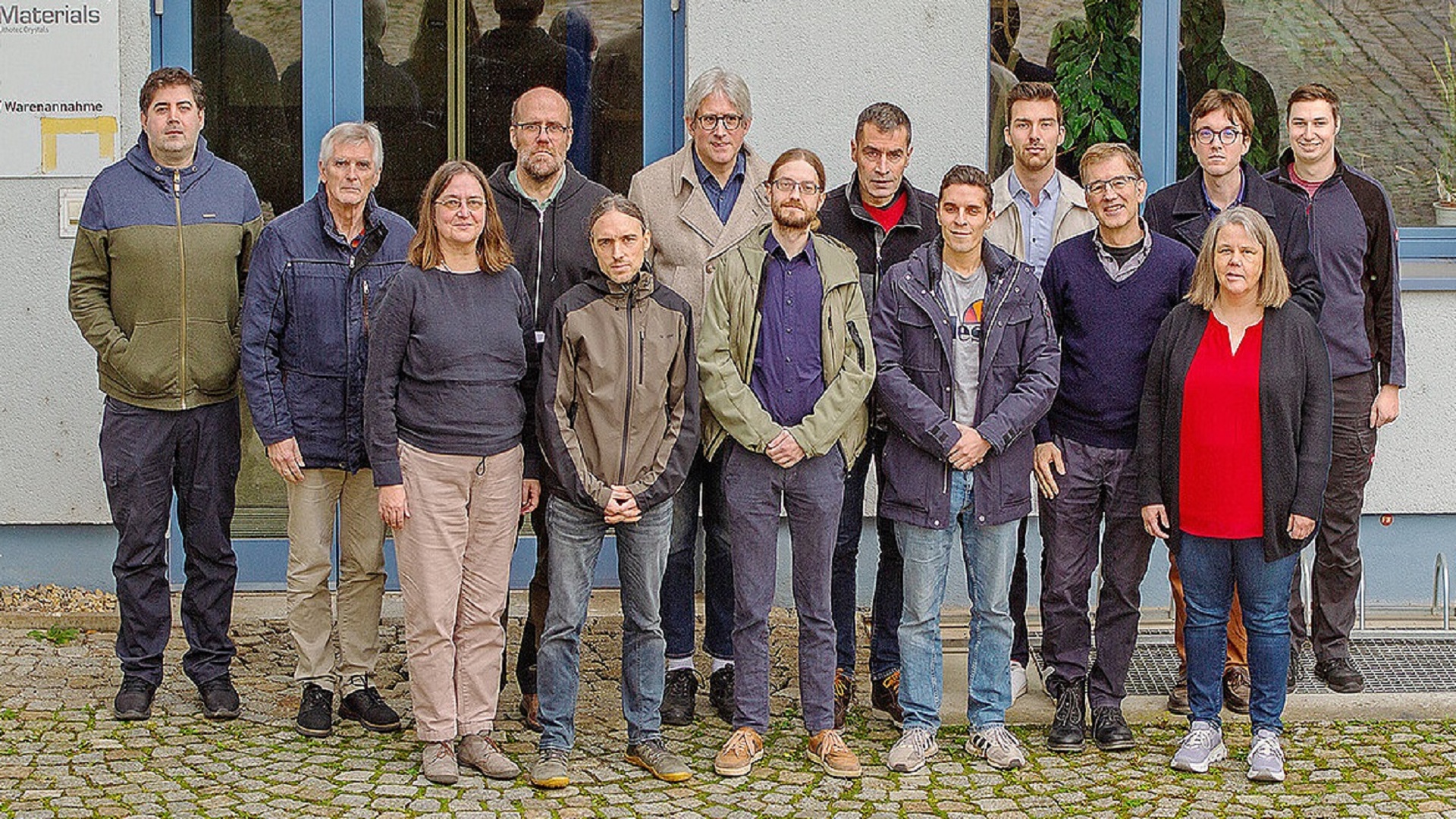 The team behind the joint project scintLaCHARM. Image credit: Thoralf Müller / Hellma Materials GmbH
To address the challenge, the research team developed an alternative technique based on scintillation detectors, lightweight crystals used for decades in orbiting instruments to detect radioactive elements in space.
Siegert said they engineered satellite-grade technology into cameras capable of mapping contamination within nuclear facilities. The cameras use multiple scintillation crystals that light up when gamma radiation from radioactive decay strikes them.
“If this causes more than one crystal to light up, i.e., if it scatters from one detector to another, the direction and energy of the radiation can be determined,” Siegert pointed out.
Sharper radiation insights
As per Siegert, all measured entry and deflection angles between the crystals indicate what radioactive material is involved and where it is located. “Particles of the same element always have the same energy, which means they can be clearly assigned,” he added.
After several hours of detections, supported by supercomputer processing, the camera produces a detailed 3D image that highlights all radiation-contaminated areas in the room. This allows contaminated and uncontaminated materials to be reliably distinguished and broken down.
The software is also supported by Uwe Gerd Oberlack, PhD, a physics professor at Johannes Gutenberg University Mainz, who is part of NASA’s COSI gamma-ray telescope mission.
The researchers now intend to integrate AI into the system. They believe it could help separate natural background radiation from true contamination, boosting the overall accuracy of the process.
“Very weak natural radioactive radiation exists everywhere on Earth,” Siegert said in a press release. “It varies in intensity depending on the location. It can interfere with the measurements as background noise.”