Canada will raise concerns about NATO’s approach to Arctic threats at a meeting in Brussels on Wednesday, Foreign Minister Anita Anand said.
“We see infrastructure moving further and further north and the geopolitical environment becoming more and more challenging,” Anand said in an interview with Bloomberg News. “We will have a further discussion about the way in which NATO will be able to take into account emerging threats, including in the Arctic.”
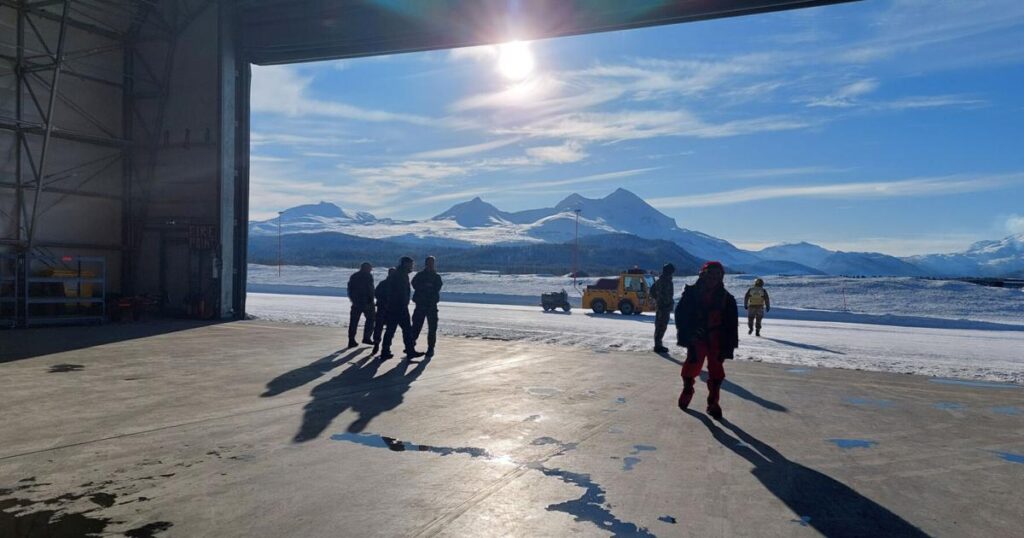
Once considered a low-tension zone, the Arctic is now at the heart of geopolitical tensions as melting ice reshapes sea routes and Russia and China vie for control.
NATO has also expanded in the Arctic, with Finland joining in 2023 and Sweden in 2024. Seven of eight Arctic countries are now part of the alliance and fall under its Article 5 collective security guarantee.
Anders Fogh Rasmussen, NATO’s former secretary general, previously told Bloomberg that the alliance should take on a stronger role in the Arctic, developing a specific strategy with concrete capability targets.
NATO’s Arctic nations want their regional defense contributions acknowledged in these targets, which outline the troops and equipment each member must offer toward the alliance’s shared goals.
Anand said she has spoken with NATO Secretary General Mark Rutte about how the Arctic features in the alliance’s spending goals and invited him to visit the Canadian far north. She will also discuss the matter when NATO foreign ministers gather on Wednesday.
“It couldn’t be more important at a moment where we’re putting C$80 billion ($57.2 billion) into Canadian defense commitments to reach 2% this year and to reach 5% by 2035,” she said. “Much of our expenditures is going to take place in the Arctic. And this means ports, this means roads, this means airports.”
At NATO’s last annual summit, allies committed to spending 3.5% of their GDP on defense and an extra 1.5% on defense-adjacent projects like infrastructure and cybersecurity.
Finland, Sweden, Denmark, Norway, Iceland and the US share Canada’s concerns about the Arctic, Anand said.