
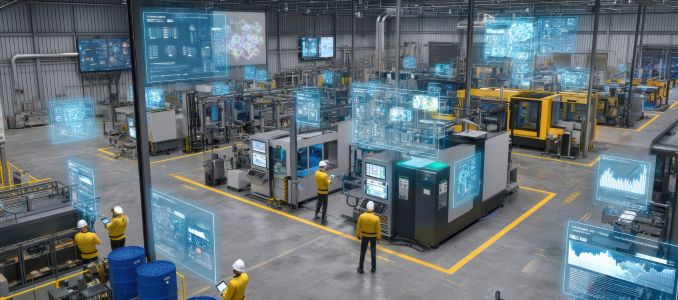
AI and Smart Manufacturing Technologies Aim to Reduce Injuries on Production Floors
As manufacturing injuries remain high, facilities are turning to AI, smart sensors, predictive maintenance and wearables to detect hazards faster and prevent common production-floor incidents.
The emergency siren sounds too often on the production floor. Accidents are distressing for everyone, with many knock-on effects that are felt beyond the worker who suffered an injury.
Safety managers dread reporting high numbers of injuries to their team. It erodes trust, lowers team morale, leads to downtime, and most likely a lawsuit, too. Some cases are particularly difficult to process because they were preventable in hindsight.
The most common injuries sustained on the production floor
OSHA data reveals the 15 most common injuries are:
- Back Injuries and strains
- Cuts and lacerations
- Slips, trips, and falls
- Struck by an object
- Repetitive strain injuries
- Machine entanglement
- Burns (thermal/chemical)
- Eye injuries
- Hearing damage
- Forklift accidents
- Electrical shock
- Hand/Finger crush
- Chemical exposure
- Falls from height
- Heat stress.
While the manufacturing industry consistently sits at the top for workplace injuries, there are reasons to be optimistic about the future. The number of recorded injuries declined from 396,800 in 2022 to 355,800 cases in 2023. Additionally, increased digitization on the production floor is expected to help decrease the number of accidents even further.
The rise of smart manufacturing
Several technologies, including Artificial Intelligence (AI), the Internet of Things (IoT), cloud computing, and automation, form the term “smart manufacturing.” These technologies have been around for years, but the level of integration continues to improve. Smart manufacturing companies stand to improve productivity, reduce waste, product quality and safety when smart systems work together.
AI has quickly become indispensable in manufacturing facilities, especially for its impact on safety. Industry-leading AI security products have an extraordinary capability to spot patterns, which makes them effective at detecting anomalies that indicate danger.
How manufacturers are using AI to improve safety: