
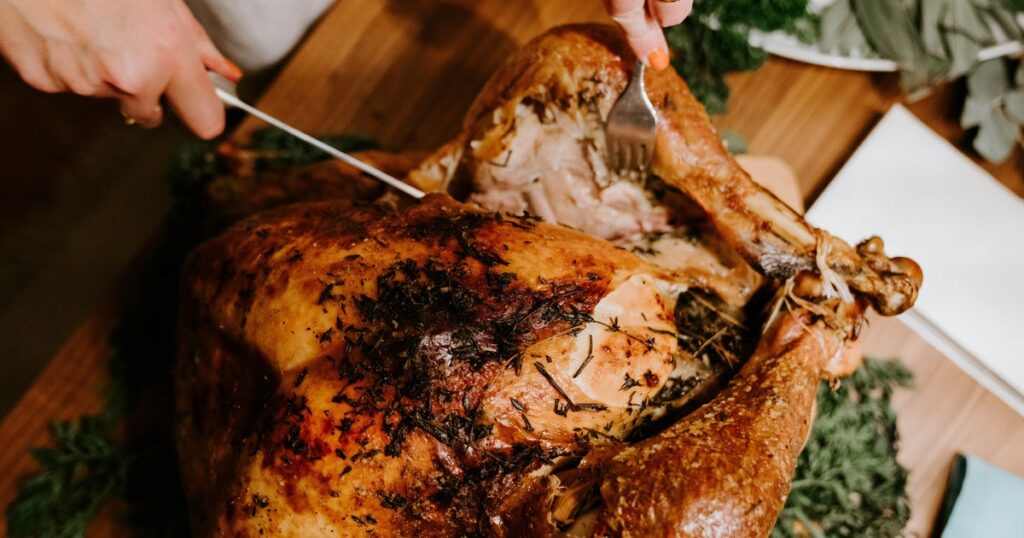
Generally, I agree with Nigella Lawson about festive food: in her 1995 Vogue column, she wrote, “There is nothing worse than going out for Christmas lunch and finding someone’s done something interesting.”
Too right. I want pigs in blankets, slightly stodgy stuffing, glossy gravy, and perfect roast potatoes, all made in the most predictable ways possible.
With one notable exception – I never cook a turkey, because 1) our household is pretty small for the massive bird, and 2) I’ve always found it a little dry.
But speaking to HuffPost UK after working with Smooth Spins Casino, former royal chef Darren McGrady said the former issue is pretty easy to resolve.
Here, he shared his secrets to juicy, flavourful turkey.
1) Start the turkey on a high heat
If you want truly crispy skin, McGrady said, “start the turkey off on a high heat to caramelise it”.
Beginning with scorching temperatures (he recommends 220°C for the first half hour) encourages the Maillard reaction, which makes all meat brown and crispy.
It’s a little like searing the beef in a scorching pan before enclosing it in pastry for a beef Wellington – the protein will stay soft and ‘crust’-less otherwise.
2) Drench your turkey in melted butter
Anthony Bourdain was right: all the best cooks know that butter is key to a truly luxurious dinner.
“There are so many different techniques, but I do agree with rubbing it with melted butter on the whole turkey, then seasoning it with salt,” he told us.
“Any butter will do, like Kerrygold butter. Salted butter and a little bit of extra salt on top of the bird.”
3) Don’t over-season your turkey
Though I’ve always found turkey to be a little bland, McGrady doesn’t think the answer lies in endless mixes and dry rubs.
“I’m a salt-and-pepper turkey fan, rather than seasoning it with a whole lot of herbs and spices,” he said.
“I think the seasoning should come through the stuffing and the gravy.”
4) Add foil to the turkey halfway through cooking
Want to avoid that dry breast, undercooked leg problem?
“Start it off on a high temperature, around 220°C, give it half an hour, then reduce the temperature and let it cook,” he said.
“Three-quarters of the way through, I stick some foil over the breast so the heat reflects off that aluminium foil, and the legs get to cook a bit more.”