
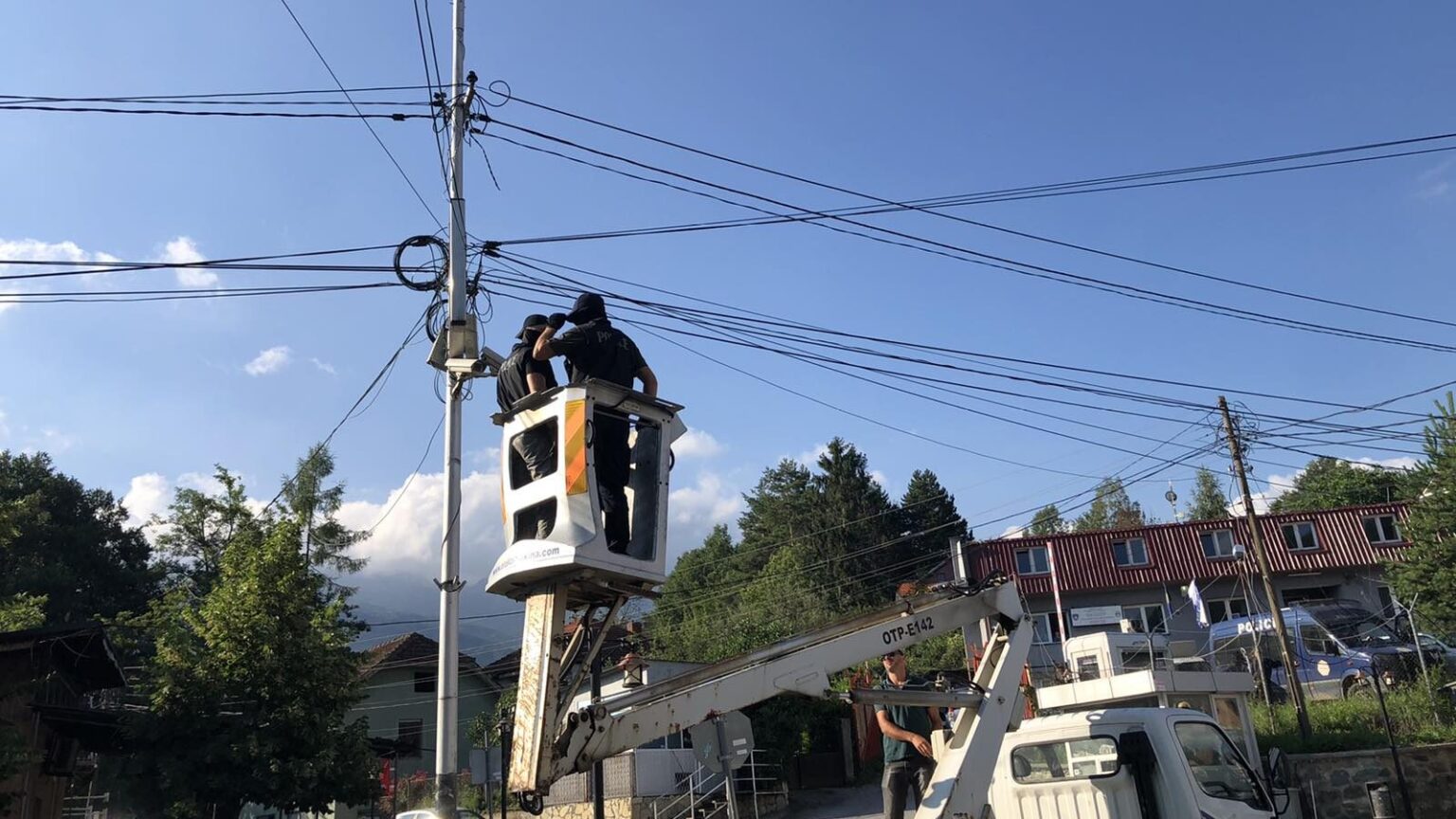
Across the Western Balkans, surveillance has increasingly shifted toward state-centric systems, combining large-scale monitoring with weak transparency and limited oversight.
In Serbia, for example, The Guardian reported in December 2024 that authorities had deployed Israeli-made spyware against activists and journalists.
Albania’s ‘Smart City’ project doubled in cost while expanding its surveillance reach without public explanation, according to a 2025 report by Tirana Times. BIRN’s Surveillance and Censorship in the Western Balkans report described these developments as part of a broader regional trend in which fragile democracies adopt powerful surveillance tools with few protections against misuse.
Kosovo is in a different position: the police remain the only authority legally permitted to monitor public space; the IPA has not registered any complaints claiming unlawful monitoring by the police; and when municipalities, including in the capital, tried to install cameras in public spaces, the IPA ordered them to suspend their use.
These actions reflect a notable distinction: Kosovo has not pursued centralised, state-led surveillance programmes of the sort emerging elsewhere in the region. Instead, the most significant risks stem from dispersed, unregulated practices by private actors, businesses, and individuals.
In this sense, most of Kosovo’s current risks come from dispersed, bottom-up practices rather than centralised systems.
Surveillance is especially problematic in northern Kosovo, where political tensions shape both its use and its impact. Here, surveillance carries a distinctly political dimension, with installations perceived as tools of intimidation rather than security.
New vulnerabilities
Kosovo is currently undergoing a wider digitalisation of public services, a process that brings both opportunities and new vulnerabilities.
As digital systems expand, so does the possibility that surveillance technologies such as automated CCTV analytics or facial recognition could be integrated into institutional workflows. Regional trends show how quickly such tools can be misused, such as in Serbia and Albania.
Civil society activists warn that these risks are likely to intensify.
Adison Gara, programme director at the Institute for Technology and Society, noted that surveillance by citizens and businesses will grow as equipment becomes cheaper and “smart” features more accessible.
Gara emphasized that both public and private institutions have neglected cybersecurity, leaving systems exposed.
“Unless more resources are directed toward cybersecurity, privacy will continue to be infringed, not because of malicious intent alone, but because the infrastructure itself is insecure,” said Gara.
Mexhide Demolli-Nimani of Levizja FOL said transparency must improve if these risks are to be contained.
“Institutions should publish the locations of cameras, explain their purpose and retention periods, conduct privacy impact assessments, and report regularly to the public and the Assembly,” she said.
Preventing Kosovo from drifting toward the state-centric surveillance model emerging elsewhere in the region requires firm and clearly defined safeguards: public-space monitoring must remain exclusively with the police, but under strict legal limits, transparent oversight, and narrow, well-justified purposes to prevent overreach; as digital public services expand, privacy protections must be built into every new system from the start – not added later to contain emerging risks; and institutions and businesses must recognise that surveillance is a regulated activity, not an informal security measure, and ensure that cameras are used only when necessary, proportionate, and clearly documented.
Above all, Kosovo needs real investment in cybersecurity. Without secure infrastructure, even basic cameras become points of vulnerability, exposing citizens to intrusion and eroding trust in digital systems.
Atdhe Lila is a legal researcher and consultant specialising in data protection, technology governance and digital rights in Kosovo.
The opinions expressed are those of the author and do not necessarily reflect the views of BIRN.