
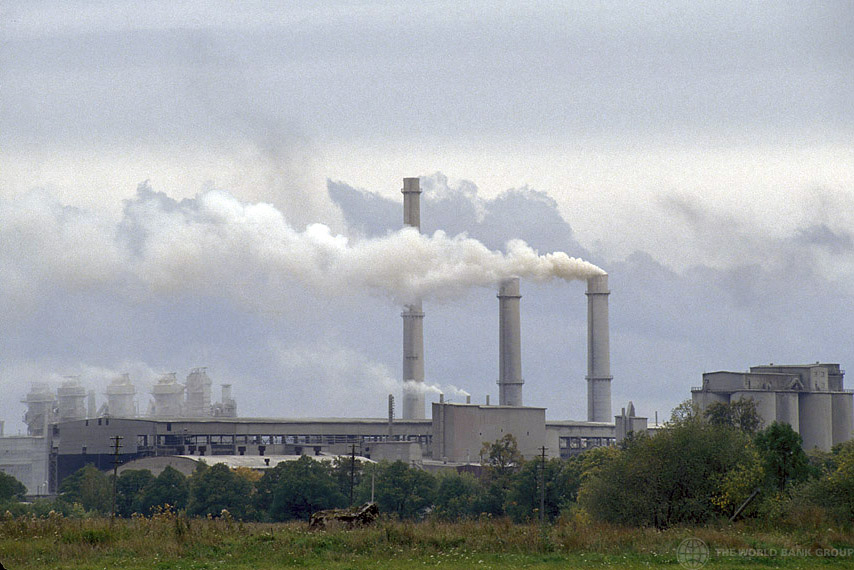
The U.S Environmental Protection Agency (EPA) rolled back regulations on air polluters twice in the past week by exempting steel plants from rules governing coal-fired smokestacks and by asking a federal court to drop the 2024 improvements to the National Ambient Air Quality Standards for fine particles of soot.
“Coal fired power plants nearly destroyed the Adirondack Park’s forests, lakes and ponds with acid rain,” said Adirondack Council Clean Air Specialist and Director of Communications John F. Sheehan. “Things are starting to get better here after 30 years of pollution reductions. We don’t want to undo this win and once again lose trees and fish.”
“The 2024 soot standards were 25% better at protecting public health than the old standard, which now goes back into effect,” Sheehan said. “Rolling back National Ambient Air Quality Standards undermines public health and safety and will have lasting economic impacts for the country. The nation saves $20 in public health costs for every dollar spent cutting air pollution such as soot, ozone and sulfur dioxide.”
The executive order issued on Nov. 21 proclaimed that steel makers would be exempt from Biden-era standards that were designed to prevent future pollution increases at all coal-fired smokestacks. All of the steel plants exempted were already meeting the new standards.
The EPA filed a motion in the U.S. District Court in Washington, DC, saying it doesn’t intend to enforce the updated national soot standards. In 2024, the EPA reduced the allowable levels of soot 2.5 microns and larger from 12 micrograms per liter to 9. Several states and industries sued the EPA to overturn the rule. Instead, the EPA said it would stop enforcing it.
Founded in 1975, the Adirondack Council is a privately funded, not-for-profit organization committed to protecting the ecological integrity and wild character of the Adirondack Park. Its work focuses on public education, advocacy, environmental monitoring and legal action when necessary.
The park contains one of the largest intact temperate forests in the world and is home to approximately 130,000 year-round residents. The council advances its mission through research, education, advocacy and legal action. It envisions an Adirondack Park with clean air and water, core wilderness areas, working forests and farms and inclusive, thriving communities.