
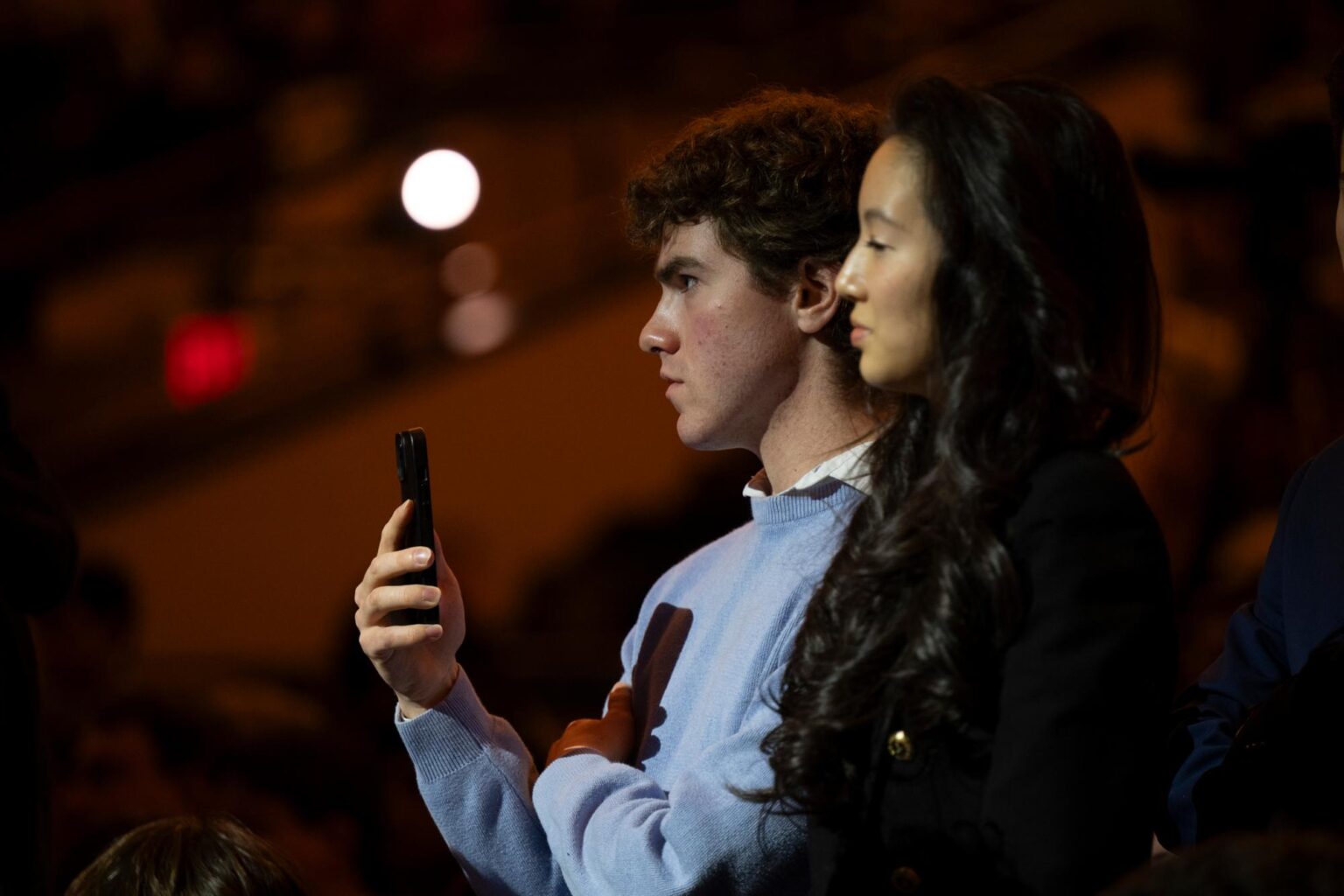
Former Student Government Association President Ethan Fitzgerald launched a mental health policy advocacy project that mobilizes GW students to lobby members of Congress for legislation expanding and modernizing mental-health resources on college campuses.
Leaders of Students for Bipartisan Mental Health Reform said they are identifying existing federal proposals with broad cross-party backing that would strengthen mental-health support for college students — including measures to add the National Suicide Hotline to student IDs and to let students continue seeing their therapists when they move across state lines. Organizers said the initiative aims to expand mental-health resources for both college and high-school students while uniting young people from across the political spectrum around an issue they contend already commands wide bipartisan consensus.
Fitzgerald, now a graduate student, said the group is almost done choosing three to four specific pieces of legislation they will lobby members of Congress for next semester. In choosing the bills, he said they try to balance creating meaningful impacts, like programs that teach students how to get themselves and others help, while also having enough existing bipartisan support to realistically get passed in a short time frame.
“Given the current landscape, we wanted to make sure that everything we’re supporting is feasible,” Fitzgerald said. “That doesn’t necessarily mean that there isn’t more advocacy to do in the future. What we’re focusing on right now is what we think has a chance of making progress that we also think would be substantive.”
Fitzgerald said Students for Bipartisan Mental Health Reform is not an official student organization but a coalition of students passionate about mental health. He said they have been able to attract around 80 to 100 students from different organizations so far.
Fitzgerald said GW College Democrats, GW College Republicans, GW Partners in Health, GW American Foundation for Suicide Prevention, GW Democracy Matters and the SGA’s Mental Health Assembly — which Fitzgerald said he helped create as an SGA senator in 2023 — have all helped in finding the legislation and recruiting students to help the lobbying efforts.
He said he wanted to work with these organizations to show how groups across the political spectrum can come together to lobby Congress to pass bills to improve students’ mental health, something he said has bipartisan support.
“I’ve also been meeting with relevant national health organizations because the goal is not to be duplicative or step on anyone’s toes,” Fitzgerald said. “The goal is to say we want to create more saliency around these issues, especially from a student perspective.”
Fitzgerald said once the “package” of specific pieces of legislation is decided on, which he projects to happen by the end of the year, the group will individually connect student lobbyists with their congressional representatives in both the House of Representatives and the Senate. He said he hopes these students lobbying members of Congress will secure enough co-sponsors to bring the bills up in Congress and pass them.
“The main purpose of this is to elevate the voices of students,” Fitzgerald said. “If we’re not going to be given a seat at the table then we need to make our voices loud enough that they will be heard. That’s our focus.”
Dhyana Holla, a sophomore studying international affairs and economics and a co-director of research and engagement on the project, said she is particularly passionate about having the group lobby for the passage of the Peer to Peer Mental Health Reform Act, a bill that has already been introduced in the House and Senate. The bill, if passed, would launch peer support programs in high schools to teach students how to get help for mental health issues for themselves and others.
Holla said she thinks pushing for urgency in mental health reform is necessary because she believes it is often sidelined by the government in favor of other issues, even though it affects many people. She added that in a political climate that often faces gridlock, seeing that things could get done is an empowering message for young activists.
“A majority of the problem and the frustration comes from the fact that students who face mental health issues, who are impacted by mental health policies, are often not included in the discussion in mental health advocacy,” Holla said. “We immediately want to fix that concept and make sure that students are part of that political discussion because that’s so vital.”
Davis Marks, a sophomore majoring in political science and a co-director of research and engagement on the project, said while he enjoyed being able to directly help GW students through his membership on the SGA Mental Health Assembly last year, he wants to focus now on improving mental health resources for high school and college students nationwide after working with GW students.
“I have a little brother in high school,” Marks said. “I hear about the things he struggles with and my friends struggle with and his friends struggle with. I think it’s very clear that across the country, no matter where you live, no matter what you do, students and youth in general struggle with mental health.”
Logan Olszewski, a junior studying international affairs and political science who also serves as the College Democrats’ chief of staff, said while the project is only currently focusing on getting a group of students to lobby for bipartisan mental health legislation to be passed, he is optimistic that the lessons learned from these efforts could inspire college students and politicians to work across the aisle more often.
“The lessons we’re going to learn from this will go forward with other initiatives, potentially in future semesters or in future years,” Olszewski said.