
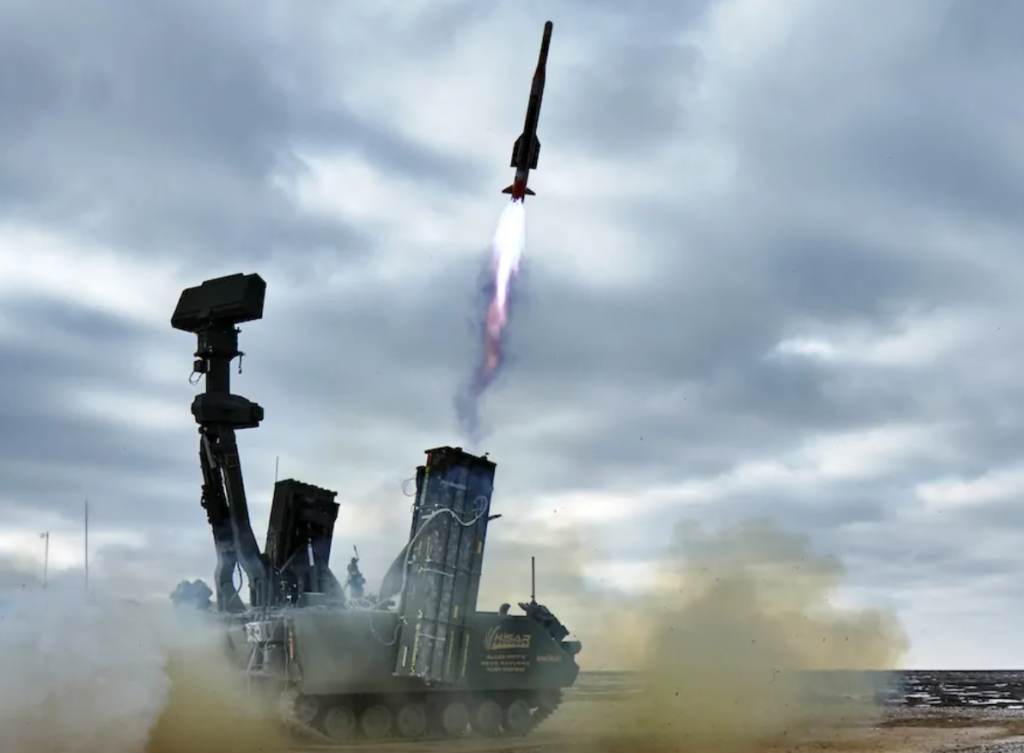
Turkey’s defense establishment announced on 26 November, that it had signed roughly $6.5 billion in new contracts to advance the ‘Steel Dome’ integrated air-and-missile defense system. These deals, made by the Presidency of Defense Industries (SSB), were concluded with leading Turkish firms such as Aselsan, Roketsan and Havelsan to begin large-scale production of sensors, interceptors and command systems. Key participants include electronics maker Aselsan, missile builder Roketsan, research agency TÜBİTAK SAGE and ordnance manufacturer MKE, reflecting the program’s emphasis on domestic industry. Officials describe Steel Dome as a “system of systems” merging dozens of locally produced radars, electro-optical sensors and missile launchers into a unified network.
 Türkiye signs $6.5 billion contracts to advance its Steel Dome integrated air and missile defense system. (Roketsan)
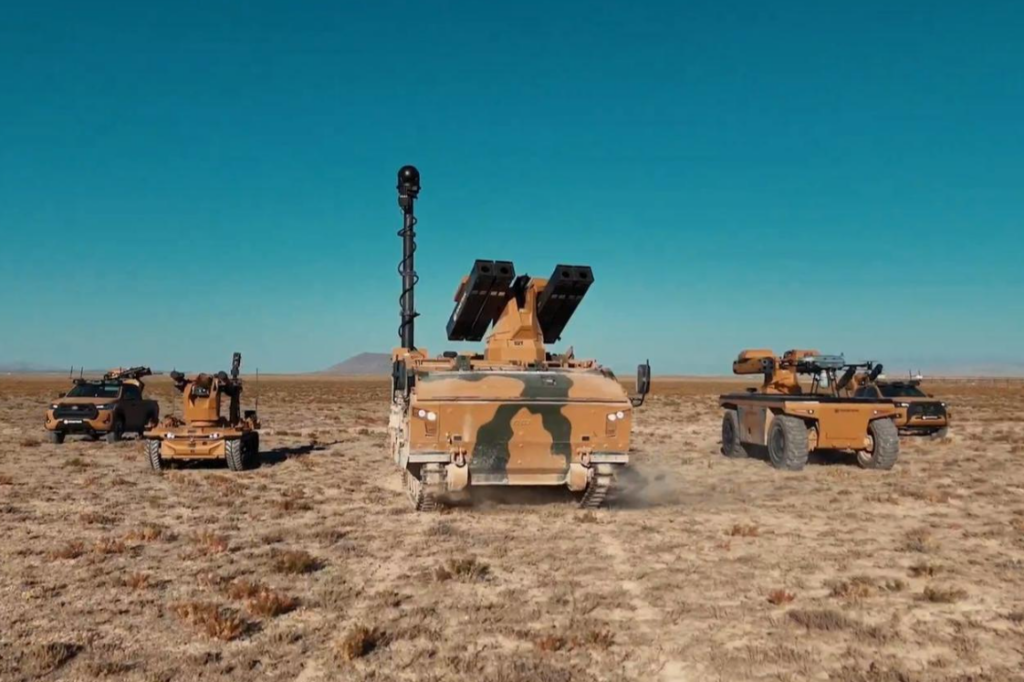
It will integrate roughly 47 subsystems – from ground radars and electro-optical sensors to short, medium and long-range missile batteries – under a single command-and-control umbrella. The layered architecture is designed to counter threats at all altitudes: for example, initial tiers include mobile short-range units (like Aselsan’s Korkut self-propelled guns and Gökberk laser) to engage nearby rockets and drones, followed by medium-range systems such as the Hisar-O surface-to-air missile (in the approximately 25km range). A further tier will use Turkey’s planned “Trench” long-range interceptor (which have a planned range of roughly 100km) for high-altitude targets. Steel Dome aims to cover “the full spectrum of threats from low-flying drones and rockets to cruise missiles and high-altitude aircraft”. By leveraging both land-based and naval assets, the architecture seeks to form a continuous protective shield over Turkey.
SSB chief Haluk Gorgun emphasized that Steel Dome will be built entirely with Turkish technology, reflecting the country’s drive for self-reliance. Roketsan’s chairman added that the agreements also include complementary systems – from space-based sensors to anti-tank missiles – underscoring a comprehensive defense approach. Steel Dome is being positioned as a national shield to close gaps in Turkey’s layered air defenses and reduce dependence on foreign suppliers.
Turkey is already marketing the Steel Dome abroad. Qatar is reportedly evaluating a proposal for the system after its Patriot/NASAMS batteries failed to counter very-low-altitude threats during recent strikes. Turkey’s original announcement described the Steel Dome as “similar to Israel’s Iron Dome system.” However, the Turkish program is much more extensive. It includes dozens of integrated elements to cover not only short-range rockets but also UAVs, cruise missiles and high-altitude aircraft.
The $6.5 billion push is one of Turkey’s largest air-defense investments. Officials concede it will take years to fully deploy the Steel Dome. Once it’s operational, the multi-tiered network should greatly improve Turkey’s ability to detect, track and intercept hostile aircraft, missiles and drones. It highlights the country’s growing defense self-sufficiency as over the past two decades Turkey has cut its reliance on foreign arms from roughly 80% to under 20% by fielding homegrown systems. Steel Dome represents a major stride toward a self-reliant and comprehensive aerial defense umbrella.