
At least four countries have announced they will boycott Eurovision 2026, including one of the “Big 5”. Recently, around 50 broadcasters from Eurovision participating countries attended a European Broadcasting Union (EBU) meeting to decide on new safeguards for the contest after several countries called for Israel to be removed from the competition over its war in Gaza and accusations of fraudulent voting practices.
Members of the European Broadcasting Union voted to approve new rules regarding the unfair promotion of songs “to reinforce trust, transparency, and the neutrality of the event.” However, no vote was held on Israel’s participation. Read the EBU’s statement below:
A large majority of members agreed that there was no need for a further vote on participation and that the Eurovision Song Contest 2026 should proceed as planned, with the additional safeguards in place.
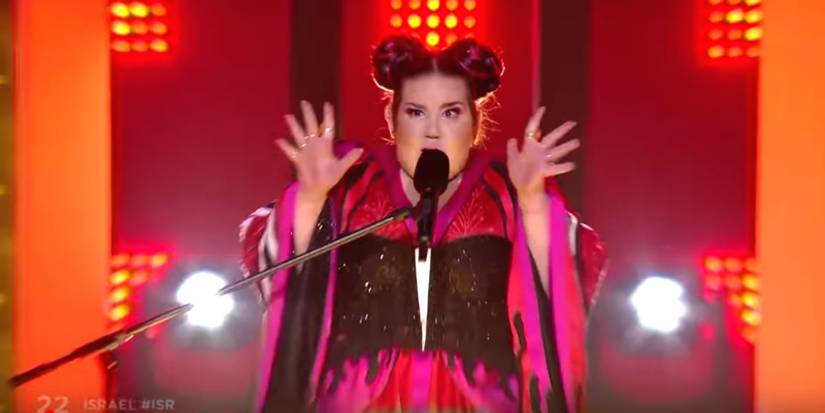
As a result, Spain, Ireland, Slovenia, and the Netherlands will boycott next year’s Eurovision. Spain is one of Eurovision’s “Big 5” countries along with France, Germany, Italy, and the UK. Their artists are allowed straight into the final, as their broadcasters provide the largest financial contribution to the EBU.
The Spanish broadcaster RTVE said that it will not broadcast any of the Eurovision 2026 events, noting that Spain’s decision to withdraw from the competition was agreed on last September. This is the first time since 1961 that Spain will not participate in Eurovision. Read RTVE’s statement below:
The board of directors of RTVE agreed last September that Spain would withdraw from Eurovision if Israel was part of it. This withdrawal also means that RTVE will not broadcast the Eurovision 2026 final… nor the preliminary semi-finals.
The EBU presidency has denied RTVE’s request for a specific vote on Israel’s participation. This decision increases RTVE’s distrust of the festival’s organisation and confirms the political pressure surrounding it,

Eurovision judges
The Irish broadcaster RTÉ followed in Spain’s steps, refusing to participate or broadcast the competition. Read its statement below:
RTÉ feels that Ireland’s participation remains unconscionable given the appalling loss of lives in Gaza and the humanitarian crisis there, which continues to put the lives of so many civilians at risk.
The Dutch broadcaster Avrotros also released a statement withdrawing from the competition, saying that, “under the current circumstances, participation cannot be reconciled with the public values that are fundamental to our organization.” RTVSLO, the Slovenian broadcaster and first to threaten a boycott this summer, said that participation would “conflict with its values of peace, equality and respect.”
Other countries may yet join the boycott, with Belgium’s broadcaster confirming that it would “take a position in the coming days” and Iceland saying it will decide by next week, despite its “support” for the EBU’s decision.
This comes after Russia was formally banned from participating in Eurovision in 2022 after it invaded Ukraine, with the EBU saying that the country’s presence would “bring the competition into dispute.” Yet Israel has continued to compete despite international criticism over its actions in Gaza, and several Eurovision participating countries calling for Israel’s removal from Eurovision.
This contrast has sparked accusations of double standards and intensified calls for the EBU to reassess how it handles political conflicts and humanitarian concerns. As the world’s longest televised song contest, Eurovision is built on the idea of cultural unity through music, a tradition that has endured since its post-war creation in 1956. Now, amid controversy surrounding Israel’s participation in the contest, that sense of unity is being tested like never before.

- Location
-
St. Jakobshalle Arena in Basel, Switzerland
- Dates
-
May 13, 2025 – May 17, 2025