
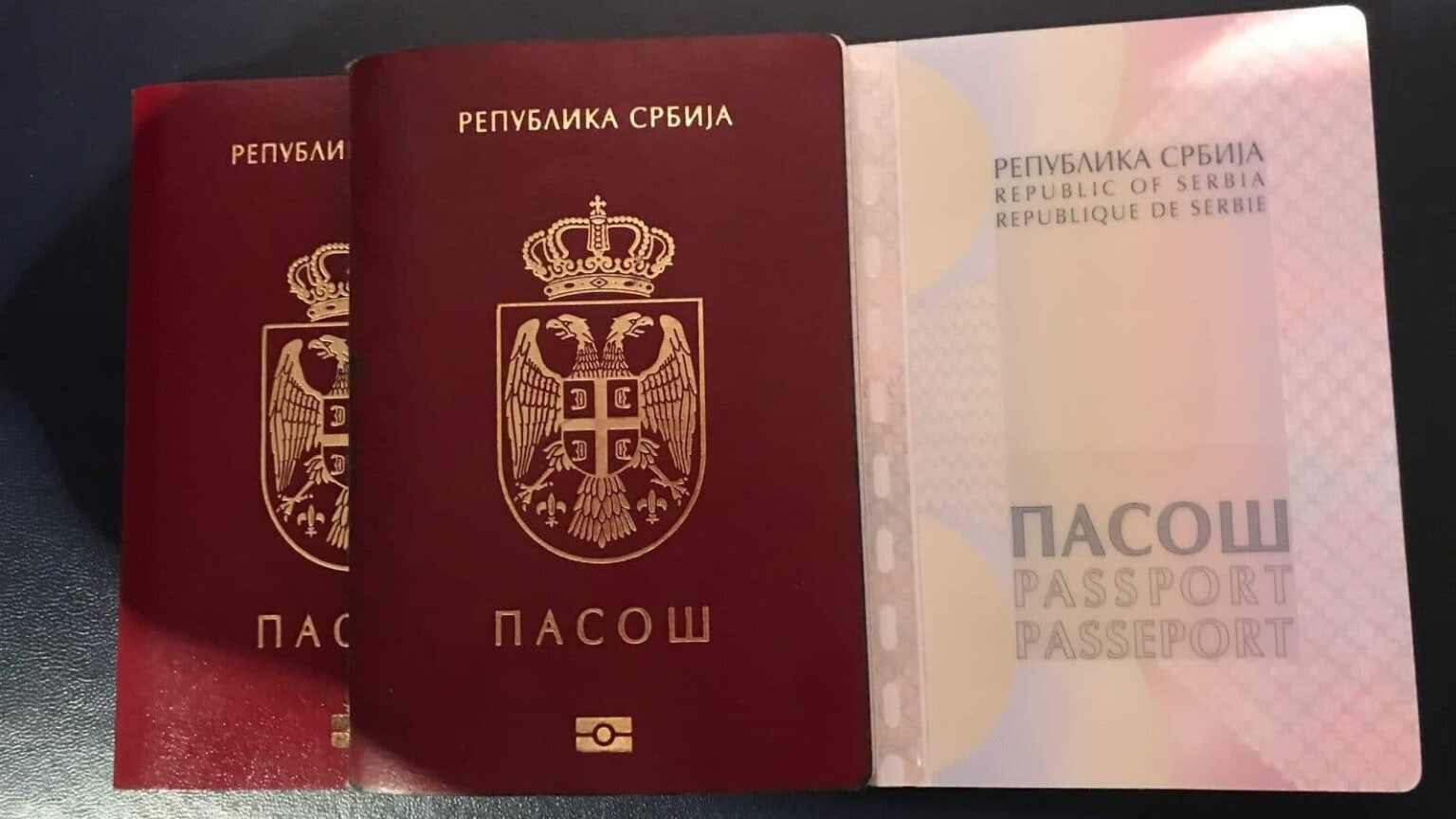
Some Russians appear to be leaving, or thinking about leaving, because of their diminished prospects of securing Serbian citizenship.
In a survey conducted in September in the Telegram channel Volna Serbia, which has over 8,600 Russian-speaking members, almost a quarter of 2,754 respondents said they were “inclined” to leave Serbia due to changes in their citizenship prospects; 28 per cent said they were “in waiting mode”.
A Russian IT entrepreneur, who arrived in Serbia with his family shortly after Russia’s February 2022 full-scale invasion of Ukraine, said he was readying to leave for Spain or Israel.
“There was a public narrative from Serbian authorities that ‘It’s great that qualified people with their own money and business came, we’re interested in them staying’,” he said, speaking on condition of anonymity for fear of being branded a security threat.
“We read the legal requirements and thought it would be okay to stay as a family and obtain Serbian citizenship after three years of legal residence.”
His opinion changed when he heard about the ‘stateless’ cases and the special interests citizenships going to “murky, quasi-oligarchic characters, athletes and intelligence officers from Russia”.
“It became clear that ordinary people would be bypassed in the legal procedure, while ‘their own people’ would be pushed through on a special track.”
As recently as March 2024, then Prime Minister Ana Brnabic told employees at the IT company Wargaming, who relocated to Belgrade from Russia and Belarus: “This is really your home, and we want you to stay here.”
But already, some Russians who had received preliminary citizenship approval had their applications stalled.
Maxim M., founder and CEO of an IT company, spent over four years in Serbia before leaving for Uruguay in 2025. He said he had been told by legal and security contacts that he had been ‘blocked’ by BIA for citizenship. Fortunately, at that point, he had not renounced his Russian citizenship, meaning he could leave.
“I have Serbian at C1 level; I had a business and property in Serbia,” Maxim said. “And here we are talking about the fact that citizenship is forbidden to me. For various guys from the FSB [Russian intelligence agency] it’s easy, but for me – nothing.”
Not giving up
Serbia was an attractive option for many Russians – a Slavic language, shared Orthodox Christian faith, lower cost of living, and proximity to the EU.
According to a survey this year by the Centre for Analysis and Strategies in Europe, CASE, a think-tank founded by exiled Russian opposition politician Dmitry Gudkov, 55 per cent of Russians in Serbia wish to obtain Serbian citizenship, a significantly higher rate than in Georgia or other former Soviet republics. Those surveyed in Serbia expressed a high degree of satisfaction with their relationship with Serbians.
One Russian company director, who has lived in Serbia for several years, said he has not given up on citizenship.
“I love the country, I know the language, and I want to help the country prosper and move forward,” he said, speaking on condition of anonymity. “Or maybe I just picked up some ‘inat’ from my Serbian friends,” he added, in reference to a stubbornness or spite said by some to be typical of people in the Balkans, “and don’t want to give up despite the dire circumstances”.
For those already stateless, giving up isn’t an option. They can’t leave.
Those in Ziganshina’s group regularly write to the Serbian authorities, asking for a resolution to their ordeal.
“We will continue to fight for our rights and our future,” Ziganshina said.