
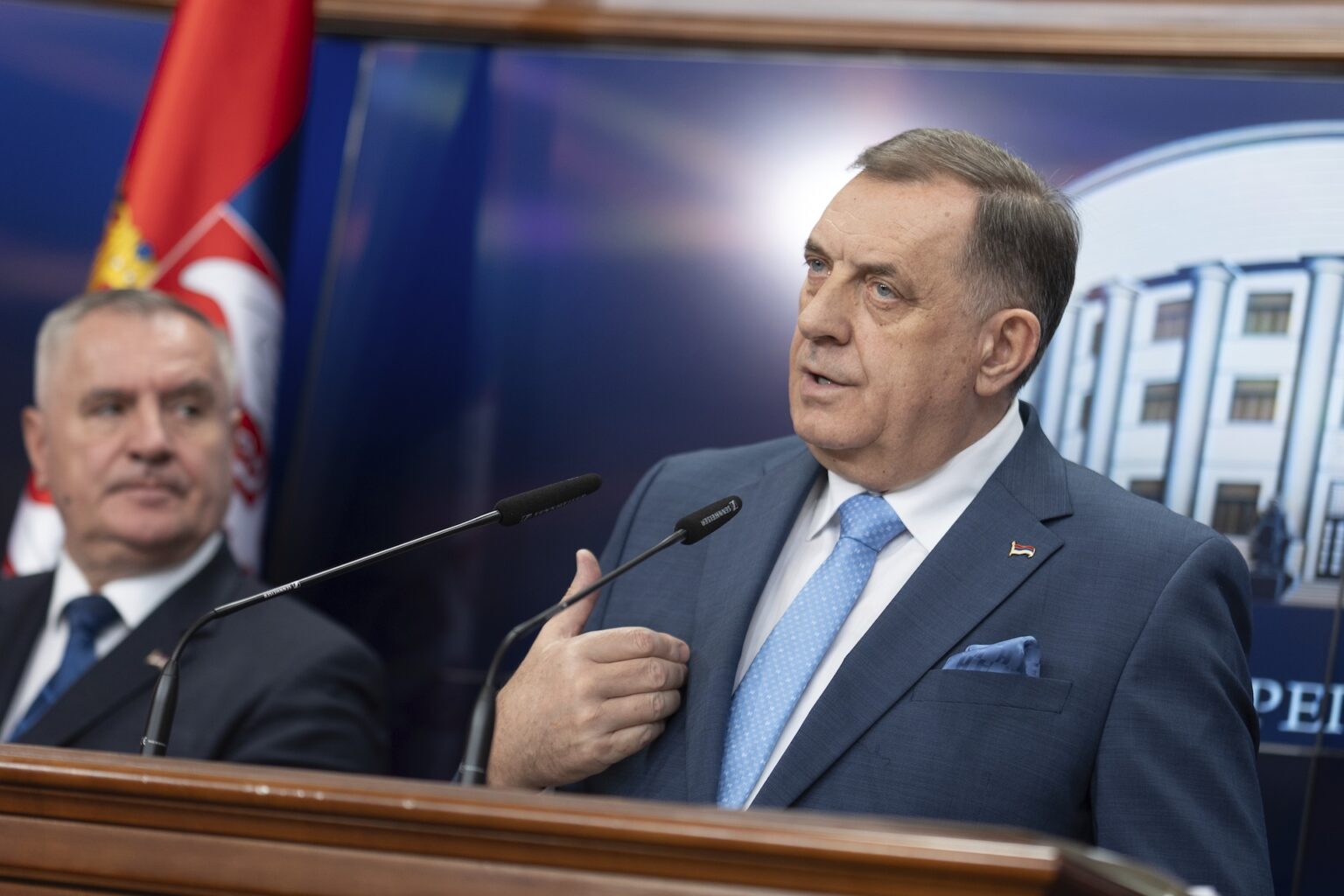
U.S. President Donald Trump’s return to office earlier this year was widely expected to bring major shifts in the U.S. approach to the Western Balkans. Given his transactional approach to foreign policy, his frequent disregard for human rights issues and the continued presence of advisers with close ties to Serbia, chances were seen as high that Trump would tilt Washington’s posture toward Serbian interests. Accordingly, there was a fear among some that his return to power could further disturb the fragile equilibrium of the Dayton Accords and compromise Kosovo’s hard-won independence from Serbia.
Indeed, Serbian nationalists celebrated after Trump clinched his election victory last November. Milorad Dodik, who until recently served as president of Republika Srpska, the autonomous majority-Serb territory that makes up part of Bosnia and Herzegovina, donned a red MAGA hat to signal his enthusiasm. Dodik, under U.S. sanctions at the time for separatist activities viewed as provocative and destabilizing, clearly believed that Trump’s return to the Oval Office would be advantageous to his interests. He would turn out to be correct.
A Surprising Sanctions Reversal
For most of 2025, U.S. policy toward the Western Balkans remained mostly unchanged. Then, in October, the Treasury Department lifted sanctions against Dodik as well as his family members and allies. The sanctions on Dodik had been imposed in 2017 by the then-outgoing Barack Obama administration in response to Dodik’s repeated violations of the U.S.-brokered Dayton Accords that ended the three-and-a-half-year Bosnian War in 1995. Dodik has advocated secession, defied the Bosnian judiciary and even threatened to recreate the army of Republika Srpska, an ominous step that could plunge the region back into conflict. Trump’s first administration and that of his successor, Joe Biden, not only maintained those sanctions but also imposed additional ones on Dodik.