Have Moldova’s ruling leaders correctly interpreted the outcome of the recent elections? If they take the results as proof of their own infallibility and political invincibility, the country’s European path could encounter serious obstacles. This is especially true as Russia may change its approach towards Moldova. And that is hardly good news.
December 8, 2025 –
Piotr Oleksy
– 
AnalysisIssue 6 2025Magazine
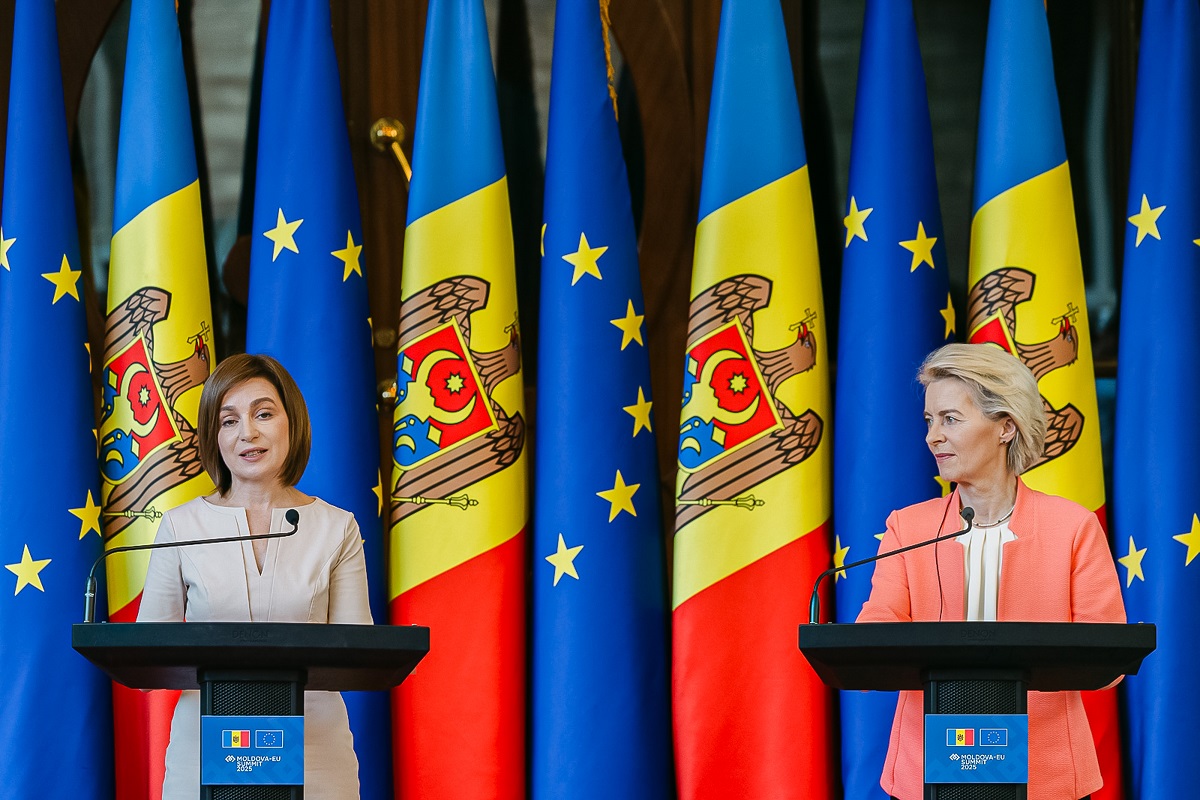
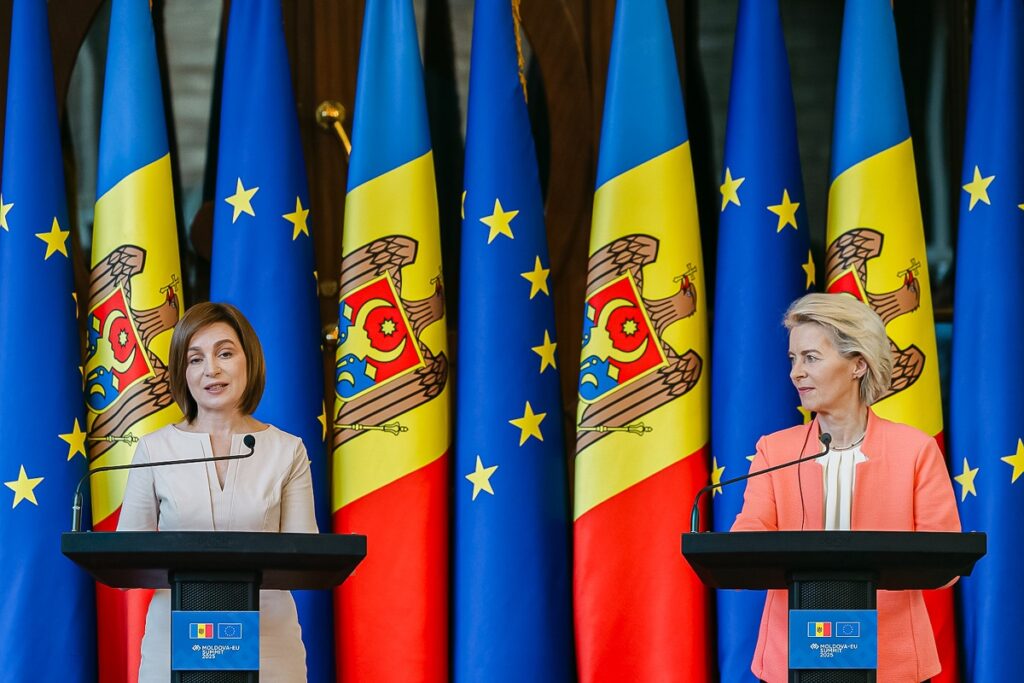
Moldovan president, Maia Sandu, (left) and Ursula von der Leyen, president of the European Commission, hold a joint press conference during a summit in Moldova last July. The president and her ruling party ran on the platform of mobilization in the name of European integration – and in opposition to Russia. The real danger now is demobilization – a complacent belief that reforms and investments will somehow take care of themselves.
Photo courtesy of the European Commission
The result of Moldova’s parliamentary elections marks a victory for the European Union and for the ruling Action and Solidarity Party (PAS), in power since 2021 – and a clear setback for Russia. The order of this list is not accidental: many signs suggest that voters chose, above all, a European future rather than simply endorsing the governing party. Moldova now stands more closely aligned with the EU than any other country in the region, and even Moscow’s unprecedented financial measures have failed to alter this trajectory. Yet, it is too early to breathe a sigh of relief. Both the EU and PAS must be aware of the possibility of becoming victims of their own success – particularly as Russia may soon recalibrate its strategy toward its former “brotherly” republic.
When analysing Moldova’s proximity to the EU and the erosion of its ties with Russia, we should keep in mind that this story did not start with PAS coming to power. In fact, European integration was declared as the overriding goal of the country’s foreign policy as early as 2004 by then President Vladimir Voronin. Three years earlier, his Party of Communists had gained sole power in parliament by promoting the idea of rapprochement with Russia. However, forced by Moscow to accept a solution to the Transnistrian conflict that was unfavourable to Chișinău, and tempted by the West, Voronin made a geopolitical – or rather rhetorical – about-face. In doing so, he responded to the EU’s eastward enlargement and the emerging new neighbourhood policy.

This article is for members only
Join the New Eastern Europe community to unlock this article — plus enjoy full access to premium content, our digital archive, newsletter insights, and podcast updates.
BECOME A MEMBER!
Already a member? Sign in to read the full article.