
Finland has joined 26 European countries in calling for changes to how the European Convention on Human Rights is interpreted, seeking to make it easier to deport foreign nationals convicted of serious crimes.
The move follows a joint statement signed at an informal ministerial conference in Strasbourg on 10 December. The document was endorsed by countries including the United Kingdom, Denmark, Italy, Sweden and all Nordic states. Large EU countries such as Germany, France and Spain did not sign the statement.
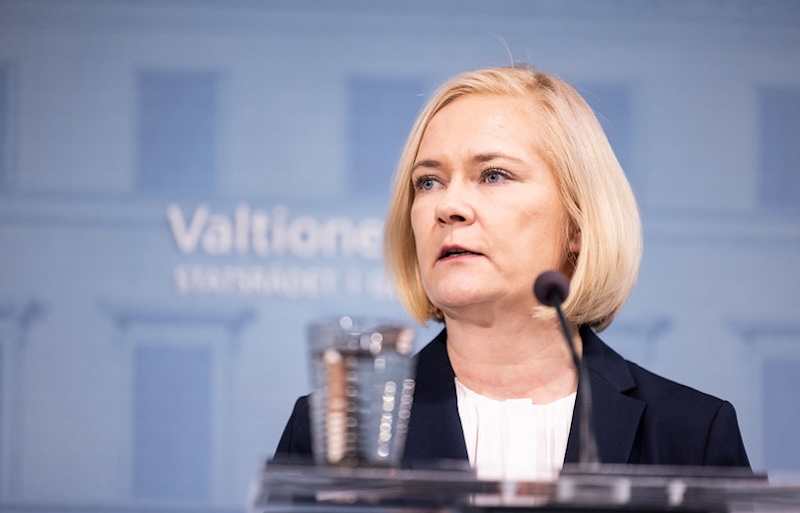
Interior Minister Mari Rantanen signed the statement on behalf of Finland. She said the Convention must adapt to modern challenges, including cross-border crime, human trafficking and politically motivated migration pressure.
“We must be able to remove foreign nationals who commit serious crimes, even if they have formed family ties in their host country,” Rantanen said in a government release. “This is about protecting our citizens and the core values of our society.”
The joint statement criticises the current legal interpretation of two articles of the Convention. Article 8, which protects the right to private and family life, is said to be applied in ways that block deportations, even in serious criminal cases. Article 3, which prohibits torture and inhuman treatment, is described as being used too broadly, especially in cases involving return to countries with poor prison conditions.
The signatories say courts should place more weight on the severity of a person’s crimes and less on their personal ties when assessing deportation cases. They argue that the concept of “inhuman or degrading treatment” should be reserved for the most extreme cases and not used to block removals based on health or detention conditions alone.
The statement also argues for the right of countries to cooperate with third states on asylum and returns, provided human rights are respected. It calls for a stronger legal basis to respond to so-called instrumentalised migration, where states are accused of directing migrant flows to exert pressure on neighbouring countries.
Rantanen cited Finland’s experience on the eastern border, where it has accused Russia of deliberately sending asylum seekers to border crossings in late 2023. This led Finland to shut its entire land border to passenger traffic, a measure that remains in place.
“The threat of instrumentalised migration still exists,” she said. “We must acknowledge these risks and respond responsibly.”
The statement stops short of proposing direct changes to the text of the European Convention itself. Instead, it calls for a “rebalancing” of existing rights and responsibilities through updated legal interpretations by national courts and the European Court of Human Rights (ECHR).
The Council of Europe, which oversees the Convention and the ECHR, will now begin formal discussions on a potential political declaration. A joint declaration is expected to be adopted at a foreign ministers’ summit in Chișinău, Moldova in May 2026.
Earlier in 2025, Danish Prime Minister Mette Frederiksen and Italian Prime Minister Giorgia Meloni argued that the Convention is outdated in light of growing security concerns.
Frederiksen said the reforms would “strengthen public confidence” in legal systems and show that European countries are acting on security and migration issues. British Prime Minister Keir Starmer has supported similar changes while maintaining the UK’s commitment to the Convention.
Under current law, only the ECHR in Strasbourg can interpret the Convention’s provisions. Governments cannot interfere with its rulings, but they hope the upcoming declaration will lead the court to consider their concerns more closely.
The Council of Europe includes 46 member states. While only 27 signed the statement, discussions will continue among all members ahead of the summit in May.
HT