
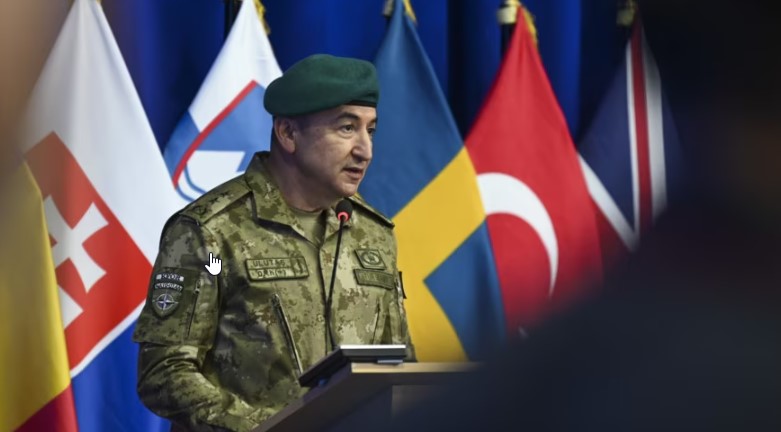
The commander of NATO’s peacekeeping mission in Kosovo, KFOR, Major General Özkan Ulutaş, said that regular communication with the Serbian Army is essential to prevent any potential escalation.
Ulutaş made these remarks after a visit to Serbia, where he met with the head of the Serbian Armed Forces, General Milan Mojsilović.
“Regular and open communication between KFOR and the Serbian Armed Forces is vital to address important developments and to prevent any potential escalation risks in a timely, appropriate, transparent, and constructive manner. In the weeks and months ahead, I will do my part to ensure that we continue to make the most of these regular communications,” Ulutaş said in a statement.
During his first term as KFOR commander, Ulutaş had also visited Belgrade.
Ulutaş thanked Mojsilović for the hospitality, saying he had already established “open and fruitful cooperation during my first term as KFOR commander. I look forward to meeting him again soon.”
The KFOR chief stated that the mission is committed to providing security that “enables the creation of the conditions necessary for political dialogue.”
“NATO — including through the daily work of KFOR — continues to support the EU-facilitated dialogue between Pristina and Belgrade as the framework for addressing outstanding issues for the benefit of all people,” Ulutaş said.
According to Major General Ulutaş, the mission has played a key role for a quarter of a century in maintaining peace and providing security for all citizens in Kosovo. Regional security, he emphasized, is linked to the security of Europe and the entire Euro-Atlantic area.
The Turkish general returned to lead KFOR in October. His first one-year mandate began in October 2023 and ended in October the following year.
KFOR is the third security responder in Kosovo, after the Kosovo Police and the EU Rule of Law Mission (EULEX). Among other responsibilities, KFOR is in charge of security along the border line between Kosovo and Serbia.
NATO increased its presence in Kosovo during 2023 following heightened tensions in the Serb-majority north. KFOR currently includes more than 4,000 peacekeepers from various countries around the world. / RFE/RL