
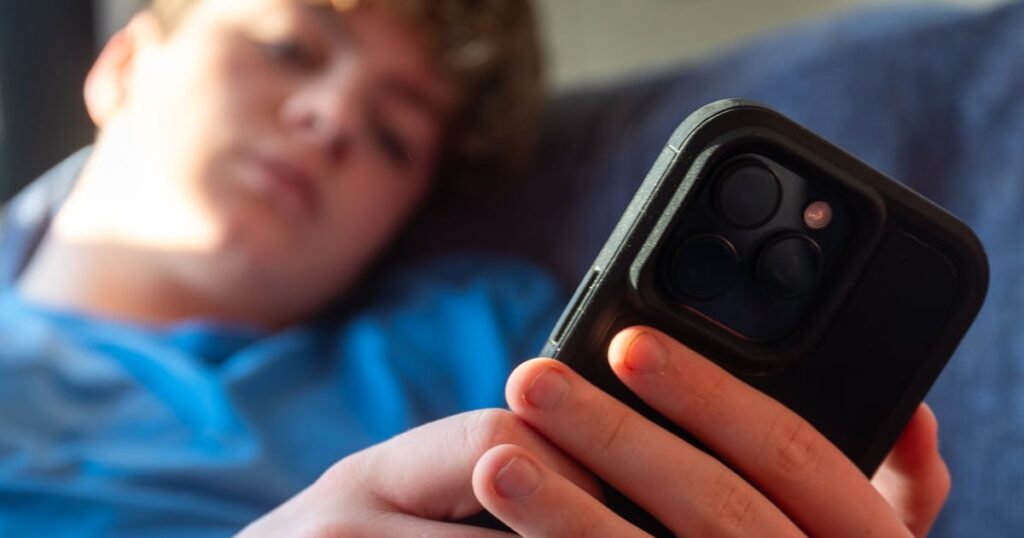
This week, psychologist Jonathon Haidt told the Sixty Minutes current affairs show in Australia that in 2012, rates of adolescent anxiety, depression and self harm began to spike across the globe. America, Canada, Australia, New Zealand, Scandinavia and all of northern Europe recorded massive jumps in adolescent mental health problems. It’s a trend that has continued.
Haidt suggested that the global boom in the use of smartphones by adolescents was the only possible conclusion for the unprecedented decline in mental health.
He called it the “great rewiring of childhood”.
Everywhere in our daily lives, at train stations, school playgrounds and even in gyms, you will see both children and adults adopting the classic “tech neck” position. Heads bent at an unhealthy angle, staring hypnotically at a screen.
Much of what these powerful algorithms feed into our apps is fear. As someone who loves the ocean, my phone is full of unwanted images of giant sharks.
While fear is a protective instinct in our evolutionary journey to avoid danger, millions of years ago, our ancestors evolved the emotional intelligence to conquer our fears by developing courage.
The clan, the village and the tribe were all born from having the courage to unite and act against a threat. If it takes a village to raise a child, it also takes a village to protect them.
This week, the Australian federal government introduced groundbreaking laws that banned Instagram, Facebook, X, TikTok and several other social media apps for children under 16. It is a courageous piece of legislation. While highly controversial, this initiative has enjoyed almost unprecedented public and political support. The vast majority of Australians see it as our community uniting to protect our children.
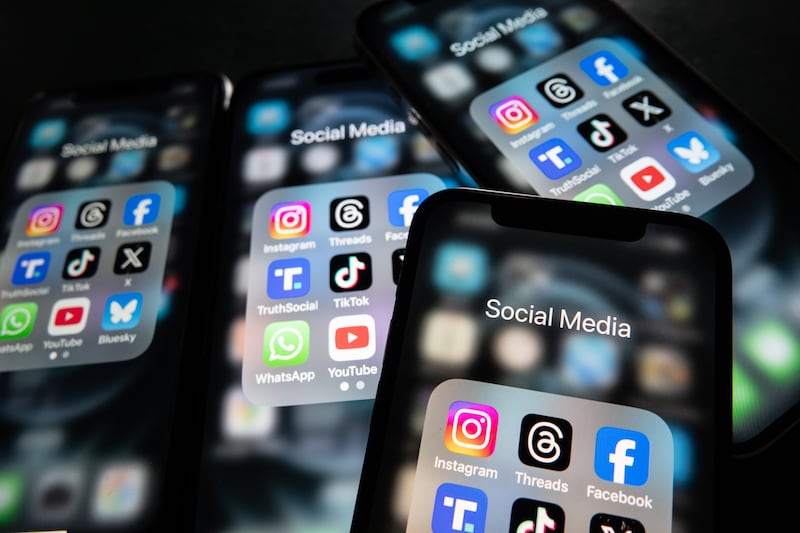
The banning of social media apps could be the antidote to one of the biggest ‘social experiments of our time on our young people;, said Australia’s e-safety commissioner. Photograph: Anna Barclay/Getty Images
Psychologists, psychiatrists and many grieving parents were the driving forces behind the drafting of this legislation.
While the Australian government concedes there are many avenues for kids to get around the roadblocks and find paths back on to the sites, this is being framed as the first shots in what will be a long and evolving battle towards protecting our children.
Australian e-safety commissioner Julie Inman Grant said the banning of the apps could be the “antidote” to “one of the greatest social experiments of our time on our young people”.
Amid this debate, I have been helping a friend coach his under-16s rugby team.
On several cold and dreary evenings over the past few weeks, when I would much rather have been toasting my feet in front of the fire and watching Netflix, I found myself in a tracksuit, enjoying the experience of working alongside a team of young men, helping them break a long losing streak.
At these training sessions, for a few brief minutes of the day, the simplicity of a solitary rugby ball allowed them to forget about every care they carry in the outside world. All that mattered was their actions around a piece of inflated rubber.
Here, they encounter the world through breathing in the cold, fresh air, getting joyously muddy, along with the sensations of physical contact and rapid motion. When combined with a willingness to laugh and have fun, it can make you feel more physically alive than in any other moments of your daily life.
At the end of each session, I once again encountered the long forgotten experience of feeling a deep mental cleansing. An emotional calmness after the physical chaos. A mental state that is the polar opposite of what doomscrolling creates.
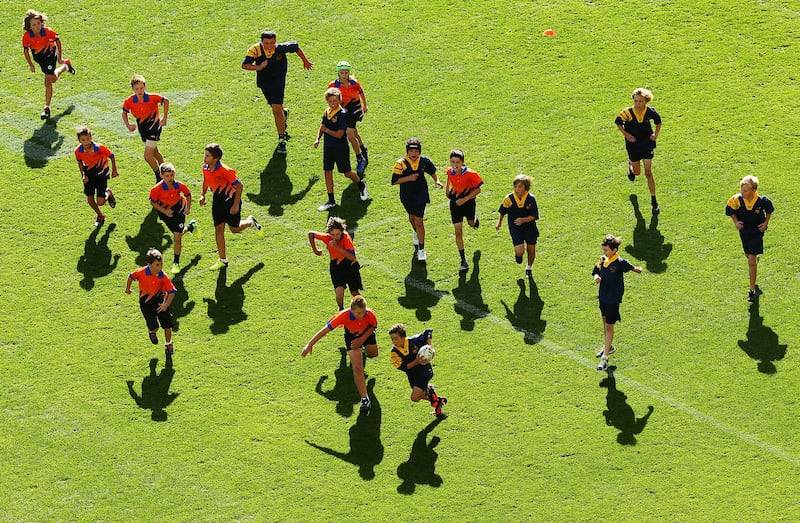
Children at play in the real world. Photograph: Scott Barbour/Getty Images
These kids were outdoors, encountering the real world. Not trapped inside cyberspace.
Last Saturday, the opposition team of under-16s were bigger, faster, stronger and well above them on the league table. Despite those obstacles, our team played with a simple game plan, implemented it with courage and won.
Be it a test match, Super Rugby, an under-16s match or a game of ping pong, I love to win, but for these players scoring more points than the opposition was not the main prize.
They discovered that playing sport can take you on a journey, learning how to overcome obstacles by becoming more resilient. A quality that psychologists tell us is now sadly lacking in our youth.
As the Champions Cup lurches into round two, cynically littered with clubs fielding weakened teams, I am reminded that, like all the others that have gone before them, this generation is full of innocence. Wonderful kids who need our support, wisdom, guidance and protection.
What makes them unique is that, unlike any generation before them, they have to confront technology and artificial intelligence that attacks their mental and emotional wellbeing.
When challenged in the media about what Australian kids, with no access to social media, should now do in their summer holidays, Australian prime minister Anthony Albanese said the country has made a stand to protect them.
He explained there are new sports to play, musical instruments to learn and lots of books that need to be read. Perhaps that advice is old school. But that does not make it wrong.
If society leaves it up to the algorithms to raise our kids, then we will be repeating a tragic betrayal that we promised to never allow again. The devastation of institutional physical and sexual abuse occurred because governments and many families were intimidated by powerful organisations and failed to protect their vulnerable youngest citizens from predators.
Today, we know that the products created by immensely powerful technology companies have themselves become the new breed of predators that attack the mental health of our youth. Yet, apart from Australia, the world is once again allowing governments to turn a blind eye to the undoubted harm that powerful organisations are inflicting on our kids.
Ireland’s tax base is dangerously dependent on the same Big Tech companies that own the apps that have destroyed the lives of many children. That fact must be a warning to the Irish people not to permit their government to abandon its youngest citizens because of the hold Big Tech has over the Irish economy.
[ Could Ireland follow Australia and ban under-16s from social media?Opens in new window ]
Ireland needs to stand up for its children by creating their own legislation to act against the ticking time bombs that Irish kids are carrying around in their pockets.