
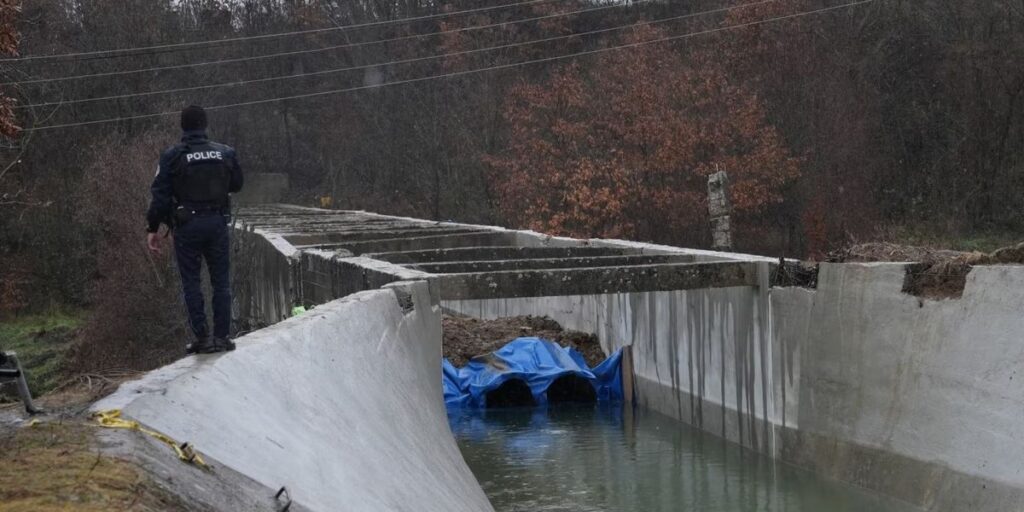
Over a year after the terrorist attack on the Iber-Lepenc canal, and over two years after the terrorist attack in Banjska, the international factor, apart from public statements, has not undertaken any punitive or sanctioning measures against Serbia. International and regional analysts assess that the risk that Serbia poses to Kosovo is very great and could turn into an inevitable conflict if the internationals do not act and if Kosovo politics is divided and fails to defeat Serbian propaganda.
Jovan Viqentijevic, one of the accused in the terrorist attack on the Iber-Lepenc canal, said that 120 people participated in training at one of the most famous military training ranges in Serbia.
Even for the terrorist attack in Basnjska, Zvečan on September 24, 2023, both the indictment and the facts presented by the Kosovo Police clearly show the state involvement of Serbia in the supply, training, and organization of the attack.
Despite the fact that the facts are public and internationals have even helped to find them, so far there have been no reactions, apart from the statements after Banjska that remained just that, declarative.
TV Dukagjini has requested a position from the American, British, German and French Embassies in Kosovo.
Apart from the German embassy, other diplomatic representations have not commented on this issue.
“We are closely following developments and expect the Serbian authorities to fully cooperate with their Kosovar counterparts, in accordance with the Agreement on Mutual Legal Assistance. However, the German Embassy does not comment on ongoing trials,” the German Embassy in Kosovo said.
Even the European Union has chosen to remain silent in the face of facts that prove Serbia’s involvement in terrorist attacks against Kosovo.
Behind all these attacks, according to international professors, lies the power of Vučić, who since 2012, in addition to seizing the state and power, has had another goal, the division of Bosnia and the destruction of Kosovo’s independence.
Aidan Hehir, a professor at the public university in London, Westminster University, estimates that the armament in Kosovo originating from Belgrade has come along with Vučić’s propaganda that ethnic cleansing is being carried out against Serbs in Kosovo.
“The goal is clear: to cause unrest, create a crisis involving open conflict between Kosovo Serbs and Kosovo security forces, and then send in Serbian troops to ‘restore order.’ Vucic is essentially copying the tactics used by Milosevic in the 1980s and also by his spiritual leader, Putin, in Ukraine,” Hehir said.
Hehir says that the international community, instead of fighting these actions by Serbia, has turned a blind eye by pursuing a policy of reconciliation, which history shows does not work, giving space to a conflict that may be inevitable.
“In particular, the people of Kosovo must wake up to the reality that KFOR has stood idly by while Serbia has smuggled weapons into Kosovo for years, has actively supported those involved in terrorist activities inside Kosovo, and has also illegally entered Kosovo territory several times over the past five years.”
“The assumption that KFOR is effective and committed to protecting Kosovo must therefore be questioned, and KFOR must be held accountable for its failures to date. It is essential that KFOR’s policy of simply observing and reporting on Serbia’s behavior be replaced by a much more active engagement and the publication of transparent assessments of how Serbian militias were armed and Serbia’s role in supporting terrorism inside Kosovo,” he said.
Like Hehir, one of the best experts on regional and Serbian politics, Ben Andoni recommends that the division in Kosovo disappear from the political scene, in order to combat Serbian propaganda.
“They will never be radical towards Serbia, this is our illusion, for the sole reason that Serbia has much greater conjunctures than Albanians in the EU, but we do a great service to Serbia when we are so clear, the only moment for us because Kosovo’s national security is at risk at every moment is that the political factor when it comes to Kosovo has a common narrative, because believe me, the Brussels authorities are ready to find any kind of element to distort everything Serbia does”, Andoni said.
Andoni says that international authorities believe they have done their job the moment the terrorists in Banjska were forced to withdraw, and secondly, they aim to calm Serbia in the face of the major problems it presents, instead of democratizing it.
According to him, expectations of international pressure and punishment against Serbia for terrorist involvement in Kosovo are illusions and not reality.TV Dukagjini/