
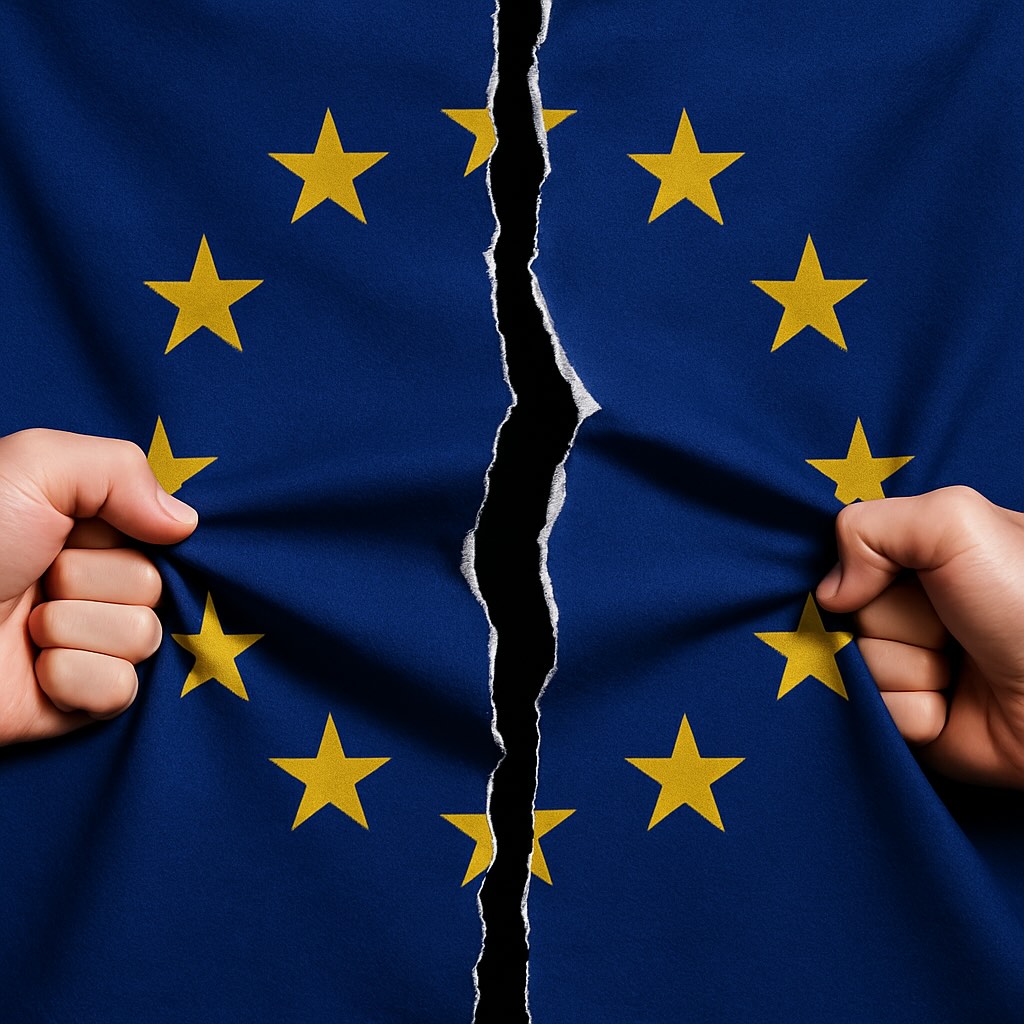
Defence One reported on 9 December that it had reviewed a fuller version of the strategy, circulating before the White House released an unclassified document on 4 December, and that it contained guidance to “work more with” Italy, Hungary, Poland and Austria, “with the goal of pulling them away from the [European Union]”.
The published National Security Strategy, available on the White House website, is a 33-page document that frames Europe’s long-term stability largely through demography, migration and social cohesion, warning that the continent could be “unrecognisable in 20 years or less” if current trends continue. The document also argues for the United States to “cultivate resistance” inside European nations to what it describes as Europe’s “current trajectory”.
According to Defence One’s account, the longer text went further, setting out how the US could “Make Europe Great Again” by deepening ties with governments it considers aligned, and by supporting “parties, movements, and intellectual and cultural figures” who favour “sovereignty” and the “preservation/restoration of traditional European ways of life”, while remaining “pro-American”. The same report said the longer version also discussed establishing a “Core 5” grouping of major powers — the United States, China, Russia, India and Japan — as a forum for geopolitical management.
The White House has rejected the reporting. In comments carried by The Telegraph, Deputy Press Secretary Anna Kelly said reports of an alternative strategy were “fake news”, insisting that “no alternative, private, or classified version exists”.
The four countries named in the reported longer text each sit differently within the EU’s internal politics, but all have featured, at times, in debates about national sovereignty and the balance of powers between member states and EU institutions. In Poland, Defence Minister Władysław Kosiniak-Kamysz publicly dismissed the suggestion that Warsaw could be pulled from the bloc, saying Poland “can’t be driven away” because it is “an integral part” of the EU, while adding that Poland wants changes “from within”, including “less bureaucracy” and “more security”.
In Austria, local reporting described an irritated response in Vienna, with officials stressing that Austrian policy is decided domestically rather than abroad, even as Washington denied any such plan. In Italy, commentary in Rome has tended to frame the debate through defence and industrial policy, with Italian ministers signalling interest in EU reform and greater European capacity, rather than a break with the Union.
The leak claim also intersects with well-documented personal and political links between Mr Trump and several European leaders. Mr Trump has praised Giorgia Meloni, Italy’s prime minister, and was quoted describing her at Mar-a-Lago in January as a “fantastic woman” who had “taken Europe by storm”. He has also cultivated a relationship with Viktor Orbán. After a White House meeting on 7 November, the US granted Hungary a one-year waiver from sanctions connected to the use of Russian oil and gas.
Across Europe, criticism has focused less on the alleged longer document than on the tone and assumptions of the published strategy. German Chancellor Friedrich Merz said parts of the language were “unacceptable” and argued Europe should become less dependent on the United States, while still seeking to maintain the transatlantic relationship.
The Vatican has also weighed in. Pope Leo XIV said Europe must be part of any Ukraine peace framework and criticised what he described as an effort to “break apart” the US-European alliance, after meeting President Zelenskyy in Rome.
In Washington, Congress has moved on a parallel track that cuts against speculation about a rapid US military drawdown in Europe. Politico reported that the House-backed National Defence Authorisation Act would limit reductions below 76,000 troops for more than 45 days unless the administration certifies the move serves US national security and consults allies, a constraint designed to curb executive latitude on force posture.
Whether the alleged longer strategy text exists as described remains contested. What is not in dispute is that the published National Security Strategy has introduced a sharper ideological edge into official US language on Europe — and, in doing so, has widened the space for European leaders to argue for greater strategic autonomy while trying to preserve practical cooperation with Washington.
Post Views: 1,105