
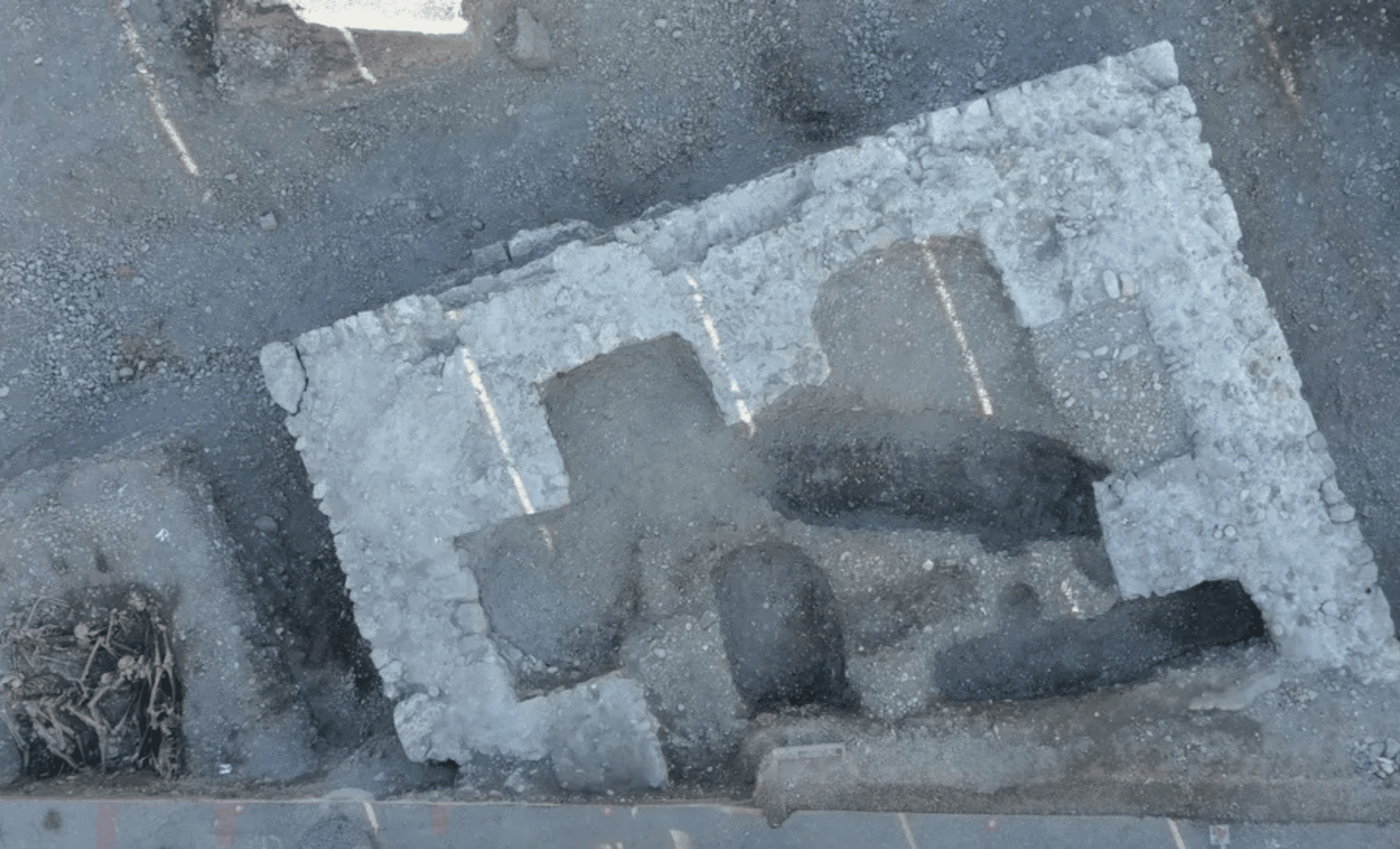
Beneath the soil of Grenoble, France, a macabre chapter of history has been brought to light. Archaeologists from the French National Institute for Preventive Archaeological Research (INRAP) recently unearthed a 16th-century gallows and the skeletal remains of dozens of individuals, offering a chilling glimpse into the brutal justice system of the past. This remarkable excavation sheds light not only on the architecture of punishment but also on the harrowing fate of those condemned to death during a volatile period in French history.
The Grim Discovery: A Gallows for Public Justice
In the summer of 2024, a team of archaeologists working on an excavation near Grenoble stumbled upon a remarkable yet somber site. Beneath the earth, a 16th-century gallows structure lay in ruins, accompanied by mass burial pits containing the remains of the condemned. This gallows, identified as one of the major judicial execution sites during the period, was a stark representation of the public spectacle of death that once held a strong grip on French society.
The structure, believed to date back to 1544, was revealed to be an imposing square brick framework with eight towering stone pillars. The pillars, stretching some 16.5 feet high, supported crossbeams that allowed for a hangman-style execution of up to eight people at once. This chilling method of justice was designed not just for execution but also for displaying the bodies of the deceased as a grim warning to others. In a time when public execution was seen as both punishment and deterrent, the gallows were an essential part of the legal landscape.
The discovery was not just an architectural find but a harrowing look into the lives and deaths of those who were condemned to suffer in the name of justice. Mass burial pits discovered nearby contained the remains of 32 individuals, most of whom were men, with a few women among them. The location and manner of their burial suggest a deliberate denial of dignity, a practice often employed in cases of political rebellion.
 The Grenoble gallows dead were buried together in pits. (Image credit: Anne-Gaëlle Corbara/INRAP)
The Condemned and Their Tragic Fates
Among the executed individuals were two known names from historical archives: Benoît Croyet, a Protestant accused of participating in an attack on Grenoble in 1573, and Charles Du Puy Montbrun, a leader of the Huguenots of Dauphiné who was executed in 1575. These men were among the many who fell victim to the brutal judicial system of the time, where dissent against royal authority was often met with swift and merciless punishment.
The discovery of their remains sheds new light on the intersection of politics, religion, and death in 16th-century France. Both Croyet and Montbrun were targeted not merely for their crimes but for their affiliation with religious and political movements that threatened the established order. Their executions, and those of others buried in the pits, were more than personal punishments—they were part of a broader effort to stifle rebellion and assert the dominance of the monarchy.
A Chilling Method of Execution and Burial
What makes this discovery even more chilling is the manner in which the condemned were treated after death. According to the archaeologists from INRAP,
“Burying a condemned person in this way was a means of prolonging the sentence pronounced during their lifetime into death; the individuals found during the excavations were therefore deliberately denied burial.”
This practice, which included dismemberment and decapitation of some bodies, reflected not just the severity of the punishment but the complete denial of dignity to those who dared to rebel.
The mass graves tell a story of a society that, in many ways, sought to ensure that those who defied its rules were completely erased from memory. Their graves were unmarked, and their final resting places were far from peaceful. The excavation reveals that these individuals were often treated with disdain even after their execution, further highlighting the cruelty of the judicial system during this period.
A Changing Landscape of Justice
The Grenoble gallows, once a symbol of royal authority, was eventually abandoned in the early 17th century. Political and religious shifts in France, especially with the rise of new ideas about justice and governance, led to the decline of such public executions. This transition reflects a broader transformation in European judicial practices, as notions of human rights and the ethics of punishment began to evolve.
The move away from public executions was part of a gradual shift toward a more private, less humiliating form of punishment. However, the remnants of this gallows stand as a testament to a darker chapter in France’s history, offering archaeologists and historians alike a tangible link to the past.