
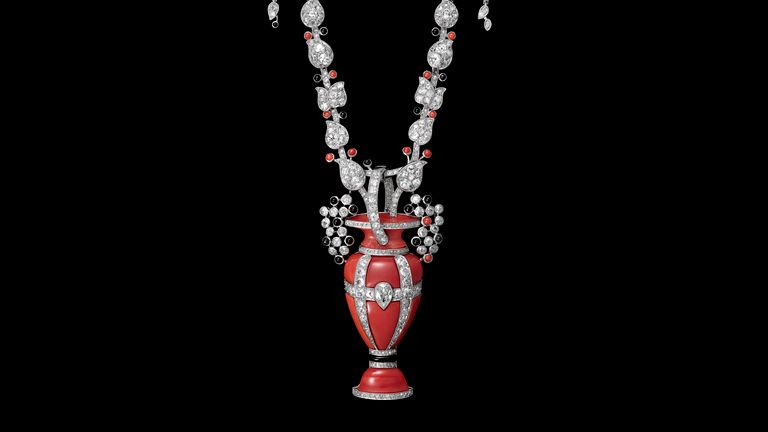
Its scarlet boxes might remind you of Paris, but Cartier’s history has as many layers as it has carats. Truly ahead of its time, the Cartier family always understood the importance of travel, exchange and sourcing the right raw materials from the right places. This demand for excellence has taken Cartier to the farthest reaches of the world, including Asia and the Gulf. However, this time the jeweller landed closer to home, with a spectacular new exhibition hosted at the legendary Capitoline Museums’ Palazzo Nuovo.
Cartier & Myths is the French maison’s 45th exhibition, but the first one hosted within the permanent collection of a cultural institution. This unmissable display, set in the world’s oldest museum dating back to the 15th century, deepens the long-standing relationship between Cartier and Italy, with a particular focus on Rome. Leaving no room for second-guessing and setting the tone for the show is a photographic album discovered in the Cartier archives during the exhibition’s preparatory work. It documents Louis Cartier’s 1923 trip through Italy – joined by Countess Jacqueline Almásy (whom he married in 1924) and his daughter Anne-Marie Révillon – with various stops from Venice to Ferrara, then Siena and Orvieto, ending in Pompeii.
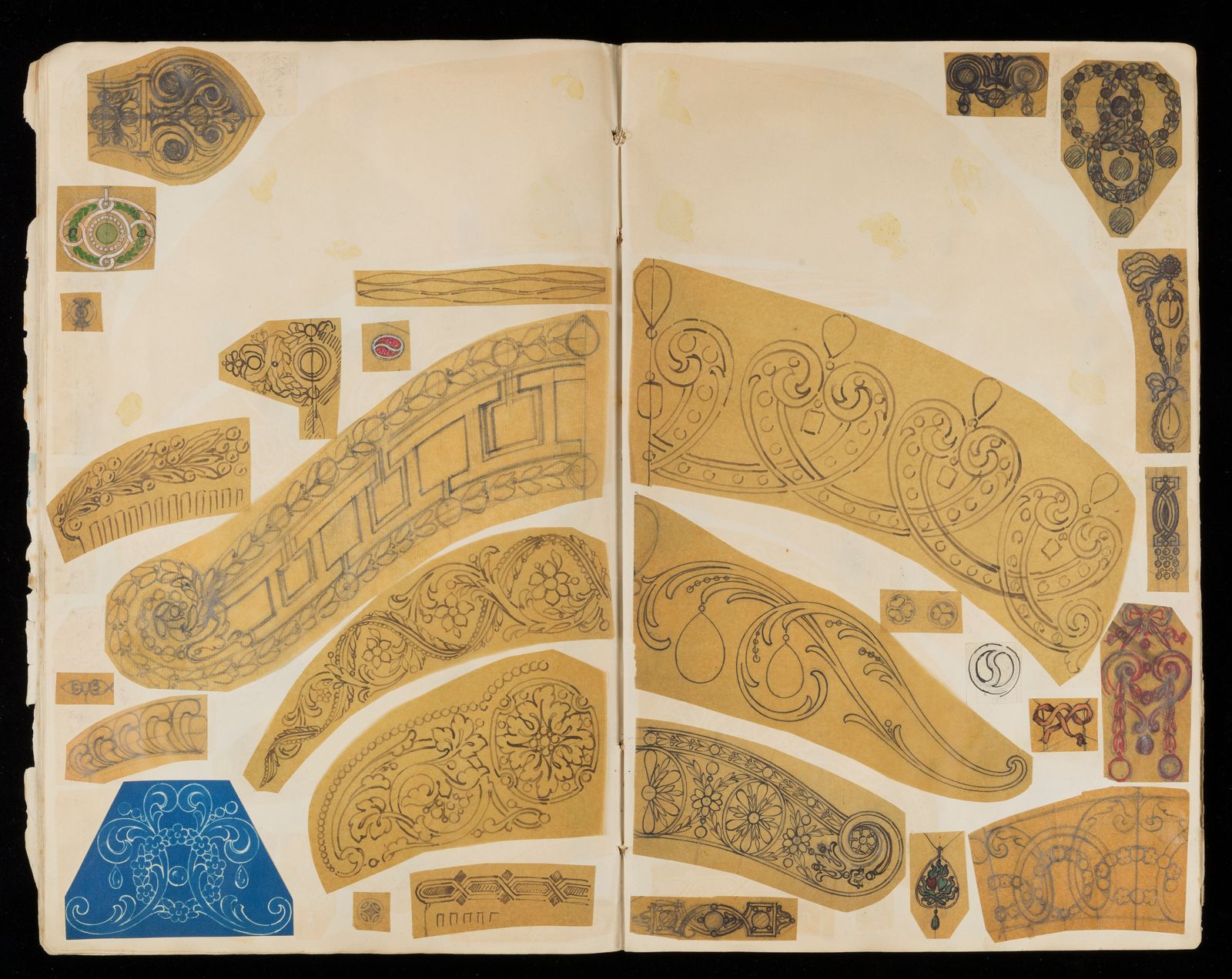
Photo: Cartier
“The exhibition Cartier & Myths at the Capitoline Museums marks a decisive return to Italy for the Cartier collection, more than two decades after the unforgettable Cartier Design Viewed By Ettore Sottsass exhibition at the Palazzo Reale di Milano in 2002,” notes Louis Ferla, president and CEO of Cartier. “This is a homecoming, a reaffirmation of our enduring connection with a land that has profoundly shaped our creative vision. We recall Louis Cartier’s transformative journey through Italy, where the wonders of the ancient world ignited his imagination and fuelled his pioneering designs.
Cartier & Myths is a testament to the everlasting power of myths, a recognition of their profound influence on art, culture and the very fabric of human imagination.”The permanent collections at Palazzo Nuovo, established in December 1733 by then Pope Clement XII, consist almost exclusively of marble sculptures, largely acquired from the collection of Cardinal Alessandro Albani. Many of these ancient artefacts have been models for the formation of the European artistic language. When Maison Cartier was founded in 1847, antiquity was in vogue, thanks to the development of scientific archaeology. Jewellery offered a rich avenue of expression, with historic pieces paying ribute to pharaonic Egypt and the Greco-Roman world. From the mid-19th century to the present day, Cartier has studied, drawn inspiration from and reinterpreted the aesthetic and symbolic repertoire of ancient Greece and Rome, transforming millennia-old motifs into jewels with a unique and modern character.

Photo: Cartier
To highlight this shared history, curators Bianca Cappello, archaeologist Stéphane Verger and Capitoline superintendent Claudio Parisi Presicce orchestrated a beautiful dialogue between the institution’s precious ancient artefacts and creations of the Maison, mostly from the heritage Cartier collection, with a total of 300 pieces on display. “This exhibition, hosted by the Capitoline Museums, is a dialogue between past and present, a conversation between ancient legends and contemporary artistry,” says Ferla.
“It invites us to explore the ways in which myths continue to resonate in our world, shaping our perceptions and inspiring our collective imagination”
Louis Ferla
As you walk through the Palazzo, you can’t help but be blown away by the striking beauty of your surroundings. On display next to Gian Lorenzo Bernini’s Bust of Medusa (1648) are unique necklaces and bracelets in the shape of flexible snakes that perfectly wrap around the wearer’s wrist and neck. In another room, we spot the Greek-inspired tiara that was commissioned from Cartier in 1909 by Canadian banker and shipping magnate Sir Hugh Allan as a gift for his wife Marguerite. This diamond and pearl headpiece that survived the sinking of ocean liner Lusitania in 1915 is strategically placed next to drawings and moulds that study Hellenic architecture. A few steps away, right next to a second-century AD mosaic that originally adorned Hadrian’s Villa in Tivoli, featuring four doves perched on the edge of a golden bowl, are multiple pieces of jewellery from different periods clearly informed by this archaeological find.
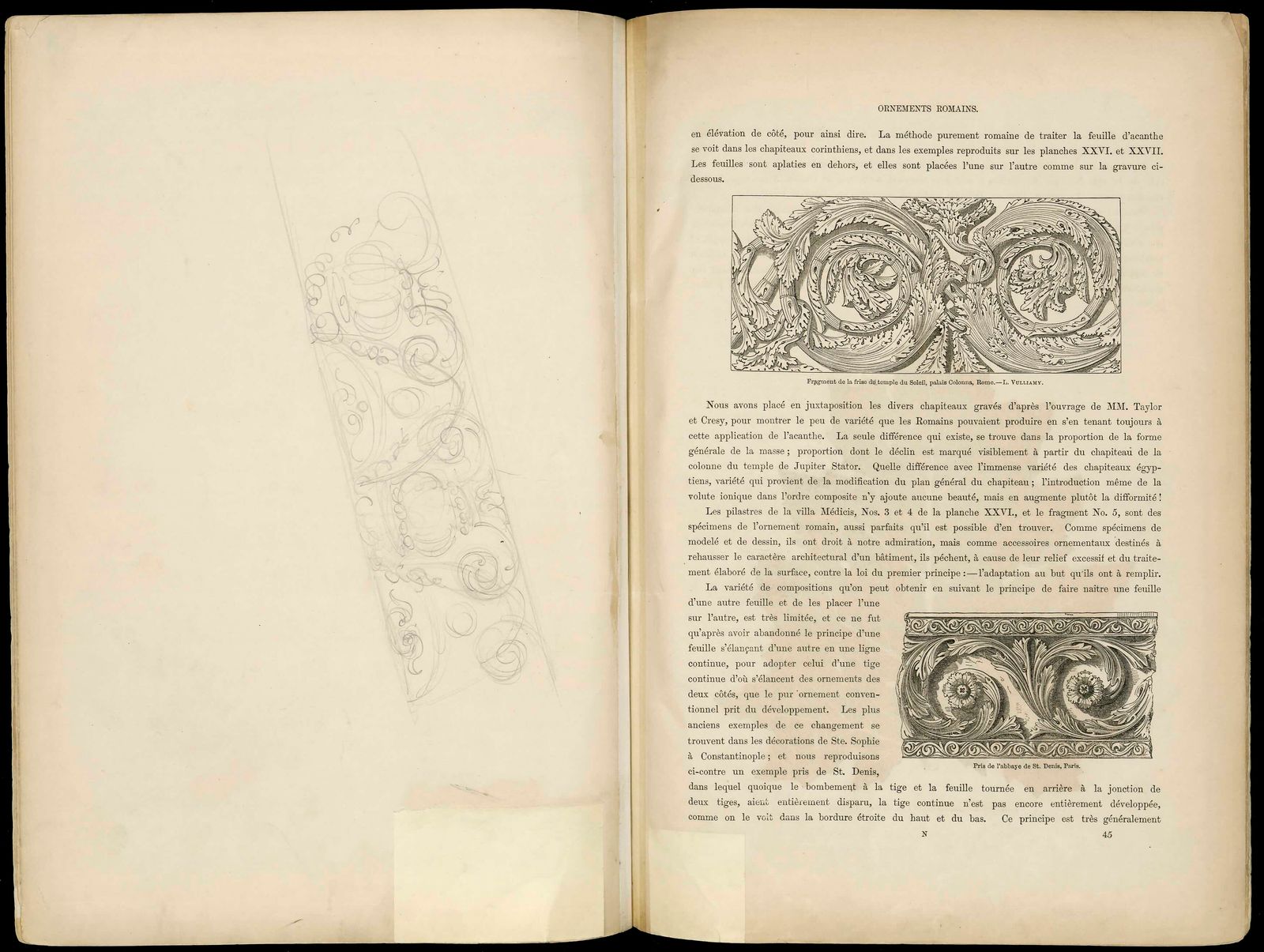
Photo: Cartier
Making this exhibition truly immersive, the journey starts in a remarkable manner, inviting you to walk through footage orchestrated by Oscar-winning production designer Dante Ferretti. As you go up different staircases to access the main rooms, the walls are projected with scenography of the movies Medea (1969) by Pier Paolo Pasolini, The Name Of The Rose (1986) by Jean-Jacques Annaud, Sweeney Todd: The Demon Barber Of Fleet Street (2007) by Tim Burton and other masterpieces. Across the Palazzo, different areas are also paired with various Cartier fragrances, making Cartier & Myths an experience to absorb with every sense.
Cartier & Myths is on display at Palazzo Nuovo till 15 March 2026.
This article was originally published in the December 2025 issue of Vogue Arabia.