
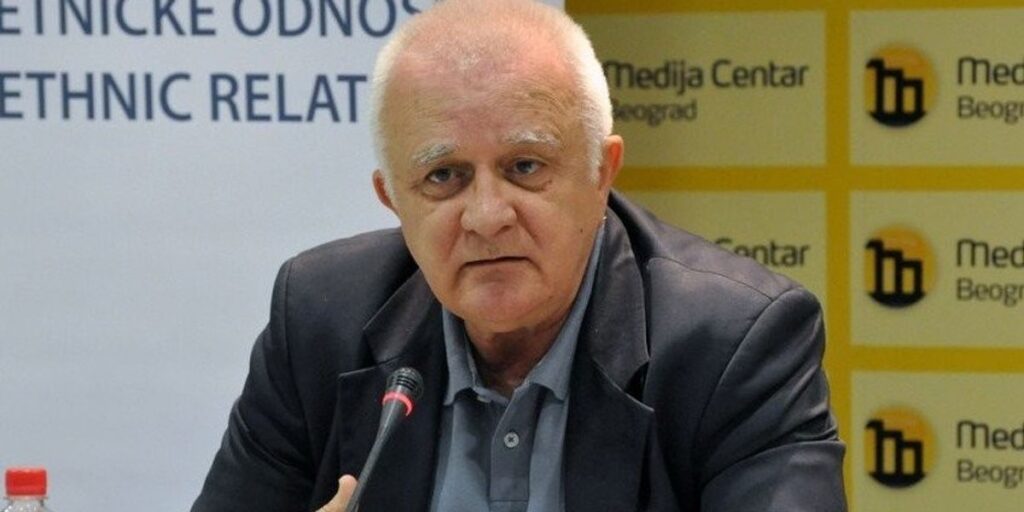
Serbian analyst, Dusan Janjic, spoke about the issue of dialogue between Kosovo and Serbia as well as the association.
Janjic says that Serbia has de facto recognized Kosovo, but that with the attack on Banjska it ruined everything. As for the Association of Serb-majority Municipalities, Janjic states that it was poorly presented.
The dialogue on normalization between Kosovo and Serbia has lost its political content and has been reduced to formal meetings without results, political analyst Dushan Janjic estimates for RTK.
Although, according to him, the dialogue is fundamentally blocked, in Serbia’s relations with Kosovo, many key issues have already been effectively resolved.
“In this process, Serbia has de facto recognized Kosovo. This is included in the agreements and documents. The narrative of ‘non-recognition’ serves only for internal use. Belgrade has nothing more to offer, with the attack on Banjska everything has been surrendered,” said Janjic.
However, according to Janjic, key political problems remain unresolved. He believes that the Association of Serb-majority Municipalities was wrongly established from the beginning and cannot offer a sustainable solution.
“The association of municipalities with a Serbian majority, in this form, is not feasible. Kosovo is already decentralized and the ethnic model represents a political failure. Without a clear institutional status and real protection of the rights of the Serbian community, Kosovo does not have a serious path towards the Council of Europe. There are models, and Kurti has even mentioned the Croatian model as acceptable for minority self-government,” Janjic stressed.
Janjic estimates that the dialogue, in its current format, cannot be revived without a fundamental change in approach, which is why the normalization process has remained blocked, without any real progress.
“The year 2025 was spent with coffee instead of dialogue. What the new facilitator is doing now is a bureaucratic attempt to revive something that cannot be revived, in this form,” Janjic underlined.
According to Janjic, although the European Union remains formally the facilitator of the dialogue, a significantly stronger political commitment from the Quint group, especially the United States and the United Kingdom, is needed. Without direct access and political pressure from these actors, the process will remain blocked in the ‘status quo’.