
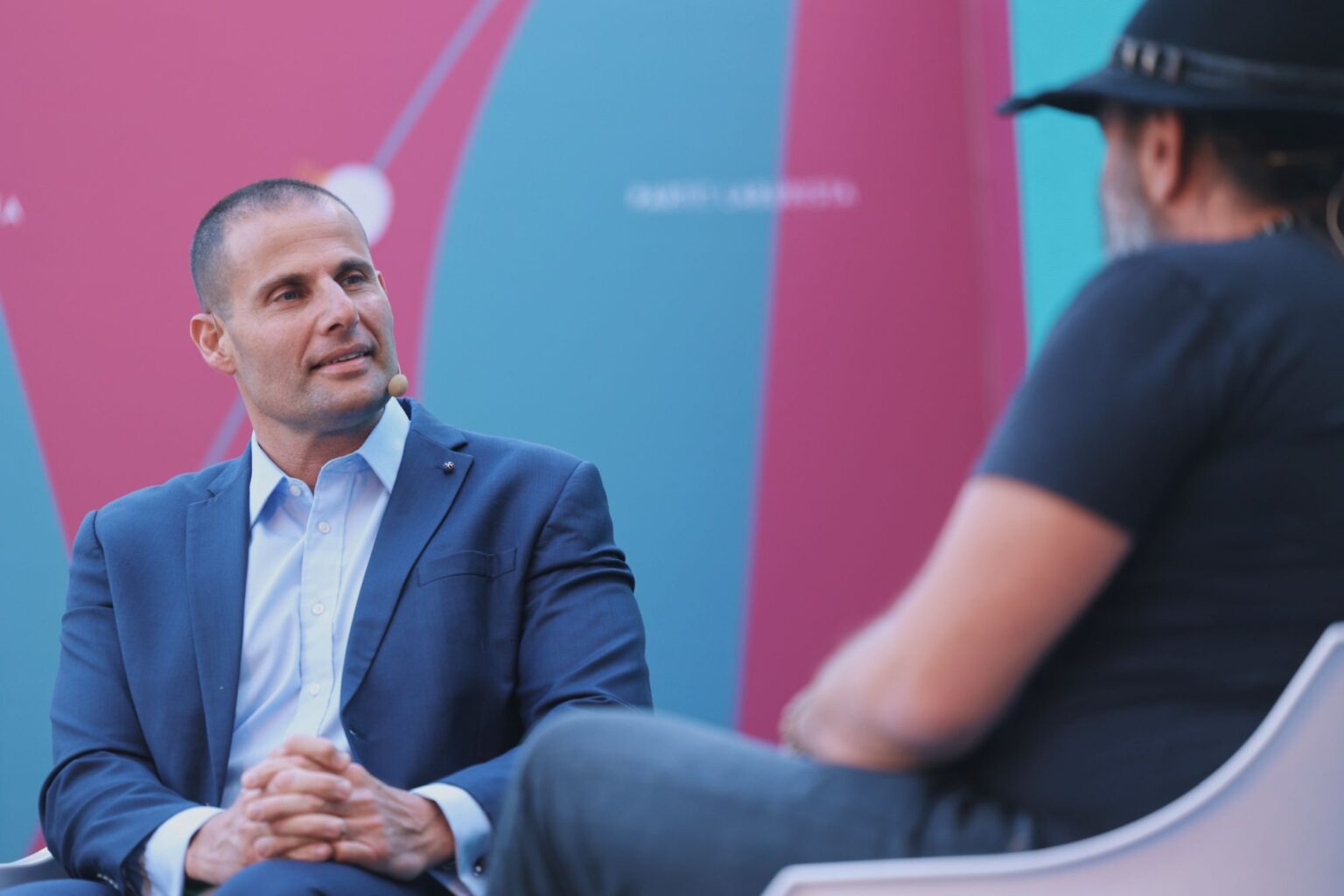
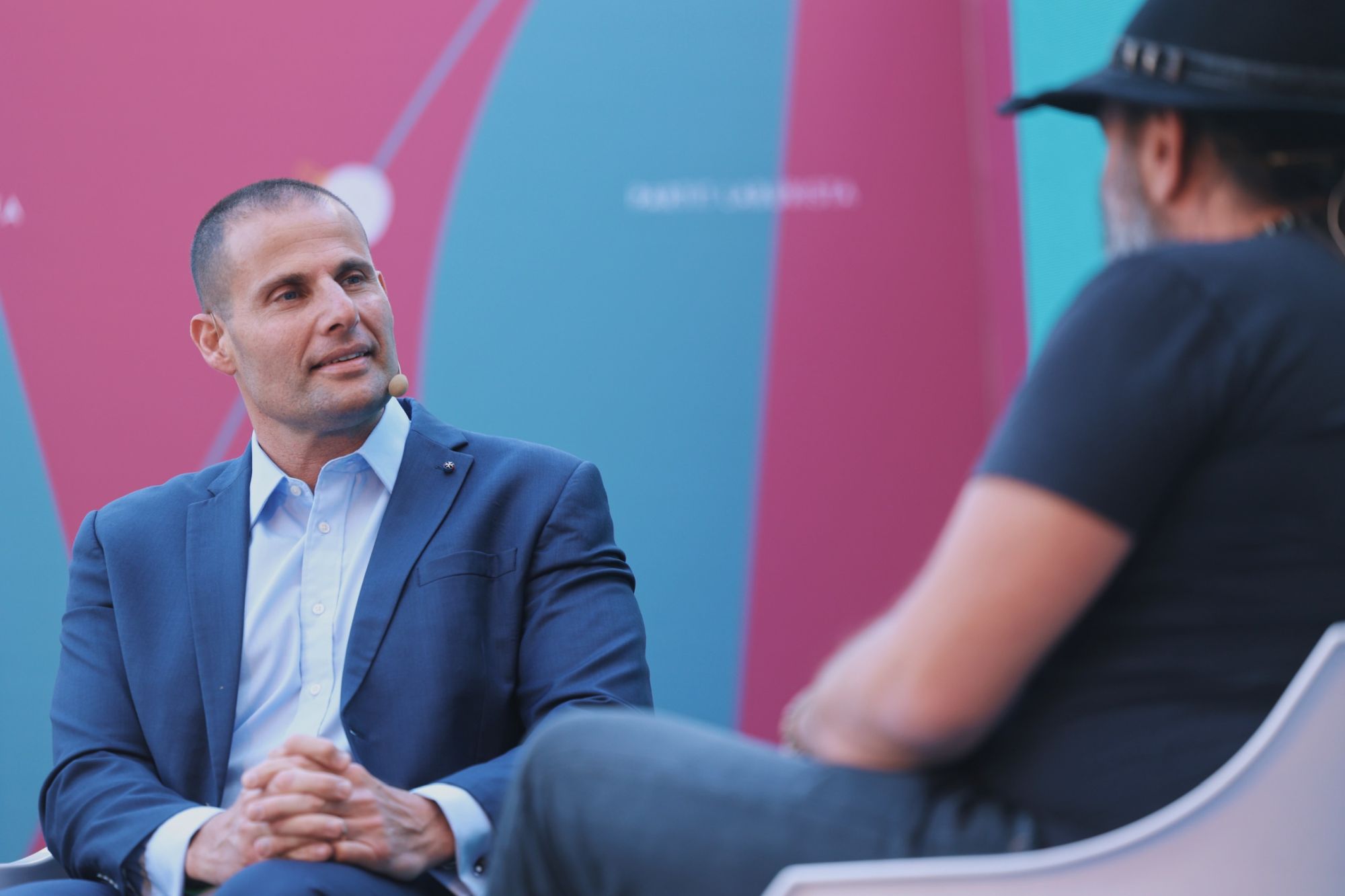
 Photo: Partit Laburista
Tista’ taqra bil-
Malti.
Prime minister Robert Abela delivered a full-throated defence of artificial intelligence on Sunday morning, insisting that the Maltese should not fear it because it would only replace the jobs the country wants to reduce: jobs predominantly carried out by foreign workers.
Amid speculation that the ongoing AI boom may be, at least in part, an AI bubble, with the generative AI investments leading the hype presently spending far more than they get back, the prime minister put himself firmly on the techno-evangelist side of this particular debate in an interview on Sunday morning.
He insisted that technology that would “positively redimension” the job market, effectively dismissing suggestions of potential drawbacks as he insisted that no one should be afraid of what it would bring.
“It will not take anyone’s jobs, except for the jobs that this country wants to reduce,” he said.
“This is the beauty of AI, the quality jobs… the ones that we need to keep in the hands of the Maltese, they will be strengthened by AI,” he said, in a statement that either overlooked or dismissed concerns that AI threatens creative jobs, including artists and writers.
“And the jobs where we can stand to somewhat reduce the number of foreign workers – more than somewhat – AI will help us reduce them.”
Abela’s interviewer, TV presenter Jean Paul Mifsud, highlighted a crucial job which Malta depends heavily on foreign workers to carry out – care work, and Abela insisted that AI would help reduce numbers even there.
He mentioned a “fascinating” pilot project by an unnamed private investor and care home owner who is seeking to reduce the number of care workers required to monitor patients requiring constant watch through what he described as AI-powered device that could monitor the individuals’ health.
The project is being followed up by the government-run St Vincent de Paul Residence, which would hope to put more patients on constant watch under each care worker’s responsibility, up from the present 1-to-1 requirement.
“There are solutions to challenges like foreign workers,” he said. “But not through populism or by fomenting hatred or negative sentiment towards them.”
The solution, instead, is purely technological, according to the prime minister.
Energy subsidies might stop if gas pipeline is built
The wide-ranging interview also touched on Malta’s costly electricity subsidies, which were introduced in 2022 and which have appeared set to remain indefinitely, not least since ending them would be inevitably an unpopular move.
During the interview, however, Abela suggested that there may be a point in which they would be reduced, albeit not for years to come.
He argued that the subsidies addressed Malta’s natural disadvantages as an island nation, and indicated that they needed to last at least until Malta builds a gas pipeline connecting it to Europe: a costly initiative for which Malta has long sought to secure EU funding.
He insisted as he did so that the Nationalist Party in opposition was “hindering us,” but in practice, the party has not made any objections to the project.
As in previous occasions, Abela avoided direct mention of the organisations that have most prominently opposed the project: the Daphne Caruana Galizia Foundation and Friends of the Earth Malta.
A key concern is that the project would benefit the Electrogas shareholders – not least Yorgen Fenech, who is presently awaiting trial for allegedly ordering Daphne’s murder.
FoEM, meanwhile, has long objected to the project on environmental grounds, arguing that Malta should work to phase out fossil fuels as soon as possible, and not tie its fortunes to fossil fuels in such a manner.

