
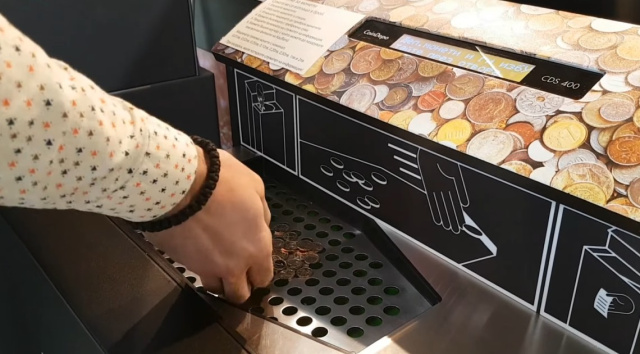
With only days left before the euro replaces the lev, queues have begun forming across Bulgaria, particularly in front of coin-counting and exchange machines. Many people are trying to get rid of accumulated lev coins, especially stotinki, often stored in bags or even sacks, according to BGNES.
One popular solution has been coin exchange machines located in large shopping centers. Customers wait their turn, pour in their coins, and receive a voucher equal to the calculated amount, which can then be used for shopping. However, in recent weeks this option has become less accessible in Sofia. Coin counters that previously attracted heavy use in two major hypermarket chains have been removed. In another large retail chain, self-service checkouts that accept coins are frequently full or now limit deposits to just 5 leva, about 2.56 euros. At the same time, small neighborhood shops that until recently willingly accepted coins of 0.50, 1 and 2 leva are increasingly refusing to consolidate cash for regular customers.
Another alternative is the Bulgarian National Bank. From early morning, people line up at BNB cash desks to exchange stotinki and coins of 1 and 2 leva. For those who do not manage to exchange their coins by the end of the year, there is still time. Throughout January 2026, lev coins and banknotes will remain legal tender and can still be used for payments.
Citizens without access to coin machines can also deposit pre-counted and sorted coins into their personal bank accounts, though banks charge a commission for this service. Online discussions are already full of suggestions on how to use remaining coins after the euro is introduced, with paying utility bills among the most frequently mentioned ideas.
Bulgaria will officially adopt the euro on January 1, 2026. According to the Association of Banks in Bulgaria, existing debit and credit cards will remain valid, and there is no need to open new accounts. All lev balances will be converted automatically into euros, free of charge and at the fixed exchange rate of 1 euro to 1.95583 leva. IBAN numbers will not change.
On New Year’s Eve, between 9:00 p.m. and one hour after midnight, card systems will temporarily suspend operations while switching from levs to euros. During this brief window, card payments and ATM withdrawals will not be possible, so banks advise withdrawing cash in advance if needed. From January 1 onward, all card transactions will be in euros, and ATMs will dispense only euro banknotes.
Between December 31 and January 2, banks will adjust their internal systems, with each institution informing clients individually about service availability. Aside from the short technical interruption on New Year’s Eve, cards are expected to function normally over the holidays.
Since December 1, commercial banks have been selling starter kits containing euro coins with Bulgaria’s national design. These coins will enter circulation on January 1, 2026, and have no collector value.
Throughout January, consumers will be allowed to pay in levs, while merchants will give change in euros. If euro coins or notes are temporarily unavailable, change may also be returned in levs. From January 1 to June 30, banks will exchange lev banknotes and coins for euros at the fixed rate without charging fees.