
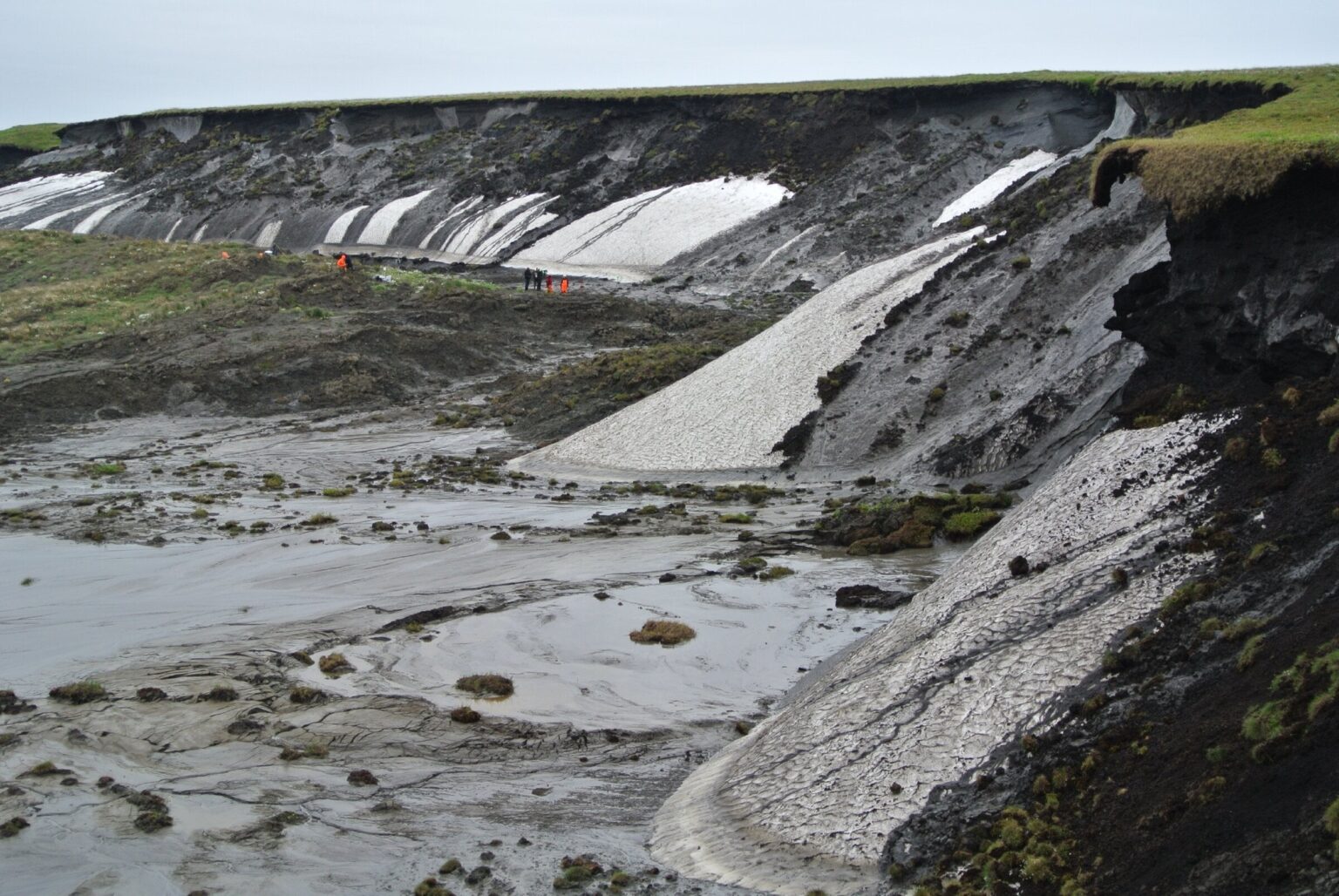
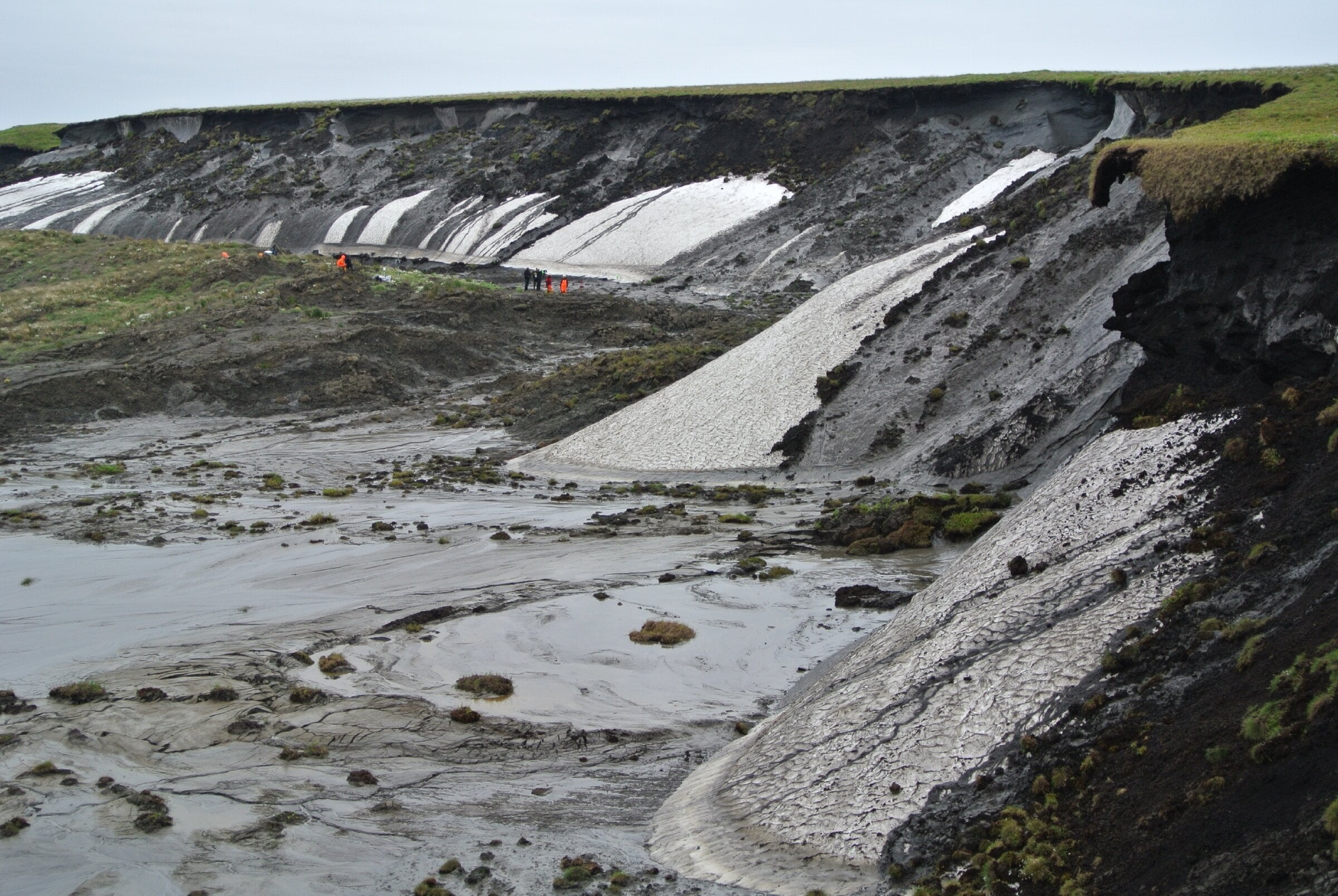
Alfred Wegener Institute: “The projected release of greenhouse gases wouldn’t lead to a global upsurge in warming by the end of the century. As such, portraying the permafrost as a global tipping element is misleading.” – Nature Climate Change
https://phys.org/news/2024-05-permafrost-climate-impacts.html
3 Comments
Recent findings from the Alfred Wegener Institute challenge the notion of permafrost as a global tipping element in climate change. The study, published in *[Nature Climate Change](https://dx.doi.org/10.1038/s41558-024-02011-4)*, suggests that the release of greenhouse gases from thawing permafrost won’t lead to a significant global warming spike by the century’s end.
Permafrost, covering about a quarter of the Northern Hemisphere, contains vast amounts of organic carbon. When it thaws, microorganisms decompose this matter, releasing CO2 and methane. While it has been perceived as a “ticking carbon timebomb,” the study reveals a more complex picture.
“Our goal was to close this gap in our knowledge,” says Dr. Jan Nitzbon from the Alfred Wegener Institute. “In fact, the idea of permafrost being a global tipping element is a controversial one in the research community.”
Led by Dr. Nitzbon, the research team found no single global tipping point. Instead, various local and regional processes trigger thawing at different times, cumulatively affecting the permafrost. These processes, such as the formation of thermokarst lakes and forest fires, amplify thawing but only on a local or regional scale.
“There is no evidence of self-amplifying internal processes that, from a certain degree of global warming, affect all permafrost and accelerate its thawing globally,” Nitzbon explains. “The projected release of greenhouse gases wouldn’t lead to a global upsurge in warming by the end of the century. As such, portraying the permafrost as a global tipping element is misleading.”
The study emphasizes the heterogeneity of the permafrost zone, where multiple small tipping points will be surpassed gradually. This means that permafrost thawing will intensify progressively with global warming, potentially leading to complete loss if temperatures rise by 5 to 6 degrees Celsius.
“There is no safety margin of warming—as the image of the tipping point suggests—that we can still exploit as long as we don’t exceed the threshold value,” says Nitzbon.
Dr. Nitzbon highlights the importance of continued monitoring and better climate modeling to understand permafrost dynamics. He stresses that achieving net-zero emissions is crucial to preserving these critical carbon reservoirs and unique habitats. “The sooner that humankind can achieve net-zero emissions, the more regions can be preserved as unique habitats and carbon reservoirs,” he concludes.
was anyone really worried about carbon? I’ve always heard that it’s the methene release that is the killer.
The title is extremely misleading.
The information from the article is that not all Permafrost will thaw evenly like a single entity but should be observed as different geographic incidents