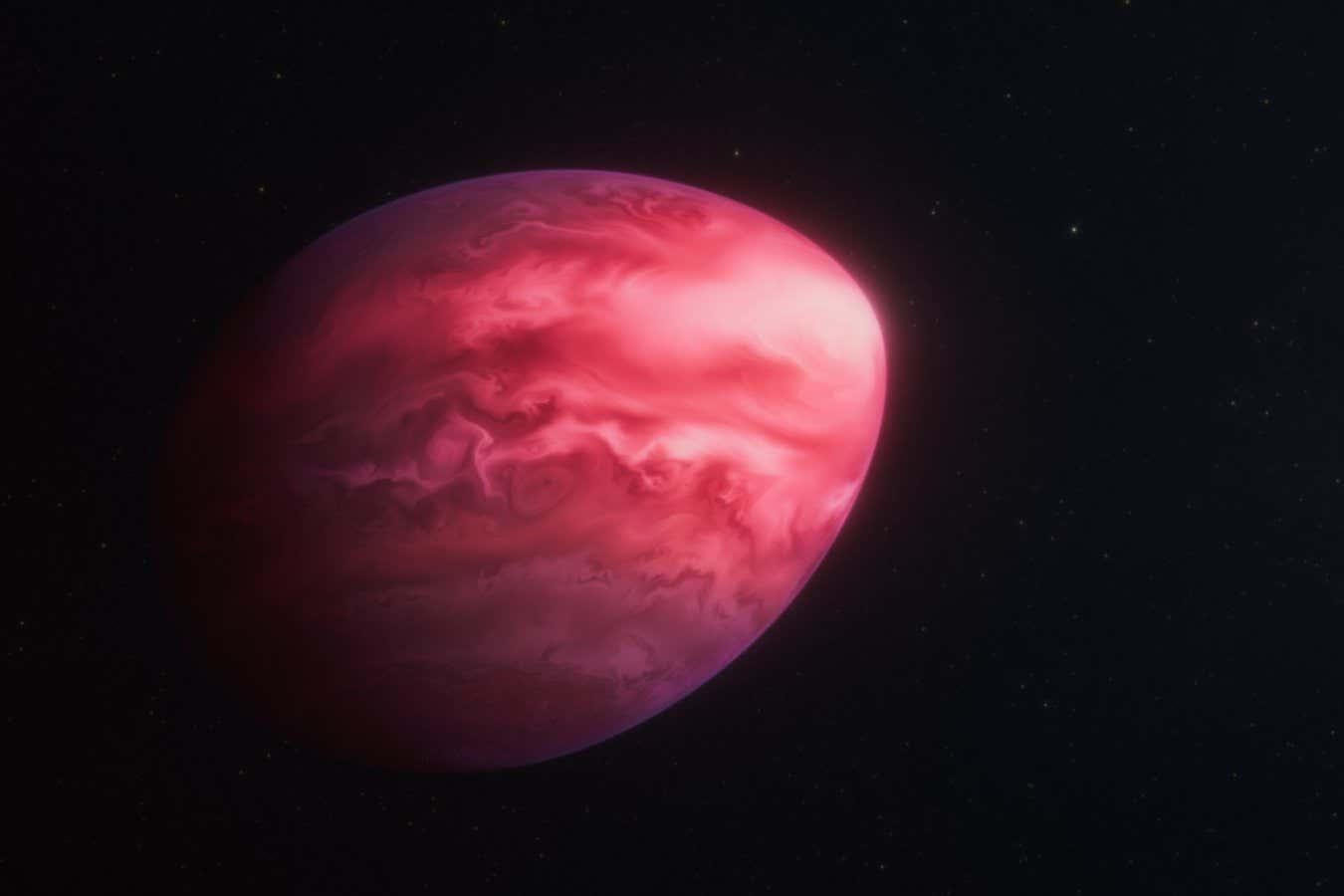
The lemon-shaped exoplanet PSR J2322-2650b appears to defy the rules of planet formation
https://www.newscientist.com/article/2508929-strange-lemon-shaped-exoplanet-defies-the-rules-of-planet-formation/


The lemon-shaped exoplanet PSR J2322-2650b appears to defy the rules of planet formation
https://www.newscientist.com/article/2508929-strange-lemon-shaped-exoplanet-defies-the-rules-of-planet-formation/
1 Comment
The planet is so close to its host star, and the host star is so massive, that it is thought to have been pulled by the pulsar’s gravity into an oblong, lemon-like shape. A full year there lasts only 7.8 hours, and even the coldest points on the planet are about 650°C (1202°F). Unlike most [other giant planets](https://www.newscientist.com/article/2468994-astronomers-uncover-the-topsy-turvy-atmosphere-of-a-distant-planet/), the winds there blow in the opposite direction to the planet’s rotation.
Journal reference: *The Astrophysical Journal Letters* [DOI: 10.3847/2041-8213/ae157c](https://iopscience.iop.org/article/10.3847/2041-8213/ae157c)