Since restoring its independence, Azerbaijan has pursued a consistent and purposeful policy aimed at building a rule-of-law state and ensuring reliable protection of human rights and fundamental freedoms.
This has not been a declarative process. The formation of a solid legislative framework, the establishment of legal institutions, comprehensive judicial reforms, and a penal policy grounded in the principles of humanism have collectively shaped Azerbaijan’s chosen democratic trajectory. The Constitution of the Republic of Azerbaijan, which enshrines human rights and freedoms as the highest value, clearly reflects this strategic choice.
However, the protection of human rights cannot be confined to constitutional provisions and legal norms alone. It must be manifested in real life — through the practical application of these rights and the steady development of citizens’ legal awareness. Societies with a high level of legal and political culture are characterized by citizens who understand both their rights and their responsibilities, actively participate in public life, and contribute to transparency and accountability in governance. The formation of precisely such a society has been defined by the Azerbaijani state as a long-term strategic objective.
Against this backdrop, amnesty acts and presidential pardon decrees stand out as clear expressions of the principle of humanism in state policy. Amnesty and pardon are not merely legal instruments; they are powerful social mechanisms that facilitate rehabilitation, reintegration into society, and the restoration of social justice. As a sovereign, democratic, and legal state, Azerbaijan recognizes personal freedom as a fundamental right and has consistently preserved the tradition of offering citizens a second chance.
The decision by President of the Republic of Azerbaijan and Supreme Commander-in-Chief of the Armed Forces Ilham Aliyev to declare 2025 the “Year of the Constitution and Sovereignty,” accompanied by a new amnesty initiative, represents another strong signal of the state’s commitment to human rights and humanistic values. The proposed Amnesty Act, expected to cover around 20,000 people, is set to become one of the largest humanitarian steps in the history of independent Azerbaijan. According to the draft, those eligible for release from punishment or criminal liability include participants in combat operations for the defense of Azerbaijan’s sovereignty and territorial integrity, close relatives of martyrs and missing persons, individuals who became disabled as a result of the war, women, people over the age of 60, minors, and persons convicted of crimes that do not pose a threat to public safety.
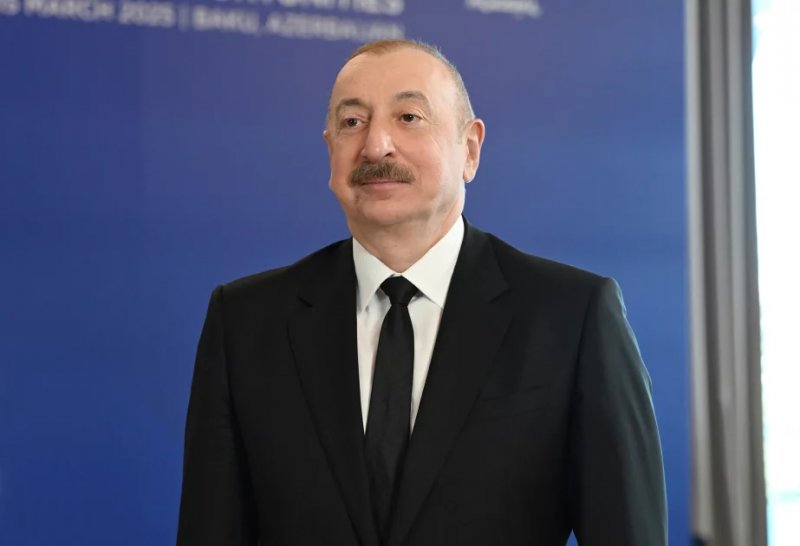
Photo: AZERTAC
Importantly, the policy of amnesty in Azerbaijan is systemic rather than episodic. Its foundations were laid by National Leader Heydar Aliyev, during whose presidency amnesty acts and pardon decrees became an integral part of state governance. Between 1995 and 2003, seven amnesty acts were adopted, covering more than 77,000 individuals and leading to the release of thousands from detention. This approach strengthened social notions of forgiveness, rehabilitation, and responsibility.
This humanitarian line was continued in later years. Amnesty initiatives put forward by Azerbaijan’s First Vice-President Mehriban Aliyeva brought relief and hope to thousands of families. A particularly symbolic moment came in 2018, when an Amnesty Act was adopted to mark the 100th anniversary of the Azerbaijan Democratic Republic. That decision became a milestone in the development of legal and political culture, reinforcing public trust in the state and encouraging greater civic engagement. Amnesty acts and pardon decrees have since become one of the defining indicators of Azerbaijan’s governance philosophy, enabling thousands to reunite with their families and reintegrate into society while highlighting the human-centered nature of the legal state. The amnesty announced in 2021 on the occasion of Victory Day occupies a special place in Azerbaijan’s modern humanitarian history.
The new amnesty initiative proposed by President Ilham Aliyev within the framework of the “Year of the Constitution and Sovereignty” carries particular significance. It is being implemented at a historic moment when Azerbaijan’s sovereignty and territorial integrity have been fully restored. The fact that the Constitution now holds supreme legal force across the entire territory of the country represents one of the most important achievements of state-building. Taking a humanitarian step at such a moment reflects the state’s confidence in its own strength and internal stability.

Photo: AZERTAC
At the same time, the amnesty initiative serves to strengthen social justice and public solidarity. By extending forgiveness to individuals who do not pose a danger to society, the state demonstrates faith in their capacity for reform and their potential to become constructive members of society. This approach not only supports social cohesion but also encourages higher levels of legal and political awareness and more active civic participation.
Ultimately, the protection of human rights and freedoms, the elevation of legal and political culture, and the promotion of social and political engagement remain among the core priorities of Azerbaijan’s state policy. Guided by the strategic vision of National Leader Heydar Aliyev and consistently advanced by President Ilham Aliyev, Azerbaijan continues to shape a model of a strong legal state and an active civil society. This model serves as a reliable foundation for sustainable development, social stability, and the strengthening of democratic values.
Rovshan Seyyaroglu
The material was prepared with the financial support of the Media Development Agency of the Republic of Azerbaijan.