
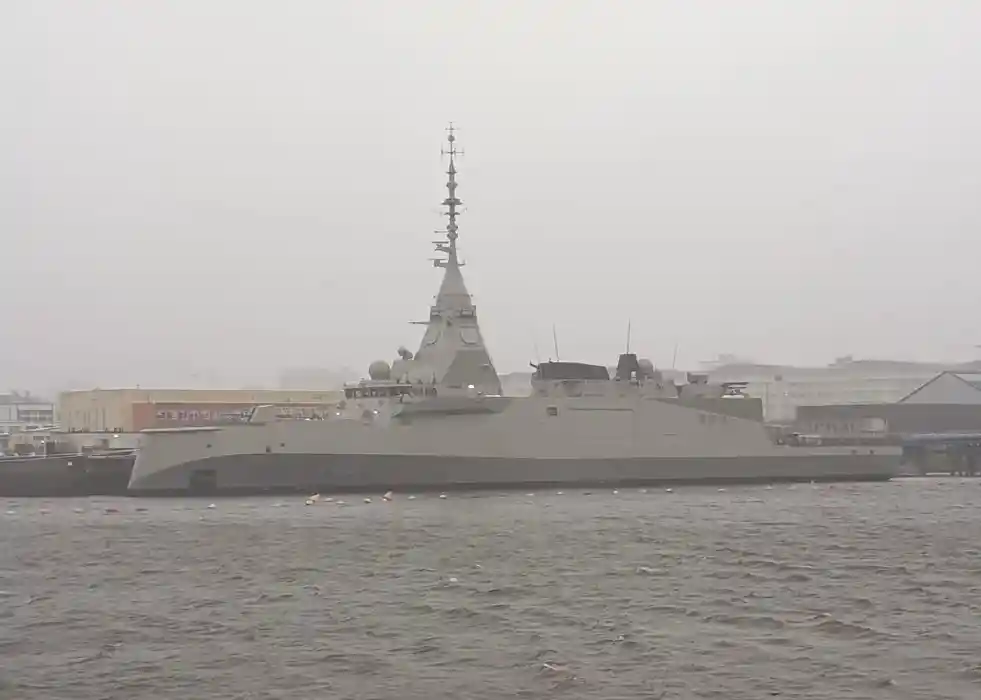
On December 18, Greece officially received its first Belharra-class (FDI HN) frigate, HS Kimon (F-601), during a ceremony at Naval Group’s shipyard in Lorient, France. The ceremony was the formal start of the ship’s service in the Hellenic Navy and the first time the Greek flag was flown on board.
Greek Defence Minister Nikos Dendias said at the delivery ceremony that the transfer was more than just giving over a single platform. He called it the start of a “new era” for the Hellenic Armed Forces and Navy. He stressed that the initiative is clear evidence of the strategic military relationship between Greece and France.
After the ceremony, HS Kimon will sail to Brest, where all of its weapon systems will be put installed. Before the frigate leaves for Greece, it will be armed with Exocet anti-ship missiles and Aster 30 surface-to-air missiles. The ship should reach the Salamis Naval Base in early 2026 and be ready to operate in the Aegean and Eastern Mediterranean that same year.
The Belharra-class is a big change in naval design philosophy since it includes cyber resiliency from the start, in addition to its normal fighting capability.
HS Kimon has a fully digital architecture that is backed up by two data centres and built-in cyber-protection systems. This is meant to keep the ship’s combat effectiveness even during long-term electronic or cyber-attacks.
This design shows that more and more people are realising that new naval systems need to be able to work in both kinetic and electromagnetic and digital environments that are being fought over.
In September 2021, Greece inked a contract for three Belharra-class frigates worth around €3 billion. The Greek parliament later granted an option for a fourth ship, which officially went into effect in November 2025.
Once completed, the programme is expected to significantly enhance the Hellenic Navy’s air-defence, anti-submarine warfare and multi-domain operational capabilities.
The Belharra programme forms part of a broader Greek military modernisation effort, under which Athens plans to invest around €25 billion over the next decade. Alongside the acquisition of Rafale fighter jets, NH90 helicopters and additional Exocet missiles from France, the new frigates are set to become a central pillar of Greece’s future naval deterrence posture.