
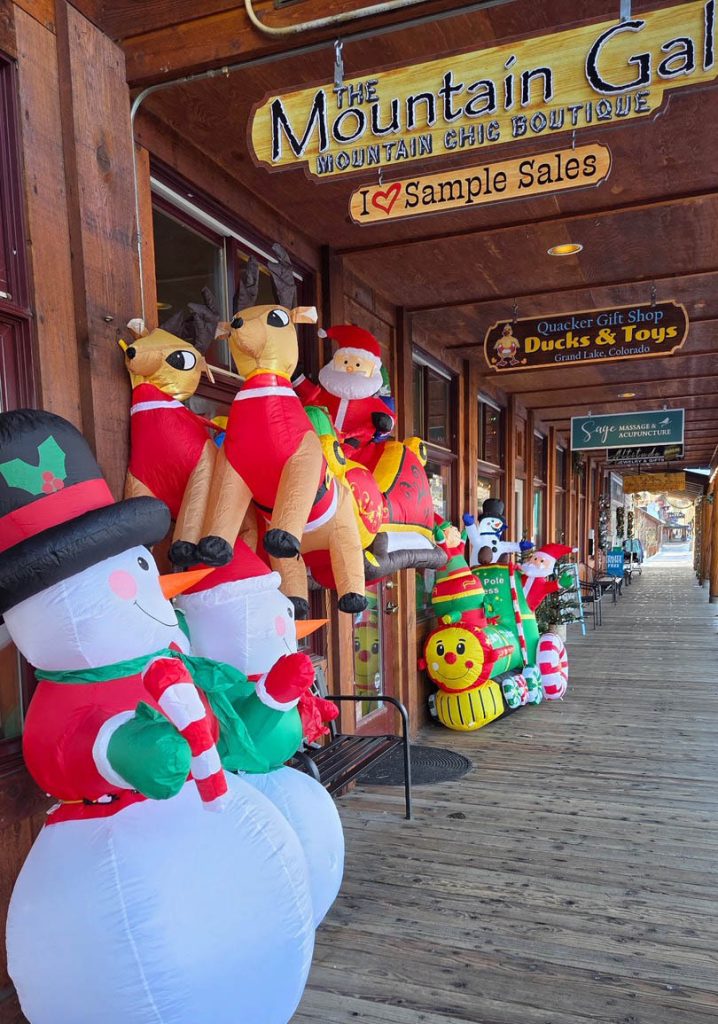
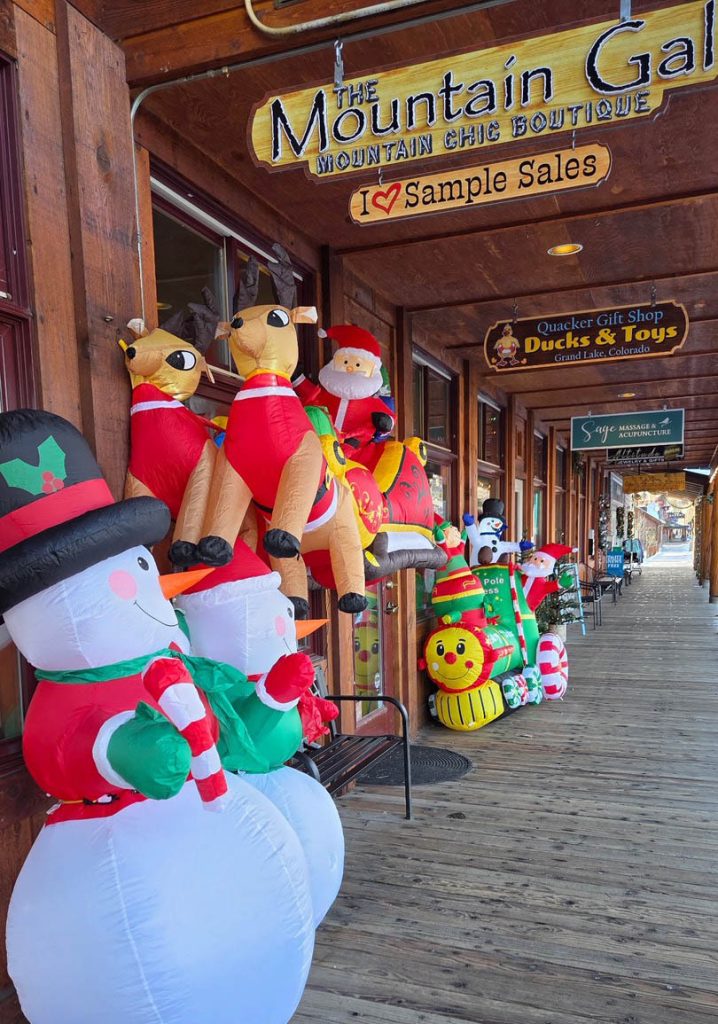
 Jennifer Brown said her two businesses in Grand Lake, Mountain Gal Boutique and Quacker Gift Shop, were faring well with steady sales headed into the winter season.
 Jennifer Brown/Courtesy photo
A slow start to winter in Grand County is expected to ramp up as the holiday season draws near, but data points to higher expenses for visitors, which experts say limits discretionary spending.
Price spikes in lodging and transportation have made visitors “more cautious with their time and money,” according Grand County Tourism Board Executive Director Gaylene Ore.
A longer fall and low snowfall in the mountains made for a quiet November this year in comparison to last, but ski towns are still seeing a slight overall increase in the pace of bookings, Ore said.
November travel trends statewide
In November, Colorado saw a 13% increase in its average nightly rate from 2024. Last November’s rate was $216, while this year’s was $243, according to data from the state tourism board.
In addition, the average length of a stay was up 0.3 nights, or 8% from last year, for an average stay of 4.3 nights. The booking window saw no change from last year, with visitors reserving lodging for their trip an average of 55 days ahead of their arrival.
However, guest occupancy rates dipped slightly from 17.8% last year to 17.1% this year, meaning that lodging properties saw more vacancies this November.
The average expenditure on lodging reservations for guests’ entire trip was up almost 20% from last year, from $1,124 to $1,336 in 2025.
More broadly, rising lodging costs are part of an uptick in travel prices, data shows. The cost of travel has gone up 20% since 2019, according to government data compiled by the U.S. Travel Association.
“There are definitely signs that other than the top 10% of earners, people are being more cautious with their time and money,” Ore said.
Winter business in Grand County
For Stephan Beck, general manager of Gravity Haus Winter Park, the slow start to the season has meant significant financial losses.
“There’s been no snow, so there’s no customers,” Beck said.
He reported bookings are down about 35% compared with last year and estimated losses of about $75,000 in November for the 38-room hotel and restaurant.
Beck described guests as more cost-conscious than in years past, spending less on dining and extras. He worries cancelations could rise if snow conditions don’t improve before Christmas.
 Stephan Beck, general manager of Gravity Haus Winter Park, said the business has seen a slow start to the season due to a lack of snow.Gino Savaria/Sky-Hi News
But other lodging businesses are reporting steady booking numbers.
Brady Johnson, director of sales and marketing at C Lazy U Ranch in Granby, said the ranch is fully booked for Christmas with New Year’s bookings looking strong.
“Some periods are up and some are down, but overall Q1 … is similar to last year,” he said. “We may be the anomaly vs. the rest of Grand County. We filled up the holidays six to eight weeks ago and are still getting requests.”
Jennifer Brown, a business owner in Grand Lake and the incoming Grand County Tourism Board president, said the week of Thanksgiving made up for lower sales throughout the rest of the month. Overall, monthly sales at her apparel store, Mountain Gal Boutique, were up 20% compared with last November.
Other than the holiday weekend, however, “November is always slow,” she said.
Looking ahead
Catherine Ross, executive director of the Winter Park and Fraser Chamber of Commerce, said quieter weeks between Thanksgiving and Christmas are not unusual.
“It’s pretty typical for this community to slow down before Christmas,” she explained, noting that holiday reservations eventually came in, though later than usual.
Tourism experts say there is an uneasy feeling among travelers this season, evident in the current booking data for Christmas. Last year, guests booked their vacations in Grand County an average of 70 days before their date of arrival, according to the county tourism board. This year, that number is down to 50 — meaning travelers are trending toward last-minute vacations.
Ross emphasized that the trend of last-minute bookings has become common across ski towns nationwide, creating anxiety for business owners who struggle to forecast staffing and finances.
Ross added that newer businesses and frontline workers often feel the slowdown most acutely. Servers, bartenders and ski patrol members can face weeks without a steady income, while established businesses are better positioned to weather the valleys. Community programs such as rental assistance funds and mental health resources, she said, are designed to help residents bridge those gaps.
“We all just need to lift each other up and do what we can to help each other,” Ross said.
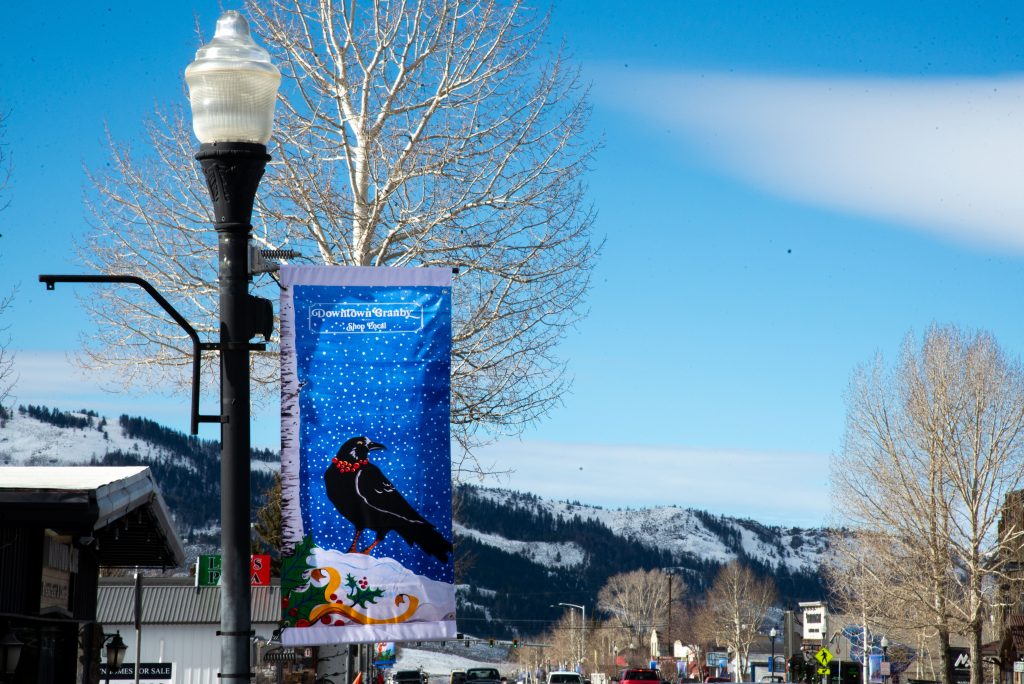 A banner pictured Thursday, Dec. 18, along Agate Avenue in Granby invites visitors and residents to “shop local.”Gino Savaria/Sky-Hi News
Hope for the holidays
Business will almost certainly pick up during Christmas and New Year’s, Ore said, but if visitors are footing a larger bill for accommodations, they may spend more frugally on retail and dining.
“When I’m reading reports that come out from our industry partners, the sense is that people are looking to see what’s going to happen,” Ore said. “There are a lot of people still taking a vacation; it is still a priority to them, but they may not spend on other luxury items.”
The only certainty is uncertainty in a weather-dependent, tourism-based economy, she added. While Christmas appears to be on par with last year’s bookings, January and February are down 7% from last year, according to state tourism board reports.
“It’s just hard to predict,” Ore said. “But with the short-term bookings, I feel pretty confident that we’ll pick that up.”
Brown said continued optimism is important despite declining tourism throughout Colorado.
“As opposed to taking a back seat at a time when tourism could slow down, we are making huge strides to promote the entire county so that Grand County is a tourist choice,” she said, highlighting the tourism board’s marketing efforts to boost off-season travel and activities.
“Our No. 1 industry in this county is tourism,” she said. “We don’t have a No. 2.”
While lodging revenue remains the dominant income source, she said she hopes to see more of an equal distribution of economic activity toward other visitor attractions in the county.
“We need to see an equilibrium with shops, dining and other services,” Brown said. “We have to be very mindful of that metric, because it’s the only way our ecosystem continues to work.”