
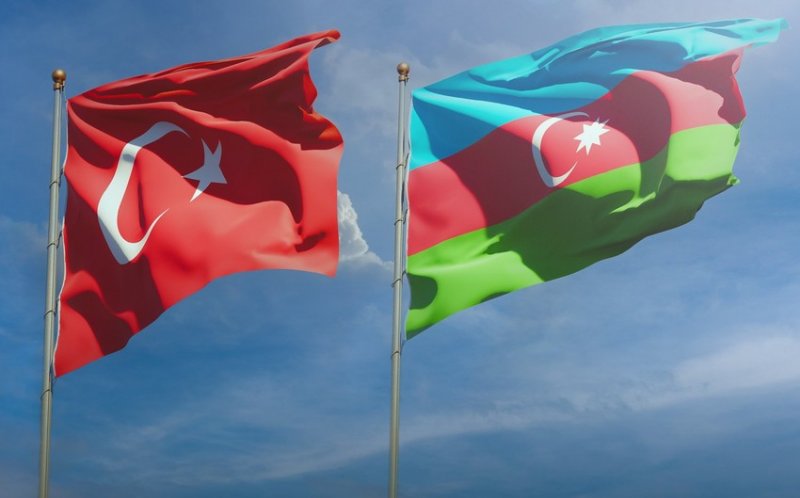
In a region where security is often addressed only after crises emerge, proactive measures are always a topic of serious discussion.
The ratification of the Memorandum on Mutual Military Security between Azerbaijan and Türkiye is a case in point. It is not merely a symbolic gesture of solidarity but a concrete step toward a more robust deterrence architecture in the South Caucasus.
News.Az spoke with Turkish political analyst and Professor of International Relations at Dumlupınar University, Hüsamettin İnaç, to discuss why this memorandum moves the Baku–Ankara alliance from declarations to real obligations, how it affects the regional balance of power amid the war in Ukraine and potential pressure from major international actors, and whether it represents a de facto model of collective defense in the Turkic world.
– What practical significance does the ratification of the Memorandum on Mutual Military Security between Azerbaijan and Türkiye have for the regional security system?
– First of all, the ratification of the Memorandum indeed has enormous significance for regional security. In essence, this document was originally a framework agreement — it theoretically outlined a broad and comprehensive direction for cooperation that went beyond declarative statements. However, after ratification, it acquired practical and legally binding force.
In fact, this created a serious deterrent factor for any forces capable of generating threats in the South Caucasus. This is especially important considering that the future of the Russia-Ukraine war remains a key uncertainty, and its consequences will inevitably affect regional security in the South Caucasus. In this context, the memorandum sends a clear and unequivocal signal: potential acts of aggression will not go unanswered.
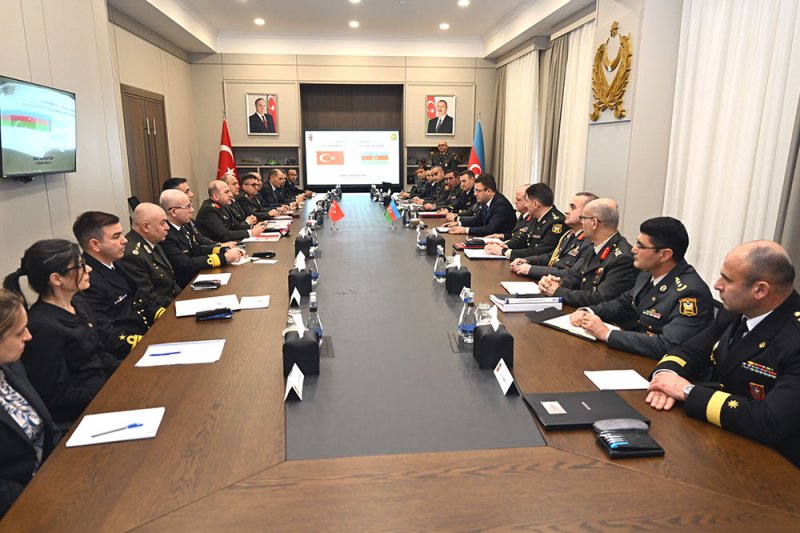
Baku hosts the 17th Azerbaijan-Türkiye High-Level Military Dialogue Meeting. Azerbaijani Ministry of Defense
– What is the fundamental difference between this Memorandum and the provisions of the Shusha Declaration, and can it be seen as a legal strengthening of existing allied obligations?
– Regarding the second question, the Shusha Declaration largely codified the strategic and geopolitical commitments of the two states — a kind of political promise and expression of the shared will of the two allies.
However, if we look closely at the text of the new agreement, we see that its legal component is now translated into concrete mechanisms and detailed norms. Essentially, this document is a “realized” form of the Shusha Declaration — its tangible, institutionalized continuation. In other words, the political will expressed in 2020 is now formalized in a stricter, deeper, and more substantive way, with enhanced legal, military, and strategic components.
– What specific forms of military, technical, or operational assistance could be provided in the event of armed aggression against one of the parties under Article 51 of the UN Charter?
– According to Article 51 of the UN Charter, a state of war must involve land-based aggression: the attack must be sudden and constitute a direct threat carried out as a ground military operation.
In such a situation between the two countries, a wide range of cooperation is possible. First and foremost, intelligence sharing. Next, joint military planning and coordination of responses to aggression. As is known, in wartime, ammunition, weaponry, and military equipment are crucial.
Cooperation in these areas, including joint production, is essential. Additionally, logistics — transporting ammunition and personnel, and ensuring economic needs, primarily food — is important. Technical support, including defense industry exchanges, also plays a significant role.
Each of these points can be implemented as concrete, practical steps and will directly depend on the nature of the threat. Its specifics will determine which of these measures take priority.
– How might the adoption of this law affect the balance of power and perception of security in the South Caucasus, including among neighboring states and international players?
– The implementation of this agreement in practice will lead to a major geopolitical shift in the South Caucasus. It represents the maximum possible synergy between Azerbaijan and Türkiye — the deepest point of their allied relations. This will inevitably be seriously reconsidered by forces that see this format as a threat.
Much will depend on the outcome of the Russia-Ukraine war — whether a peace agreement or at least a ceasefire is reached. If a scenario similar to the so-called Trump plan occurs, with peace signed in the current configuration, there is a risk of increased Russian presence in the South Caucasus. In that case, Moscow could attempt to limit Türkiye-Azerbaijan cooperation and put serious pressure on the Organization of Turkic States.
Russia traditionally considers both the South Caucasus and Central Asia as its “zone of privileged interests,” its “near abroad,” and does not allow active regional formation by other actors under this doctrine.
Therefore, considering the current context, the Türkiye-Azerbaijan agreement has a strong deterrent effect. It significantly raises the cost of potential aggression for any adversary and thus acts as a factor of strategic balance.
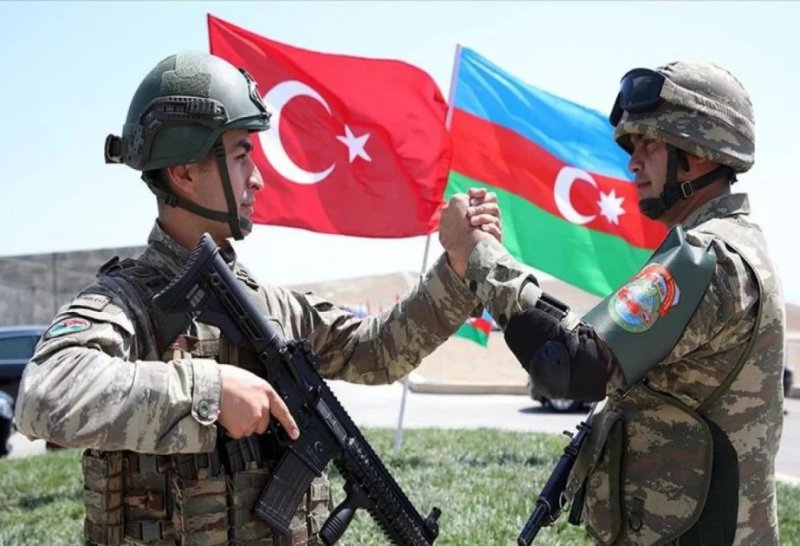
Source: AZERTAC
– How much does this step strengthen Azerbaijan’s long-term security guarantees, and can we speak of a de facto allied model of collective defense with Türkiye?
– For Azerbaijan, this agreement creates a strong security belt. Moreover, it can activate not only a bilateral format but also the Organization of Turkic States and bring Türkiye’s allies, primarily Pakistan, into the orbit of interaction.
Essentially, it is already a full-fledged alliance agreement, working on a logic similar to NATO’s Article 5: “one for all and all for one.” An attack on one party will be considered an attack on the other, and both countries will deploy all available resources and potential without hesitation.
In this context, a new security architecture is forming: Azerbaijan effectively becomes the focal point of military cooperation in the Turkic world. It is no coincidence that at the last summit in Turkmenistan, it was decided that Azerbaijan would become the central venue for military exercises.
Overall, all these factors mean that Azerbaijan, by taking this step, has gained a serious strategic “shield,” significantly enhancing its security, including against potential threats from Russia.