
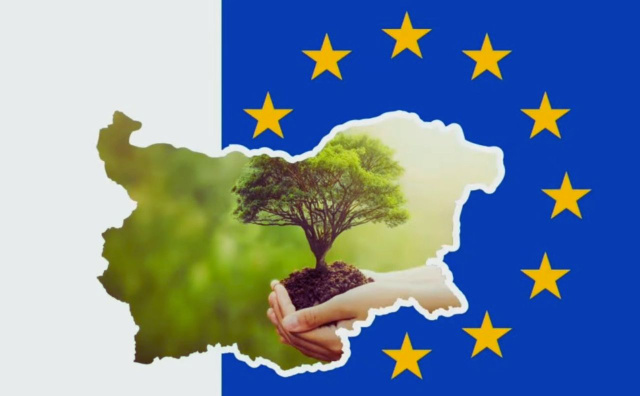
Bulgaria has received close to 70 billion leva, or roughly 35.8 billion euro, in grant funding from the start of the transition period (1990s) up to 2024, according to an analysis by the Institute for Market Economy.
The volume of grants has grown steadily over time, with more than half of all funding absorbed in the past ten years alone. During this period, grant financing has accounted for around 3 percent of Bulgaria’s annual gross domestic product and approximately 7 percent of total revenues in the state budget, underlining its increasing role in public finances.
More than 90 percent of all grant resources are linked to Bulgaria’s membership in the European Union. The largest share comes through EU operational programs, amounting to about 35 billion leva, or nearly 17.9 billion euro, followed by funding under the Common Agricultural Policy, estimated at around 20 billion leva, or just over 10.2 billion euro.
In addition to EU funds, Bulgaria has received grant support from individual partner countries, including the United States, Norway, Iceland, Switzerland, Germany, the United Kingdom, France and Japan, though these sources account for a much smaller portion of the overall total.
Geographically, the bulk of the funding has been concentrated in regions with stronger economic centers, particularly Sofia, Plovdiv and Burgas. The main beneficiaries are public sector bodies, including state institutions, ministries and municipalities, as well as educational and cultural organizations.
By sector, agriculture absorbs the largest share of grant funding, accounting for roughly one third of the total. Infrastructure projects receive around 10 to 15 percent, while significant resources are also directed toward environmental protection, regional development, innovation and measures aimed at boosting competitiveness. In terms of project numbers, initiatives focused on education, human resources, innovation and social activities dominate the overall portfolio.