
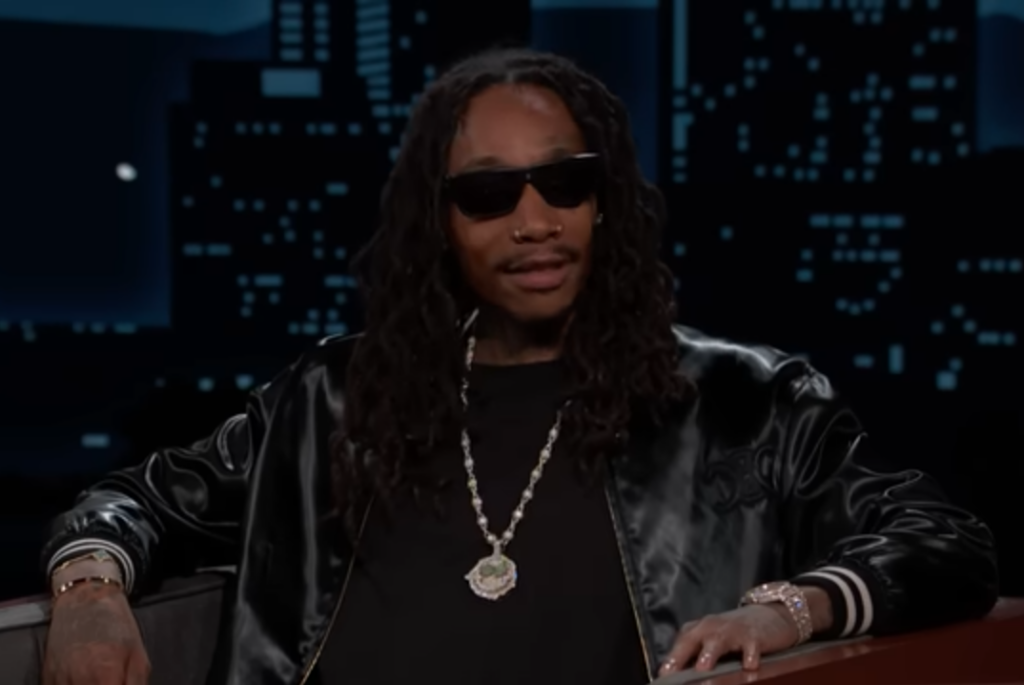
The Pittsburgh-born rapper was arrested in the Eastern European nation with strict drug laws
On a sizzling summer night in 2024, Wiz Khalifa did what he’s customarily done countless times on stages across the globe. As the bass thumped and thousands of fans swayed in unison at a Romanian music festival, the Pittsburgh-born rapper sparked a joint mid-set — a familiar ritual interwoven into his performance persona as tightly as his laid-back flow, lanky frame, and clouded hooks.
This time, the smoke didn’t just drift into the crowd. It followed him into the Eastern European nation’s court.
When the beat drops — and the gavel falls
Nearly a year later, on December 18, Romania’s Constanța Court of Appeal delivered a stunning reversal: a nine-month prison sentence for drug possession tied to that onstage moment, according to the Associated Press. The ruling overturned an earlier judgment that had treated the offense as minor, imposing a fine of roughly $700.
Prosecutors appealed — and won — under Romania’s strict laws criminalizing the possession of “dangerous drugs,” even when intended solely for personal use.
Romanian court found Wiz Khalifa guilty
The case traces back to the summer of 2024, when Khalifa was briefly detained after his performance. Authorities released him shortly afterward, and the episode initially appeared to be a fleeting clash between rockstar bravado and local law. But the legal process quietly moved forward, culminating in a decision that has now rippled far beyond Romania’s borders.
To many fans, the sentence feels jarring, even surreal. Khalifa’s career has long been inseparable from marijuana culture. His testimony about needing to smoke 30 joints a day on the “Jimmy Kimmel Live” show went viral overnight.
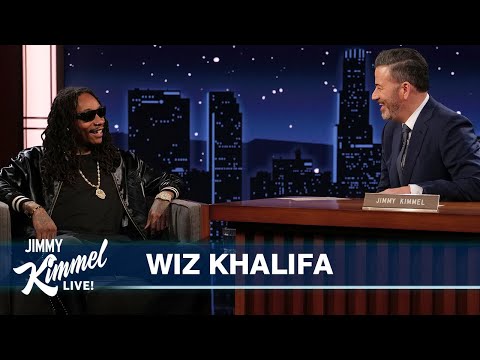
His breakout years were soundtracked by hazy anthems and weed-forward branding, from the chart-topping blockbuster track “Black and Yellow” to the cult-classic Kush + Orange Juice mixtape. Cannabis isn’t just a personal habit — it’s a pillar of his artistic identity.
In 2025, he even released a sequel to Kush + Orange Juice, arriving fifteen years after the original, a nostalgic nod to the era that cemented his image. He even struck up a strong bond with the king of kush, Snoop Dogg, early on in his career based mostly on their shared love of the pungent plant that alters the state of mind.
But Romania is far from Los Angeles, Amsterdam, or Berlin. While countries such as Germany, Portugal, and the Netherlands have relaxed penalties for small-scale cannabis possession, Romania remains one of Europe’s most hardline states on drug offenses. Possession is a crime, regardless of intent, setting the stage for a cultural collision between an American hip-hop icon and Eastern Europe’s zero-tolerance legal framework.
Romanian authorities have emphasized that Khalifa’s conviction involves possession only, not distribution or trafficking. Still, the sentence is real, and the implications are complicated.
Is extradition possible?
For now, Khalifa remains in the United States. Although Romania and the U.S. share an extradition treaty, extradition is far from automatic. According to the U.S. Department of State, such cases hinge on multiple factors, including whether the alleged conduct is criminal in both countries and whether prosecutors choose to pursue extradition at all. In practical terms, unless Khalifa travels to a country willing to enforce Romania’s warrant, he is unlikely to serve the sentence.
The episode underscores a growing tension in global pop culture: artists tour freely across borders, but laws—and attitudes—toward drugs remain stubbornly local. What reads as performative rebellion in one country can become a criminal act in another.
For Wiz Khalifa, the moment was fleeting — a joint lit, a song finished, a crowd roaring. For Romania’s courts, it was a test case in enforcing the letter of the law. And for the rest of the world watching from afar, it’s a reminder that even in an era of global stardom, sovereignty still has teeth.