
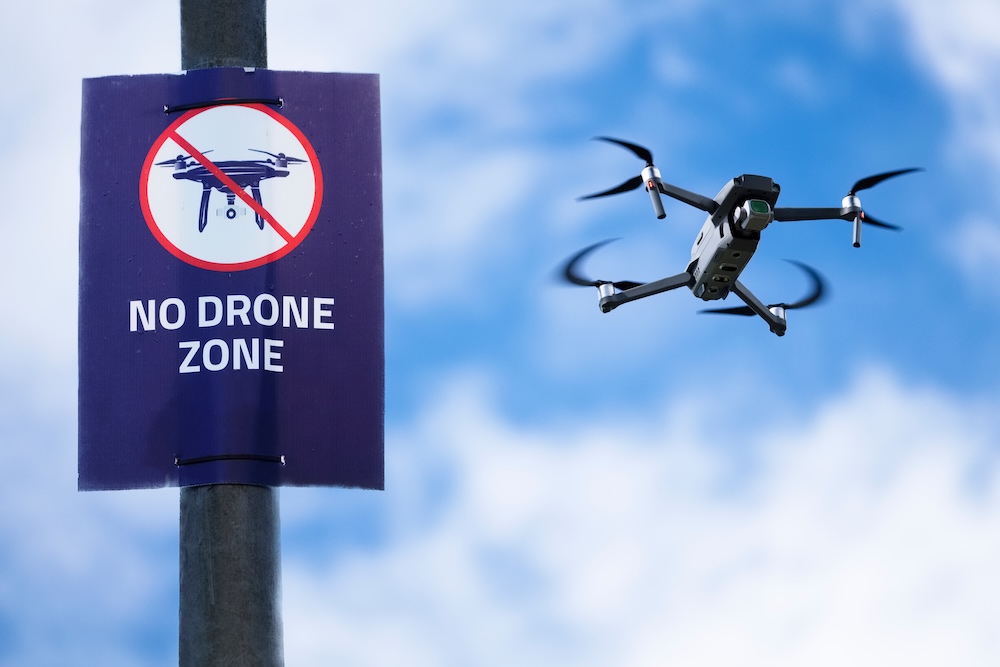
Münch said the BKA has been compiling a national “situation picture” since the start of 2025, bringing together data from suspected cases and including information from the Bundeswehr. He described an “acute threat situation”, with sightings concentrated around military facilities and transport hubs, as well as defence companies and port infrastructure.
Investigators have stopped short of attributing the flights to a specific country in every case. Münch said the authorities could not say with full certainty whether the activity was linked to Russian actors, citing the practical difficulty of identifying drone pilots and proving control or direction. In many incidents, he said, the pattern appeared consistent with state-directed operations.
German reporting has framed the drone flights as more than a nuisance. Münch has said they may be used to collect information as well as to unsettle the public. He gave an example involving military sites where Ukrainian soldiers are trained in Germany. He suggested drones could detect which smartphones are present at a location and potentially identify those devices again later.
Earlier figures show a steady rise through the year. Der Spiegel reported that the BKA logged 850 suspicious drone sightings between January and mid-October 2025. The report said the cases included flights over military facilities and defence firms, as well as sightings over infrastructure such as electricity providers and waterworks.
One incident cited in the same coverage took place on 13 October at a Bundeswehr site in Gnoien, Mecklenburg–Western Pomerania, where four drones were reported in the air. According to the report, German air defence specialists were training Ukrainian soldiers at the time and neither the Bundeswehr nor the police were able to stop the aircraft. Investigations were opened against unknown suspects.
The German government has responded with a new coordination structure. On 17 December, federal and state authorities inaugurated the Joint Drone Defence Centre (Gemeinsames Drohnenabwehrzentrum, GDAZ) in Berlin, intended to improve detection and the coordination of countermeasures. Until now, drone defence in Germany had been spread across multiple agencies; the new centre is designed to close gaps while leaving decision-making powers with the participating bodies.
The GDAZ is located within the Federal Police and brings together representatives from security agencies, the Bundeswehr and intelligence services to exchange information and coordinate operational measures. Full operations are due to begin in January 2026. The centre as modelled in organisational terms on Germany’s Joint Counter-Terrorism Centre.
Alongside the new centre, Germany is expanding specialist capacity. A Federal Police counter-drone unit has been established and is expected to grow to 130 personnel. It will be deployed at airports, in Berlin and around security-sensitive sites nationwide, using equipment including AI-assisted jamming systems and automated interceptor drones.
The expansion has revived debate about where police powers end and military support begins. The cabinet has approved a reform of the Air Security Act, now in parliamentary procedure, to clarify the legal basis for Bundeswehr assistance in countering larger drones and to widen options beyond diversion, potentially including forcing drones down.
Industry has also reported rising demand for counter-drone systems. The German Aerospace Industries Association (BDLI) had recorded increased interest in detection and defence technology, with a survey indicating enquiries from civilian security actors and the Bundeswehr. The association called for clearer legal rules for both defensive measures and the use of drones by security authorities.
For investigators, the challenge remains twofold: establishing intent and proving responsibility. Even where sightings are credible, evidence about the operator can be thin, particularly when drones are launched quickly and flown from a distance. The government’s aim, through the GDAZ and dedicated units, is to tighten reporting, improve real-time situational awareness and speed up intervention at sensitive sites.
First published on defencematters.eu.
Post Views: 989