
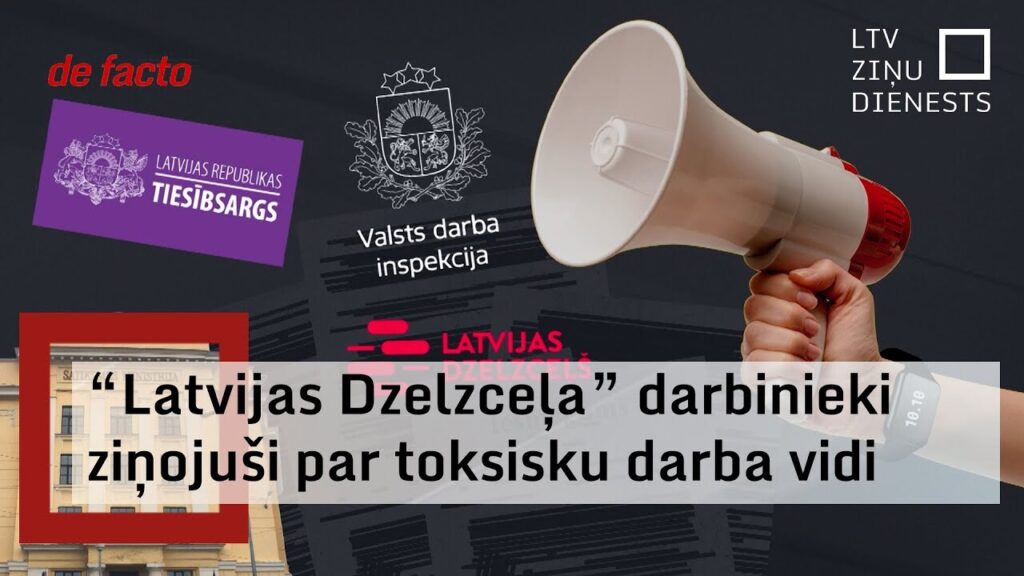
The work atmosphere at national rail company Latvijas dzelzceļš (Latvian Railways/LDz) leaves a lot to be desired, if reports from Latvian Television’s De Facto investigative show are accurate.
Former board member of the company Mārtiņš Ķeņģis resigned at a time when the company was assessing complaints from several employees that he had behaved disrespectfully and humiliatingly towards them. In addition, Ķeņģis’ subordinates had also contacted the State Labour Inspectorate (VDI) and the Ombudsman’s Office, reports De Facto.
Ķeņģis started working on the LDz board in July last year, winning a competition among 32 applicants. After working there for just a year and four months, he resigned at a time when a specially created LDz commission was evaluating an employee’s complaint regarding Ķeņģis’s allegedly bullying manner.
This application was received by the LDz Council, which oversees the company’s board, on October 10th. However, this was neither the first time nor the first instance where the company’s employees collectively turned to the State Labour Inspectorate (VDI) for help. They had been seeking help from the VDI since January. The first application was received there on January 22nd of this year.
In total, 11 applications were received there regarding LDz, two of which were collective or signed by several people.
“We received several reports that employees have unacceptable working conditions in the work environment, that they are humiliated, insulted, and [employees] also pointed out possible bullying,” says Baiba Šilberga, head of the regional VDI, chief state inspector. “Employees’ signals ranged from minor, seemingly private disagreements to very unacceptable situations, interspersed with physical violence,” she continues.
No institution is commenting on this situation in detail because the case materials are confidential. However, “De facto” knows that the episodes described in the application involve humiliation, offensive comments, including those related to age, as well as, according to the employees, disproportionate work demands.
The VDI investigated the incident by conducting interviews with those involved. The circumstances of the case clarified during the interviews allowed the VDI to conclude that the working environment conditions were indeed inappropriate.
“Evidence was obtained that employees were being abused, that their mental health was being threatened for a long time. We drew the attention of the employers that such conditions were unacceptable,” says Šilberga.
“I made the decision to leave because the resistance to change in the company was enormous and I was met with sabotage and targeted countermeasures. Already about the first changes I initiated, I received a comment that largely characterizes the culture of LDz – we survived 16 board members, we will survive you too,” explains Ķeņģis about his reasons for leaving his position.
“De facto” said that the name of another manager, Alla Krūmiņa, also appears in the complaints, although to a lesser extent. She was the head of the LDz infrastructure development and construction department. Complaints about her were considered separately, observing the hierarchy of positions. But in her case, the evaluation did not reach a final decision either, because she too wrote a resignation letter. She worked under Ķeņģis for three months.
Both former officials deny that they behaved unethically or disrespectfully towards colleagues. Furthermore, Ķeņģis also believes that this application was not evaluated fairly enough. “I was informed that an application from individual employees (in total, there were more than 2,300 employees in my area of responsibility) had been received, but I was denied the opportunity to familiarize myself with the content of the application and legally express my opinion on the content of the application,” he explains.
However, as Gita Oškāja, Head of the Legal Department of the Latvian Railway and Transport Workers’ Union, points out, revealing the application to the abuser described in it could lose the trust of employees. “In this situation, it is extremely important to protect employees who have been victims, therefore openly indicating who were the ones making the complaints is definitely unacceptable,” emphasizes Oškāja.
The Ministry of Transport, which also received information several times, expects an explanation from LDz on how to systematically address similar situations in the future.
Select text and press Ctrl+Enter to send a suggested correction to the editor
Select text and press Report a mistake to send a suggested correction to the editor
Tell us about a mistake