
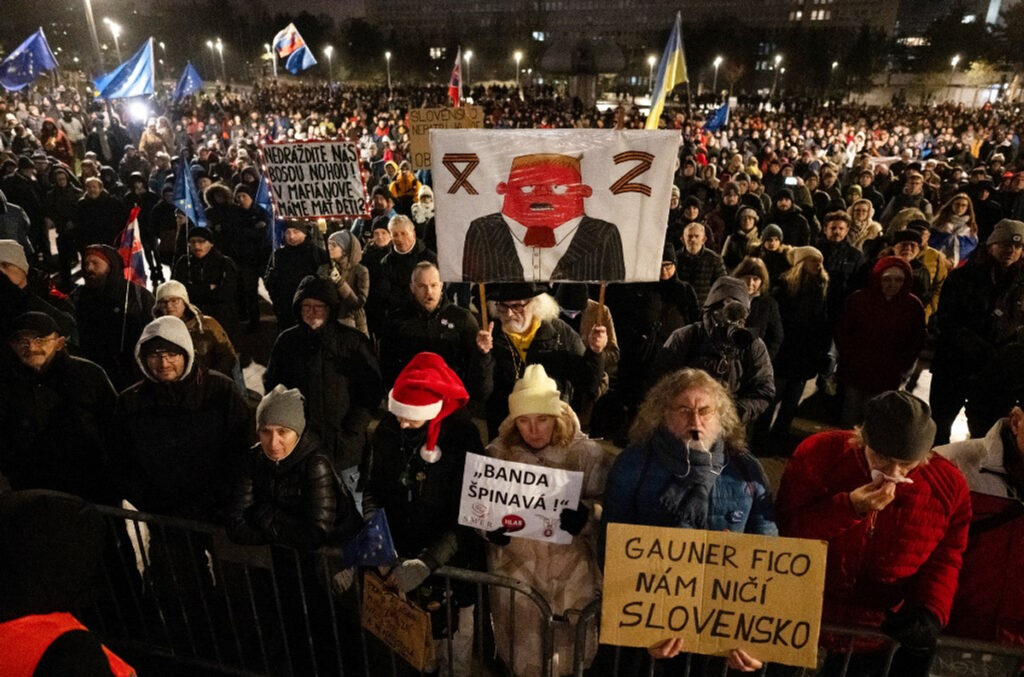
Thousands of protesters railed in Slovakia’s capital on Monday against the abolition of the country’s whistleblower protection office and hastily adopted penal code changes they say undermine EU rule of law.
Since his return to power in 2023, nationalist Prime Minister Robert Fico has faced a series of protests over his government’s moves curbing rights in the country of 5.4 million people.
Follow our coverage of the war on the @Kyivpost_official.
The latest protest came after Slovakia’s parliament approved further amendments to the penal code, including restricting who can be a cooperative witness in investigations.
Last year, a controversial overhaul of the penal code already saw the easing of penalties for corruption and economic offenses.
Last week, parliament also approved a law that critics say will reduce protections for whistleblowers by replacing Slovakia’s whistleblower office with a body that will be placed under government authority.
Protesters in Bratislava on Monday held up placards that read “Gangster Fico destroys our Slovakia” and chanting “Shame!” and “Enough of the mafia!”.
Katarina Kosegyova, a 60-year-old employee, said she joined the protest to stand up against the government which “is pulling us towards Russia”.
“This is something I never thought could happen – they win a fair election and then destroy democracy in Slovakia,” retiree Peter Susko told AFP.

Other Topics of Interest
‘Kyiv Isn’t Losing, Moscow Is’ – Senators Call for US to Double Down
Leading US lawmakers say Ukraine’s resilience is holding Russia back and urge Congress to expand military and economic support to secure a lasting strategic advantage.
According to an AFP journalist on the scene, about 7,000 people took part in the protest, which was called by a group of NGOs.
Jozef Kuciak, the father of the slain investigative journalist Jan Kuciak, spoke on stage at the rally, saying that it was “crazy” how the law abolishing the whistleblower office “could even come about”.
“What will happen next? Will we have a regime? We are here to prevent that,” he told the crowd.
Over the weekend, NGOs called on President Peter Pellegrini to send the law to the Constitutional Court for a review after he had unsuccessfully vetoed it.
Pellegrini said in a statement last week that he would not sign the law, even after his veto was overturned.
“I will be guided by legal and democratic principles and by building a reputation for Slovakia that will command respect from our partners in international institutions,” he wrote in a statement on Facebook.
Slovakia’s rank in Transparency International’s annual corruption perceptions index dropped several places last year, with the country ranking among the most corrupt in the EU last year.