
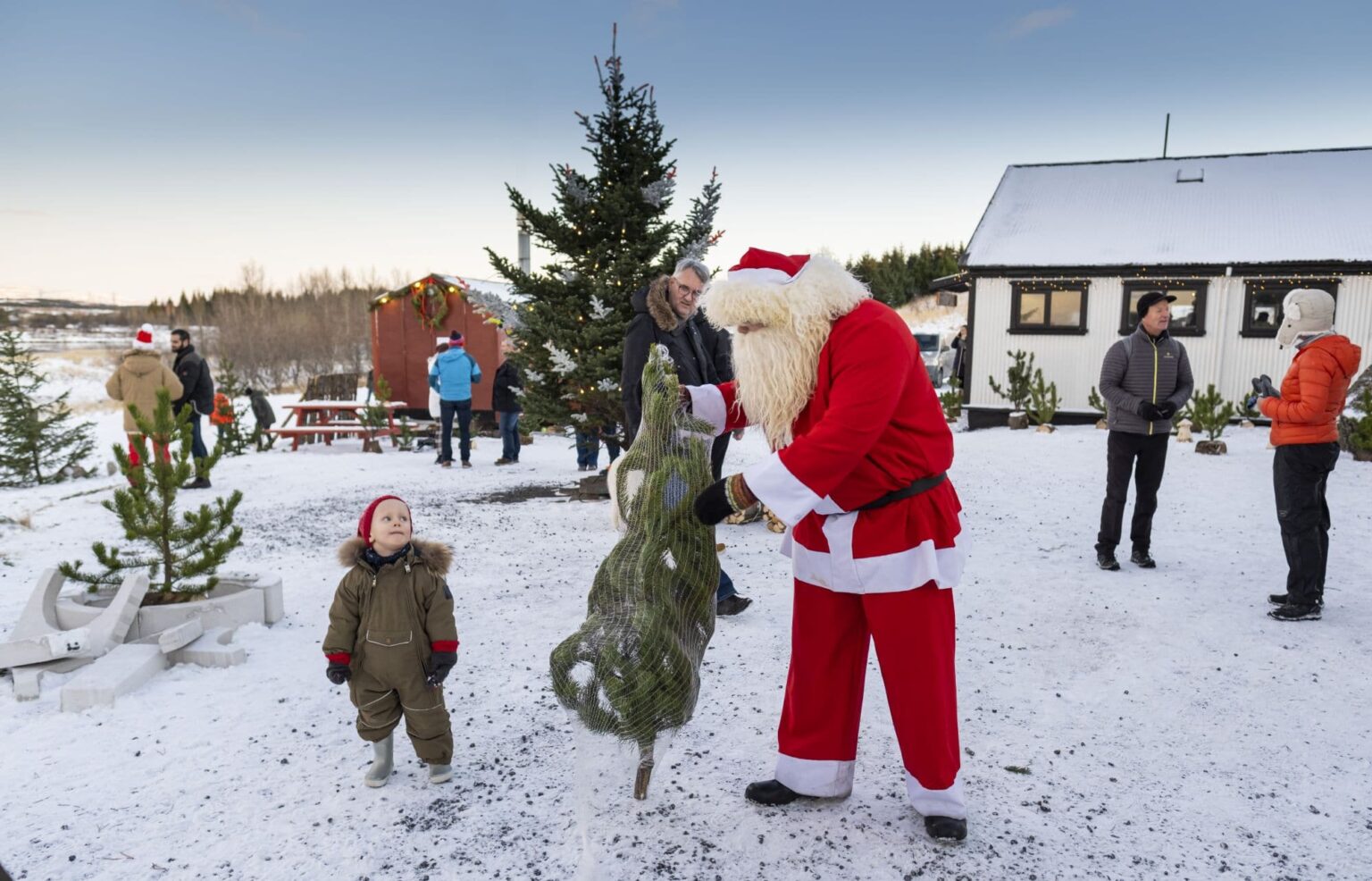
 Photo: Golli.
One of the earliest written references to the Yule season comes from the English monk and historian Saint Bede, later canonised as St. Bede the Venerable. Writing in the early eighth century, he described giuli, a two-month period in the pagan calendar observed by both the Anglo-Saxons and the Norse.
According to this calendar, giuli marked the turning point of the year, when the long northern darkness began to recede and daylight slowly returned. The season was therefore closely tied to ideas of renewal and survival, themes that would later be absorbed into Christian celebrations.
By the ninth century, the word Yule had become closely associated with Christmas itself, eventually giving rise to the modern Icelandic term jól. Despite this shared linguistic heritage, Icelandic Christmas traditions developed along a distinct path.
Unlike in much of Europe and North America, Santa Claus has never occupied a central role in Icelandic folklore. In fact, the word “Santa” does not appear in Icelandic texts until the eighteenth century, when it surfaced in Sálarfræði ætluð námfúsum unglingum, an Icelandic translation of a Danish educational work by Joachim Heinrich Campe.