
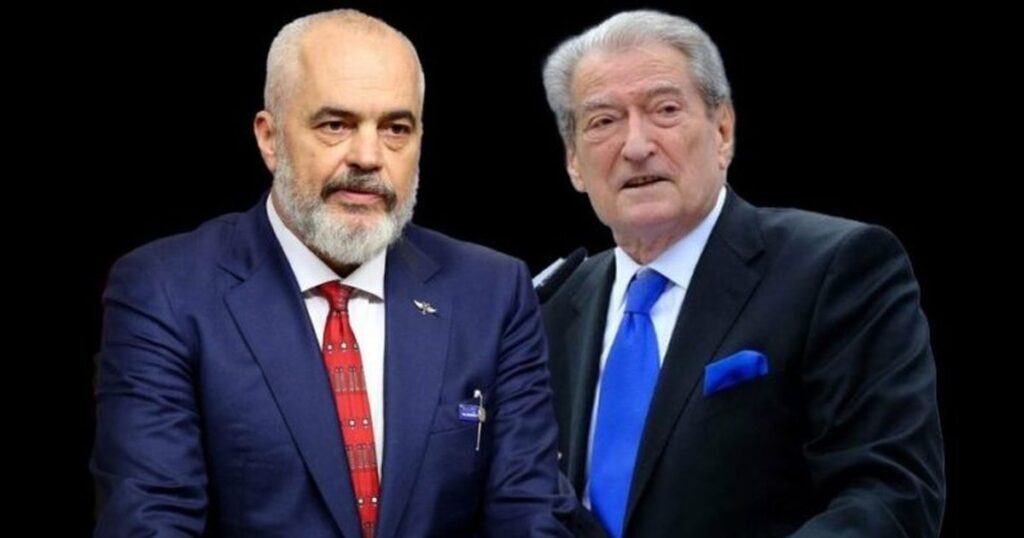
The American media outlet Washington Times has dedicated an article to the situation in Albania, where opposition leader Sali Berisha has declared that the country has turned into a narco-state, accusing the socialist majority of being responsible for a series of scandals.
Washington Times article :
A blatant mafia murder last month near Albania’s main airport has heightened fears that the NATO ally is sliding deeper into the rule of organised crime – as opposition leaders warn the country is on the verge of becoming Europe’s first true narco-state.
Gilmando Dani, a leader of the Shullazi criminal network, was killed by gunfire in broad daylight while returning to Albania from Spain on November 11.
In a video of the incident, a squad of assassins emerges from a parked vehicle and ambushes the crime boss’s luxury car. The shooters calmly confirm that the victim is dead after a barrage of automatic weapons and then flee the scene.
Critics say such brutal scenes are becoming increasingly common in Albania. The Shullazi criminal network is involved in several activities, including drug trafficking. Opposition leaders and international counter-narcotics experts warn that the country has become a key Balkan hub for drug cartels from Latin America and a key hub for the European marijuana market.
“The Albanian branches of South American narco-terrorist cartels are currently the main transporters of this drug from South America to Europe; they control the price in Europe and are strengthening their influence on the American market as well,” former Prime Minister Sali Berisha told ‘The Washington Times’.
Mr. Berisha and other members of the Democratic Party have demanded that US President Trump officially declare Albanian drug cartels as narco-terrorist organizations.
Berisha said the US government under President Joe Biden turned a blind eye to the narcotics trade, which flourished during the term of Socialist Prime Minister Edvin “Edi” Rama, whose party has been in power since 2013.
Then-Secretary of State Antony Blinken offered “praises” to Rama, calling him “an extraordinary partner for the United States,” during a visit on February 15, 2024, for Albania’s role in hosting Afghan refugees and supporting Ukraine.
The ‘International Democratic Alliance’, a federation of center-right and Christian-democratic parties, adopted a resolution this month accusing the ruling Socialist Party of allowing “criminal infiltration in public contracts, construction and tourism.”
Berisha himself was sanctioned by the Biden administration in 2021 for corruption and banned from entering the US – a decision he opposes as politically motivated.
Corruption and organized crime have been persistent problems in Albania since the chaotic collapse of communism in the 1990s. In the last decade, Albanian criminal networks have expanded ties with criminal organizations in Italy, such as the ‘Ndrangheta (Calabria) and the Camorra (Naples), as well as with newer groups in Latin America.
These connections have fueled a new wave of violence in Europe, with strong similarities to drug violence in Latin America.
On September 29 in Brussels, thousands of commuters passed by the body of a suspected Albanian drug trafficker who had been hanging for hours. It was the first such killing in Belgium, but a common tactic by Mexican cartels to send a message of fear.
Evidence of the boom in drug trafficking in Albania is found in an unexpected place – the urban skyline of Tirana.
In the early 1990s, Tirana had only a few traffic lights. Today, it is experiencing an extraordinary construction boom. Last year, construction accounted for 14.4% of Albania’s economic output by 2024, according to Eurostat – the highest percentage in Europe. The government recently approved 16 new towers, one of which, if built, would also dominate the US Embassy.
“According to international anti-crime organizations, a significant portion of the construction boom in Tirana – especially projects over 10 floors – is believed to be financed by criminal syndicates that launder drug money,” the Tirana Times wrote this year.
Meanwhile, about a third of the population lives below the poverty line and more than 1 million Albanians have left the country since 1991. The traditional informal banking system “hawala” is also used, allowing the rapid transfer of large sums – a mechanism exploited by Albanian drug traffickers.
Mr. Rama has announced a series of new measures to curb the increasingly open narcotics trade – a battle that has marked much of the political turbulence of recent years.
The prime minister has launched police campaigns against drugs, including a spectacular operation in 2014 in Lazarat, the center of cannabis cultivation, that turned into armed clashes and attracted international attention. Yet despite these efforts, the illegal industry has not only survived – it has adapted and evolved.
The legalization of marijuana for medical use in 2023 has sparked a new surge in the drug trade. Albanian syndicates have developed discreet cultivation methods and their influence extends beyond the Balkans. As far as Scotland, Albanian cannabis farmers are reported to have smuggled in small boats.
According to the opposition, the Rama government has oriented the judicial system more against political opponents than against crime. They cite the one-year detention of Tirana Mayor Erion Veliaj without timely charges, which has caused concern across the EU about the rule of law and the independence of the judiciary.
“In 2017, when I served as Minister of Interior, I was informed of a list of 126 senior State Police officers who had been reported to the Serious Crimes Prosecution for links to drug gangs,” said former minister Dritan Demiraj, who now lives in the US.
In so-called narco-states, institutional decay blurs the lines between government, security forces, and criminal organizations. Even the justice system is collapsing – familiar models from Colombia or Afghanistan.
“If elected representatives of a NATO member state are involved in organized crime,” Demiraj said, “then NATO faces real and serious security challenges. Such a country could become the weak link in the alliance, exploitable by Russia, China or Iran for internal destabilization.”
/ 2025-12-23 14:18:14Politics
/ 2025-12-23 13:50:48Politics
Bardhi: Balluk’s corruption amounts to 1.1 billion Euros
Read
/ 2025-12-23 12:15:58Politics
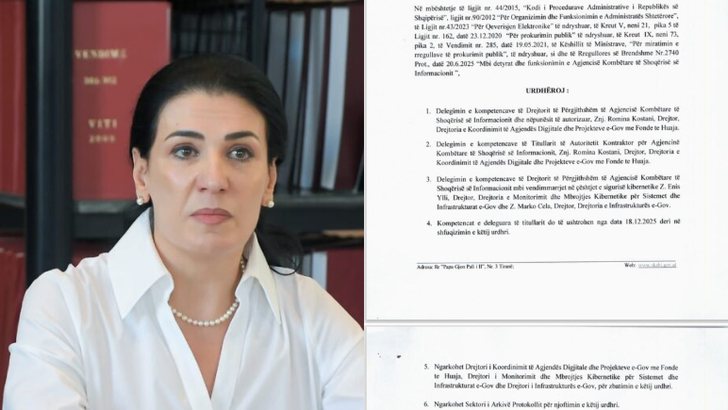
AKSHIT Director delegates powers after being placed under house arrest!
Read
/ 2025-12-23 12:02:58Politics
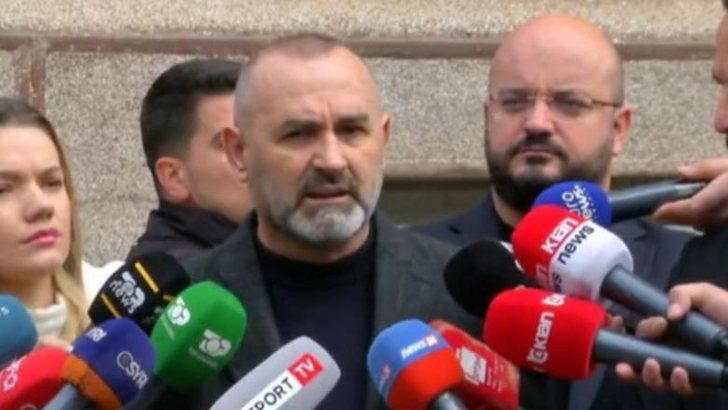
Manja after the Ethics meeting: We reviewed the footage, abnormal session
Read
/ 2025-12-23 11:28:01Politics

/ 2025-12-23 11:26:02Politics
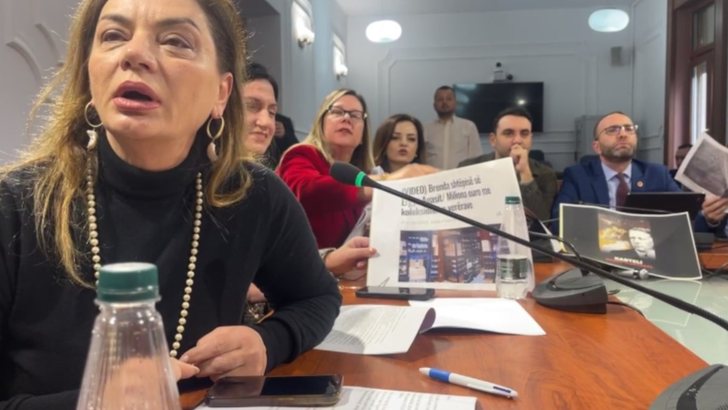
NAMES/ TENSIONS in the Assembly, SP expels 6 DP deputies for 30 days!
Read
/ 2025-12-23 11:03:22Politics
/ 2025-12-23 10:41:57Politics
/ 2025-12-23 10:40:46Politics
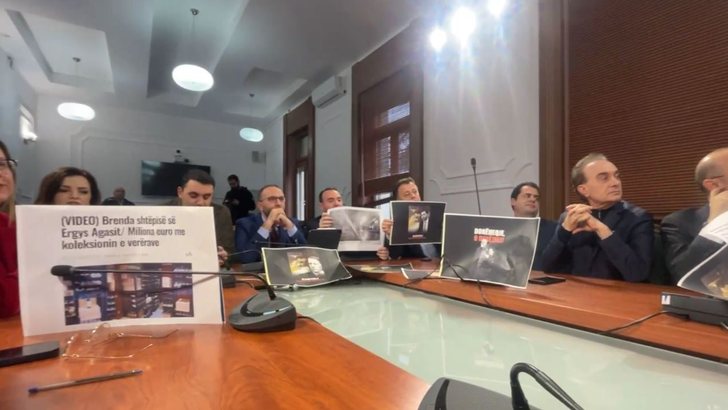
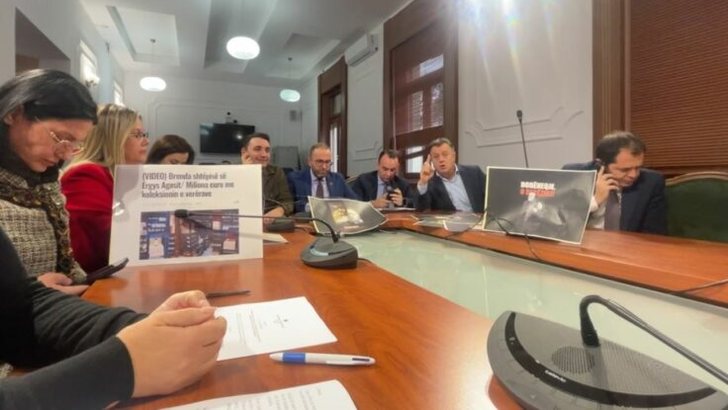
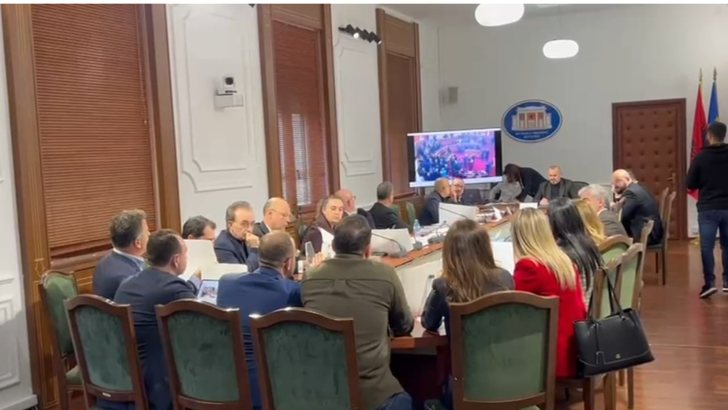
The Ethics Secretariat meets, opposition MPs with banners and ironic messages about the AKSHI file
Read
/ 2025-12-23 10:27:57Politics