
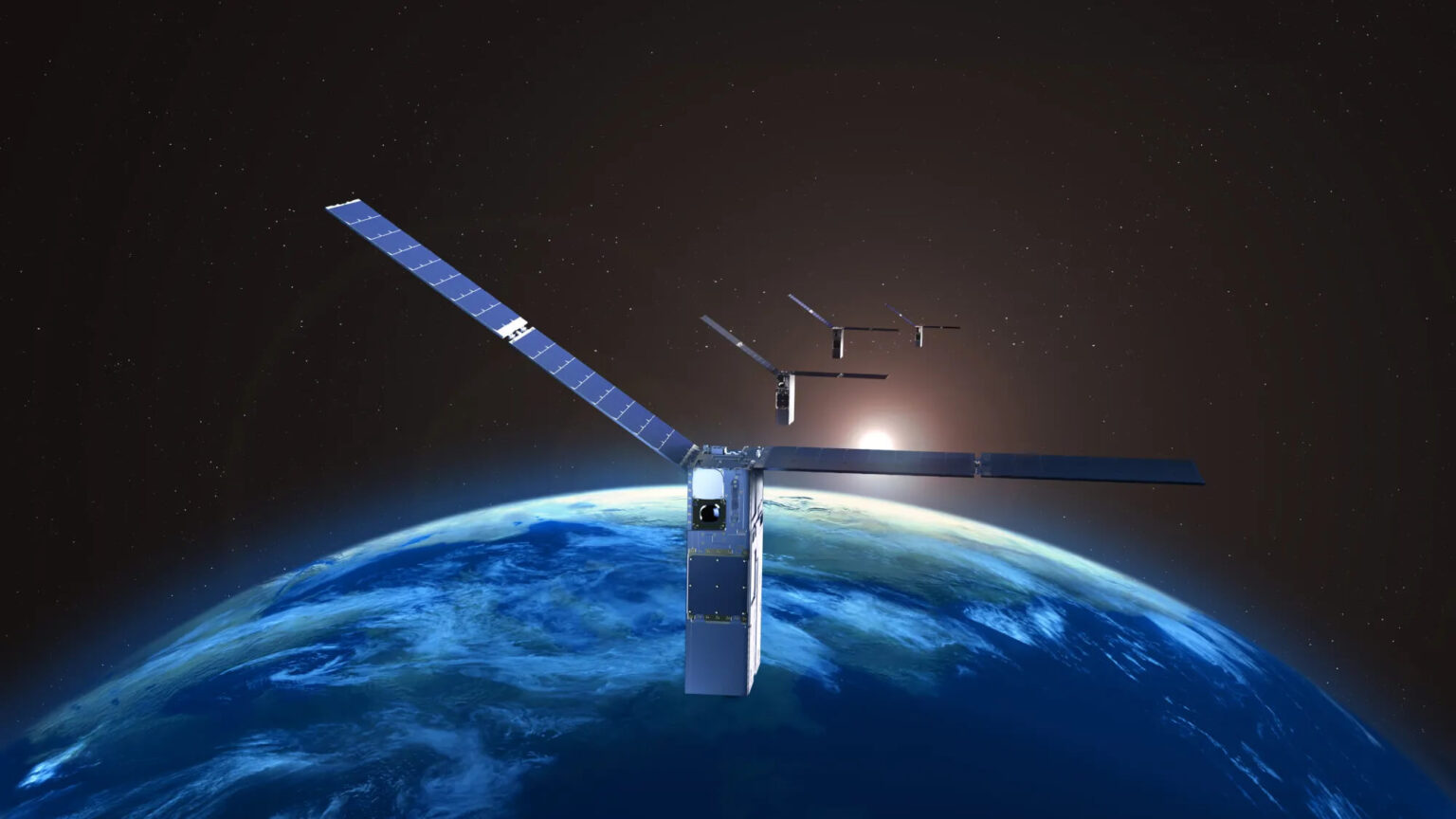
Western intelligence agencies believe Russia may be developing a new type of anti-satellite weapon designed to disable large numbers of low-Earth orbit satellites at once. Elon Musk’s Starlink constellation is seen as a primary potential target.
According to intelligence assessments from two NATO member states, seen by the Associated Press, the system under development is described as a so-called “zone-effect” weapon. Rather than striking individual satellites with missiles, the concept would involve dispersing hundreds of thousands of dense and tiny pellets into orbital paths used by Starlink. This could potentially damage or disable multiple spacecraft simultaneously.
The suspected aim is to undermine Western space-based capabilities that have become strategically important during Russia’s war in Ukraine. Starlink has provided vital communications for both military and civilian use.
A Risky Form of Counterspace Weapon
Unlike direct-ascent anti-satellite missiles Russia has tested in the past, the proposed pellet-based system would be indiscriminate. Intelligence officials believe the pellets could potentially be released from specially designed satellites, forming clouds that intersect with Starlink’s orbital regime at roughly 550 kilometres above Earth.
Such an approach could allow Russia to target multiple satellites simultaneously, but analysts warn that it would also pose severe risks to other space systems operating at similar altitudes. Debris generated by impacts could spread rapidly and unpredictably.
Canada’s Brigadier General Christopher Horner, commander of the country’s military Space Division, said that while he had not personally been briefed on the specific system, the idea could not be dismissed.
Doubts Over Feasibility
Not all experts are convinced the weapon would ever be deployed. Victoria Samson, a space-security specialist at the Secure World Foundation, expressed strong doubts about the practicality of such a system.
“I don’t buy it. Like, I really don’t,” she said. “I would be very surprised, frankly, if they were to do something like that.”
Samson and others argue that releasing vast numbers of pellets into orbit could trigger uncontrolled cascading debris effects, sometimes referred to as the Kessler Syndrome, making entire orbital regions unusable for years or decades. Such an outcome would harm Russia and its allies, including China, which also relies heavily on satellite infrastructure.
“There are huge drawbacks to something this indiscriminate,” Samson said, suggesting the concept may still be at the level of research or theoretical exploration rather than an operational weapon.
Strategic Signalling
The intelligence assessments do not indicate when, or even if, Russia might be capable of deploying the system. Officials familiar with the findings say the technology appears to be in active development. Any details about testing or readiness remain completely unclear.
Analysts also suggest the threat itself could serve a strategic purpose, regardless of whether the weapon is ever fielded. Clayton Swope, a space security expert at the Centre for Strategic and International Studies, described the concept as potentially more valuable as a deterrent than as a battlefield tool.
“It definitely feels like a weapon of fear, looking for some kind of deterrence or something,” he said.
Tiny pellets, the intelligence findings suggest, could be difficult to track, complicating attribution in the event satellites were damaged. Still, experts say patterns of failures would likely point to a deliberate attack.
Russian officials have not commented on the specific allegations. The Kremlin has previously denied plans to deploy weapons in space and has called for international efforts to prevent orbital weaponisation. However, Nato officials note that Russia has, in recent years, carried out what they describe as “irresponsible and hostile actions” in space.